
Last updated September 20, 2026
Free on-site gate assessment - hinges, posts, and your LiftMaster or Nice gate operator checked before anything is quoted
The assessment is free and the quote is the invoice.

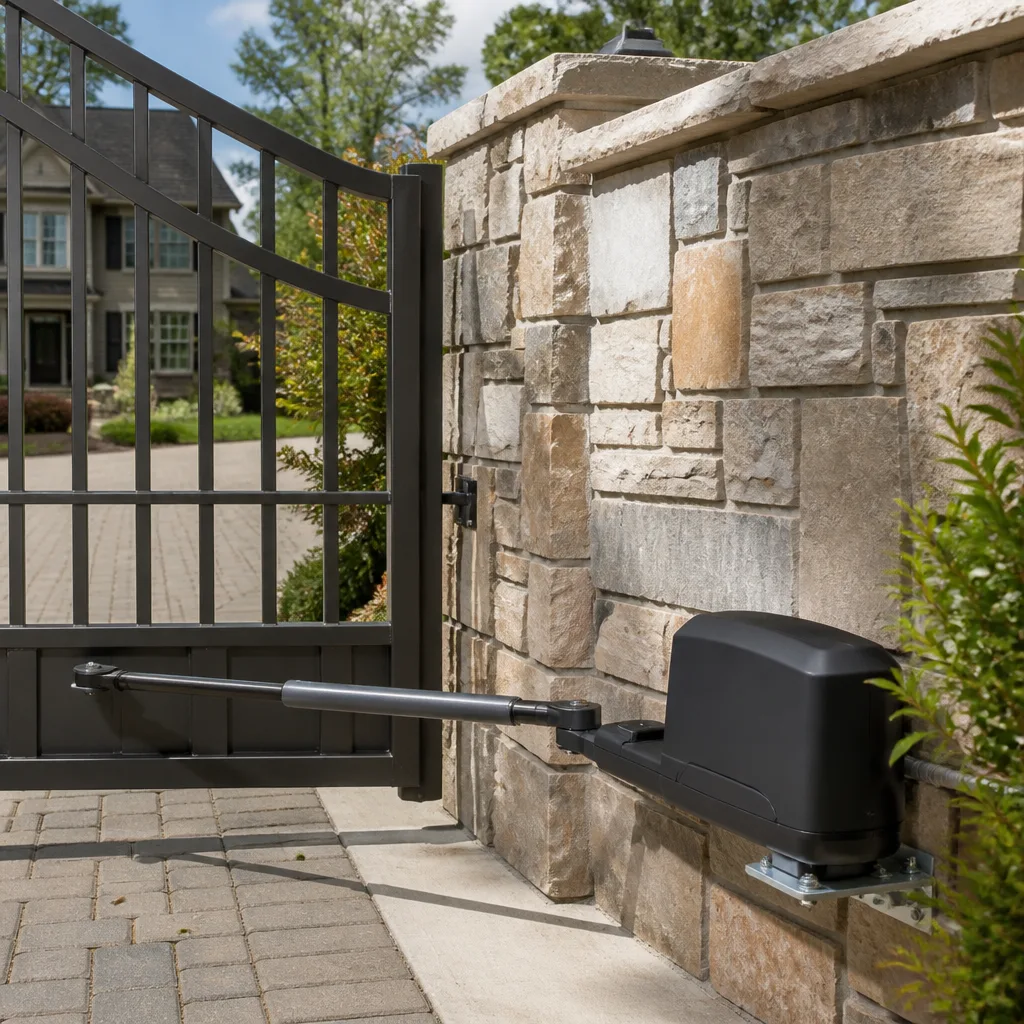
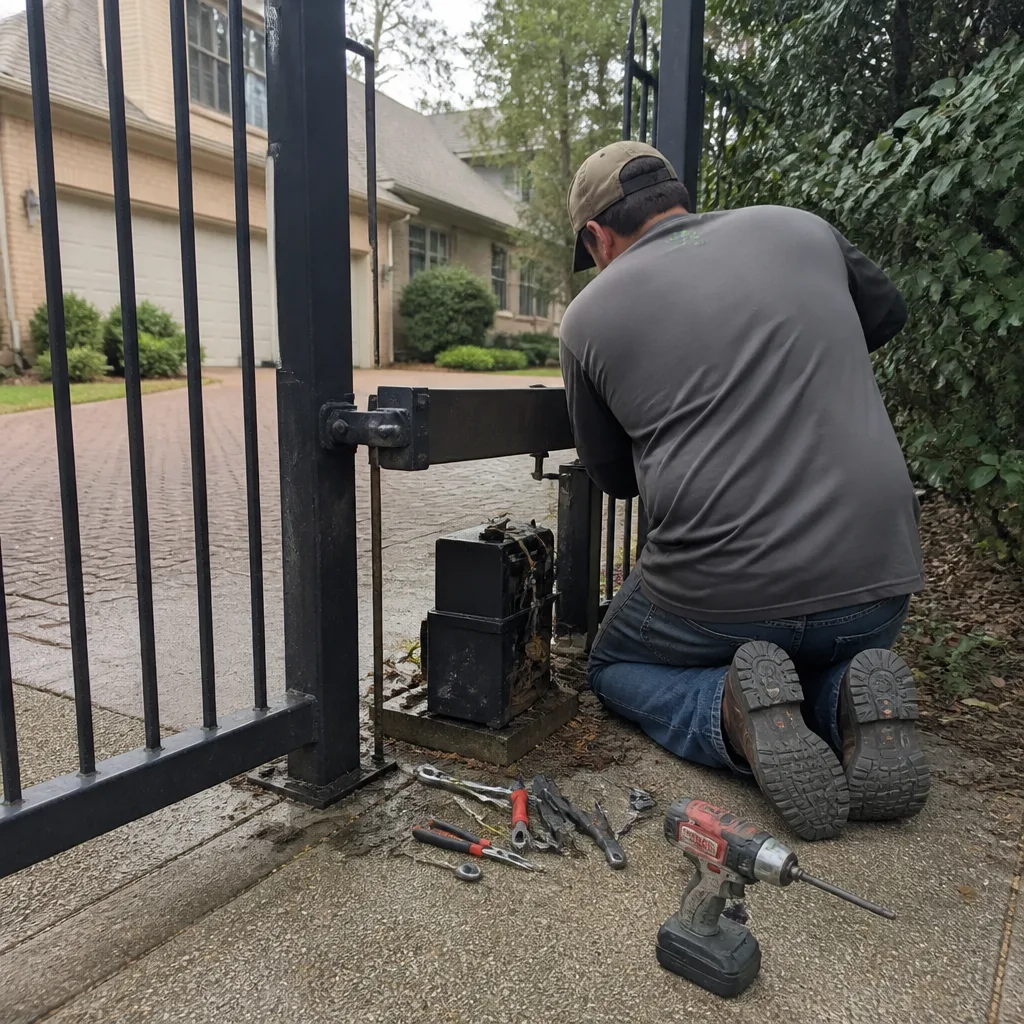 Before
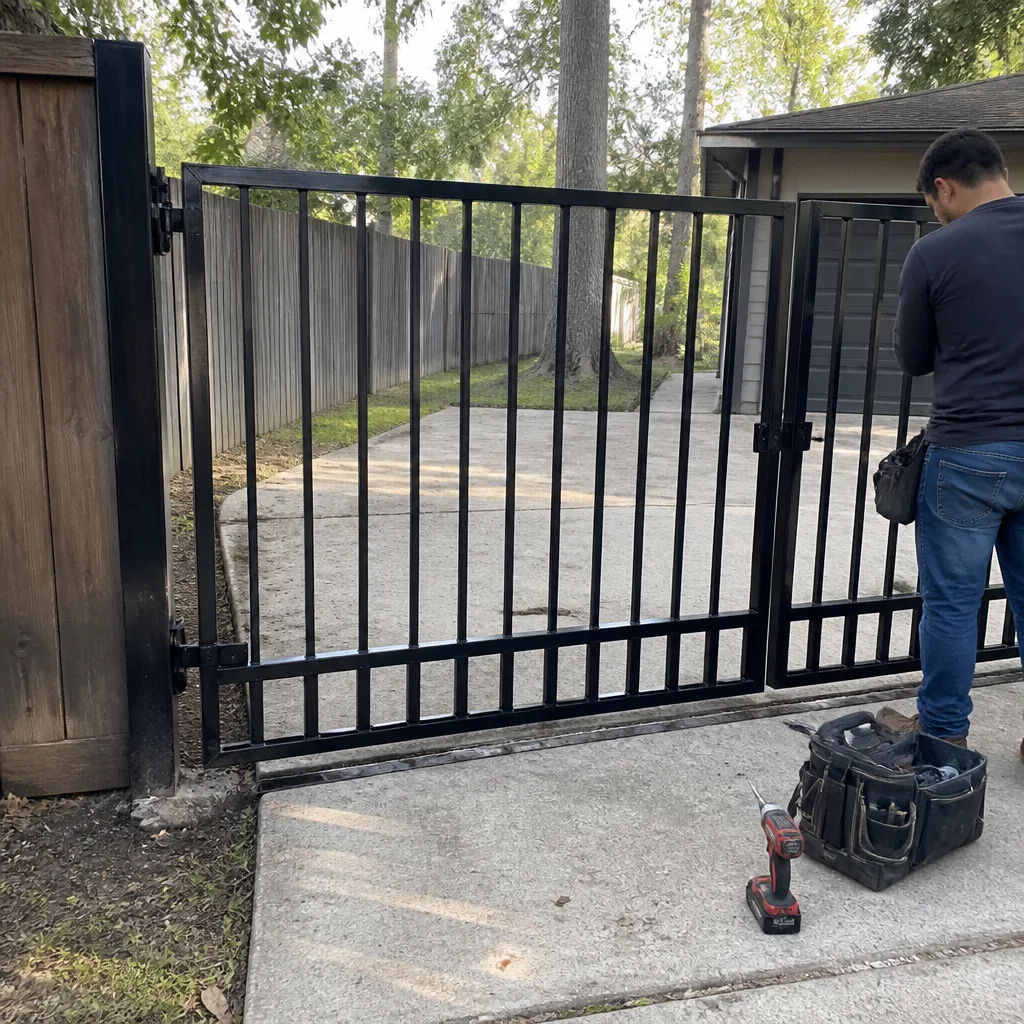 After
After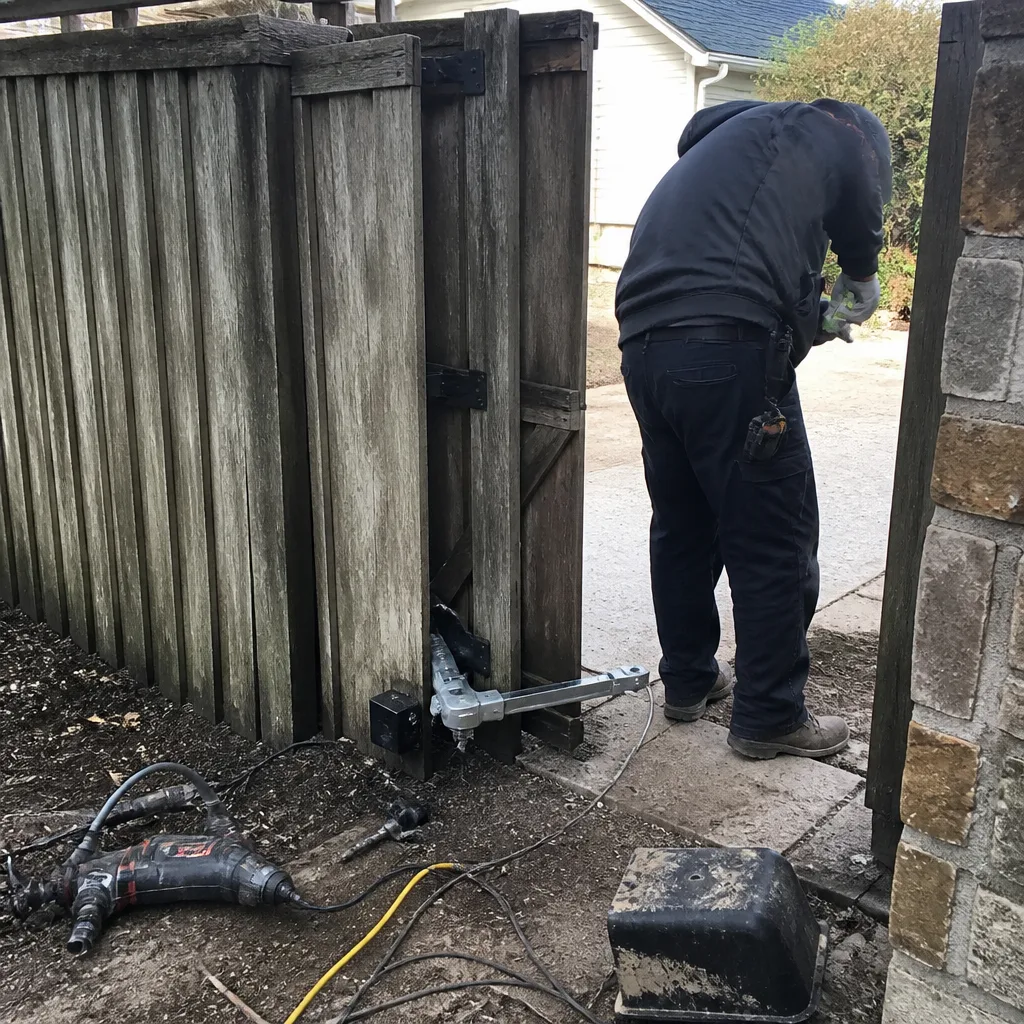 Before
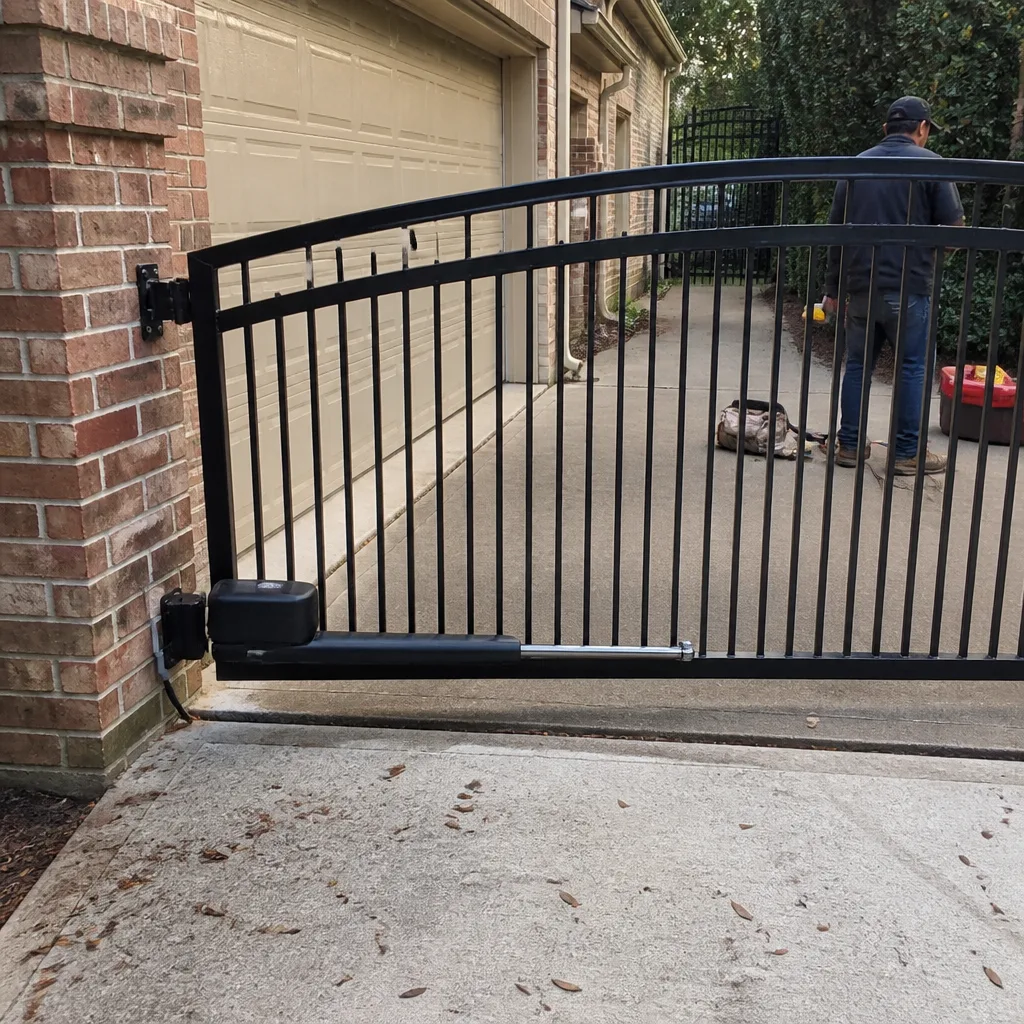 After
After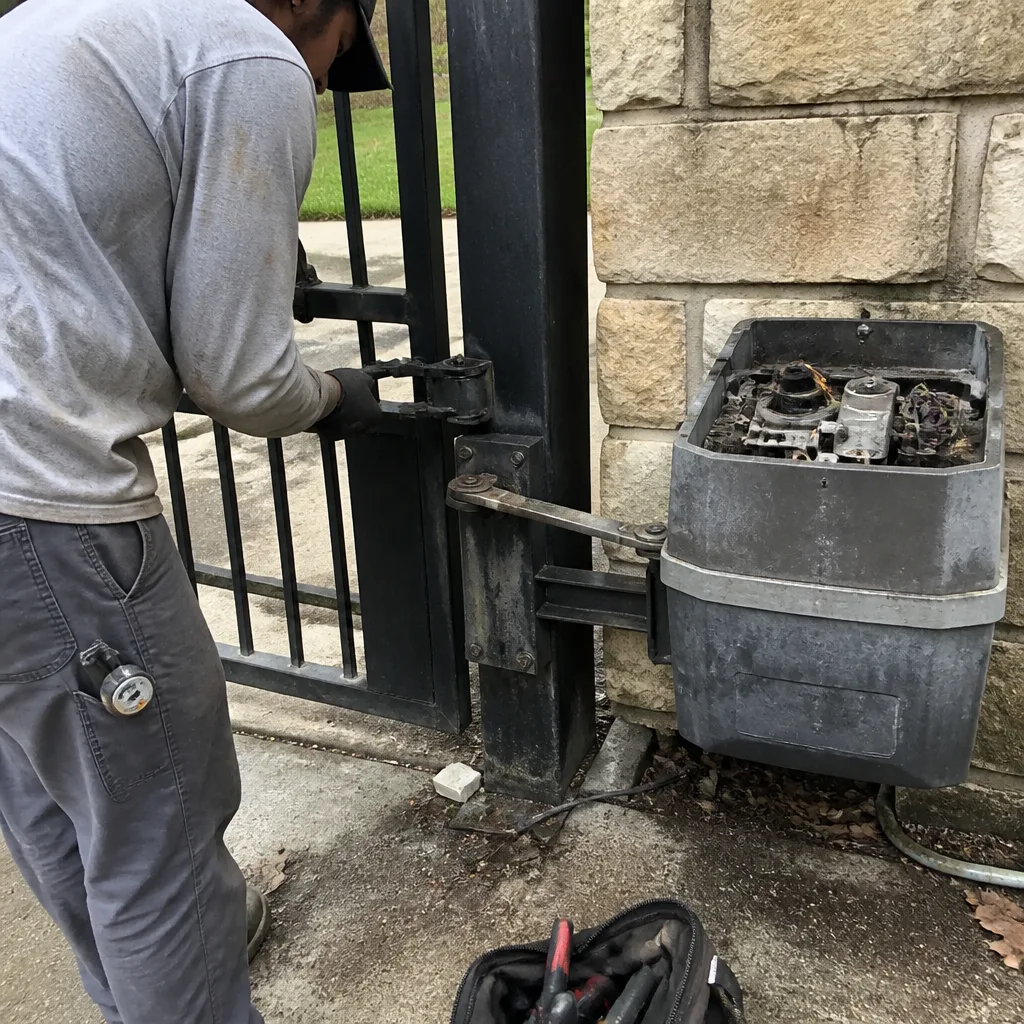 Before
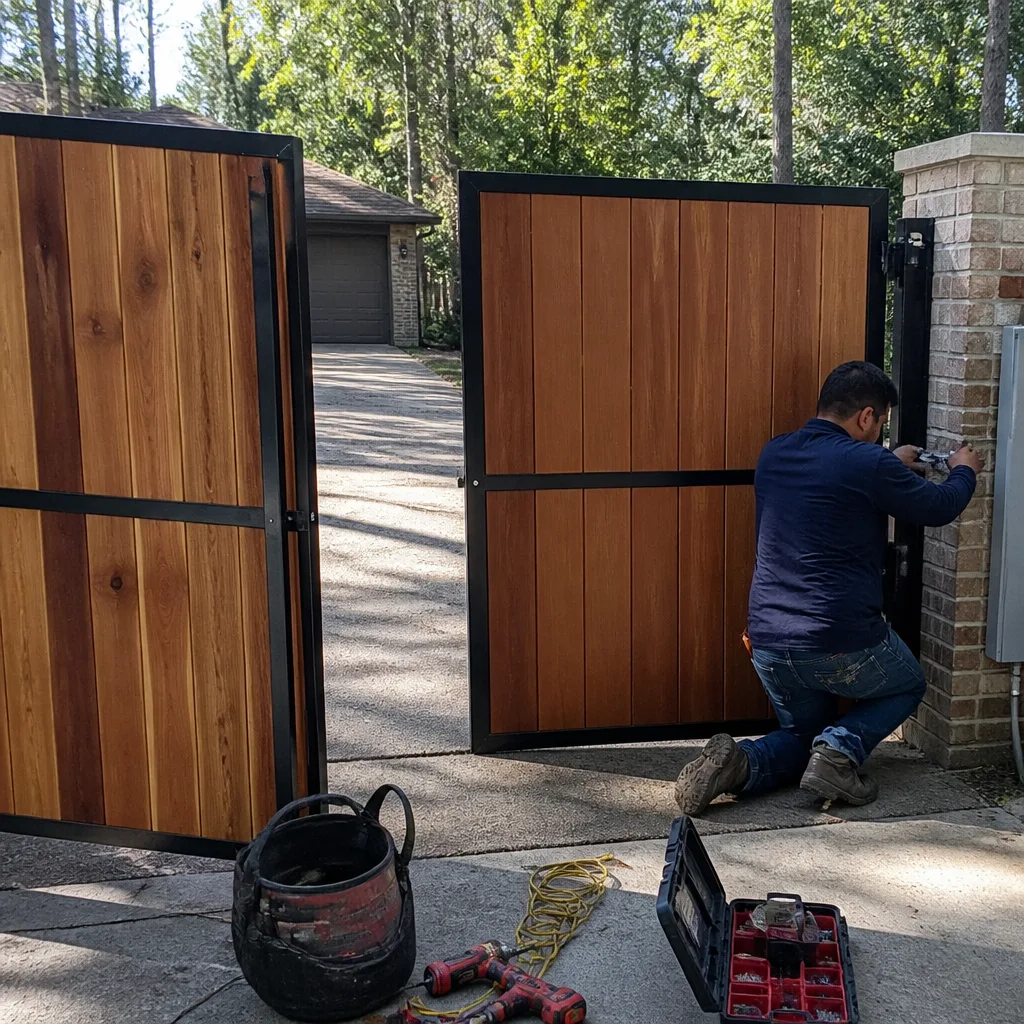 After
AfterGate Repair Permits, Codes & Inspections in TX: What You Need to Know
A gate operator swap that includes running a new 120V circuit to the post requires a licensed electrician and a permit in Montgomery County. The same job done by a gate-only technician reusing the existing circuit does not. Conflating the two has cost homeowners in The Woodlands both fines and unnecessary permit fees. This guide maps the actual decision tree so you can ask the right question the first time, understand what your contractor should be doing, and keep the documentation that protects you at resale. For professional help with any issues, see our Gate Repair services.
Quick Answer
Most residential gate repairs in Texas do not require a permit because they involve low-voltage control wiring (typically 12V or 24V DC) and existing mechanical components. A permit is required when work crosses into line-voltage electrical (adding or modifying a 120V circuit), structural modification (new footings, posts set in concrete, column changes), or when your local jurisdiction specifically requires one. In The Woodlands, HOA architectural review often runs parallel to and can be stricter than county permit requirements.
Table of Contents
- The Actual Permit Decision Tree for Texas Gate Work
- Low-Voltage Gate Work: What Requires No Permit
- Line-Voltage Work: When the Texas Electrical Safety and Licensing Act Triggers
- Structural Changes: Footings, Posts, and Building Permits in Montgomery County
- HOA Architectural Review in The Woodlands Villages
- What Unpermitted Gate Work Means at a Home Sale
- Documentation to Retain After Any Permitted Gate Work
- Common Mistakes to Avoid
- When to Call a Professional
- Frequently Asked Questions
- The Bottom Line
BeforeAfterThe Actual Permit Decision Tree for Texas Gate Work
Ask a gate company “do I need a permit?” and you’ll get one of two answers: “no, it’s just a gate” or “yes, always.” Both are wrong in different directions. The correct answer follows a three-question decision tree. We walk every homeowner through this exact sequence when we start a project in The Woodlands, because getting it wrong has real consequences: a failed inspection, a red tag, or a title company flag at closing. Learn to spot trouble early with our guide to Gate Repair Warning Signs: A The Woodlands Homeowner’s Reference Guide.
Here’s the decision tree in order:
- Does the work touch line-voltage wiring? If yes, you need a permit and a licensed electrician. This means any modification to a 120V or 240V circuit, including running a new circuit to the gate post. If the work only involves low-voltage control wiring (the 12V or 24V wires between the motor, the keypad, the photo-eyes, and the control board), you do not need a permit for the electrical portion.
- Does the work modify or add structural elements? Setting a new post in concrete, widening a footing, replacing a column, or relocating a gate hinge point are structural changes. In Montgomery County, these can trigger a building permit. Replacing hardware on an existing post does not.
- Does the property fall under an HOA with architectural review authority? In The Woodlands, nearly every village has design review committees that govern fence and gate appearance, height, and placement. Their review runs parallel to county permitting and can be more restrictive.
The mistake most homeowners make is asking the gate company “do I need a permit?” when they should be asking “does this job include any line-voltage work or structural change?” The first question invites a binary answer that often defaults to whatever is convenient for the contractor. The second question maps to the actual legal line.
Low-Voltage Gate Work: What Requires No Permit
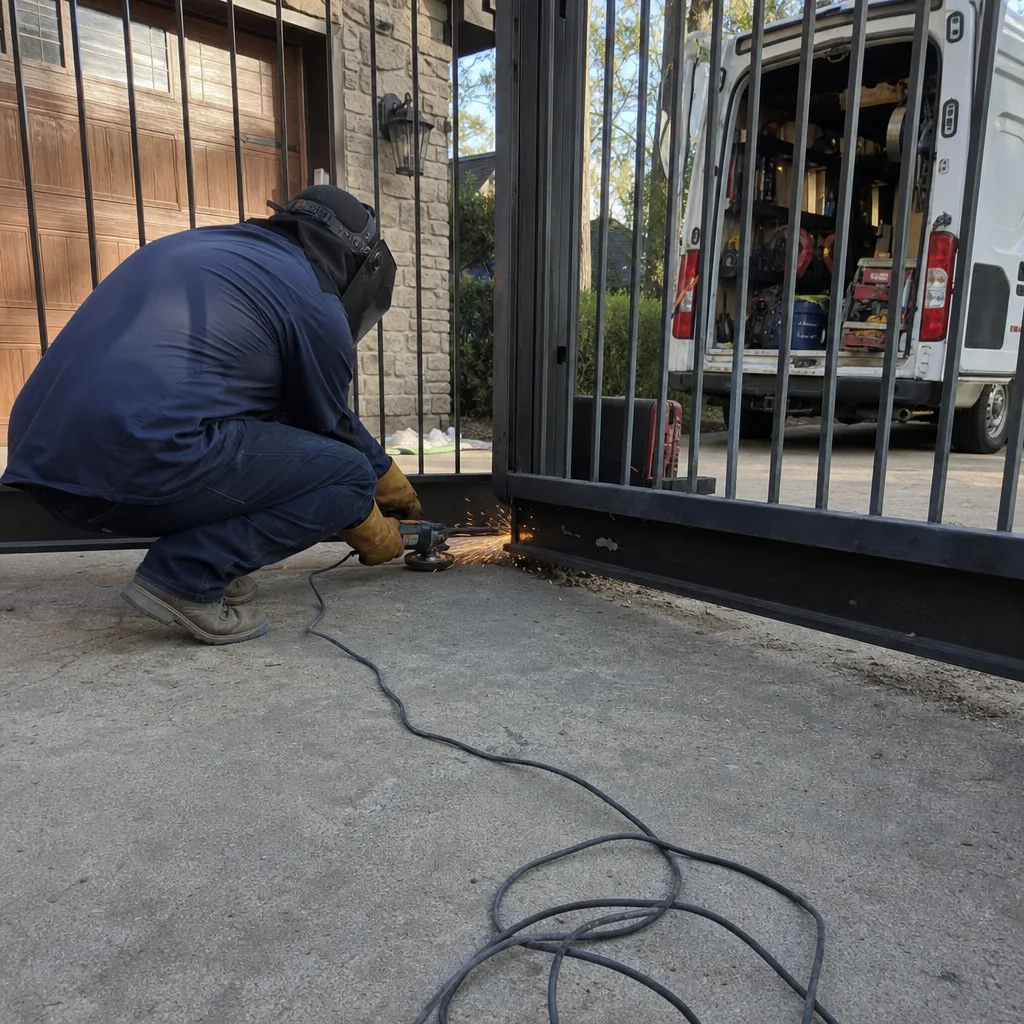
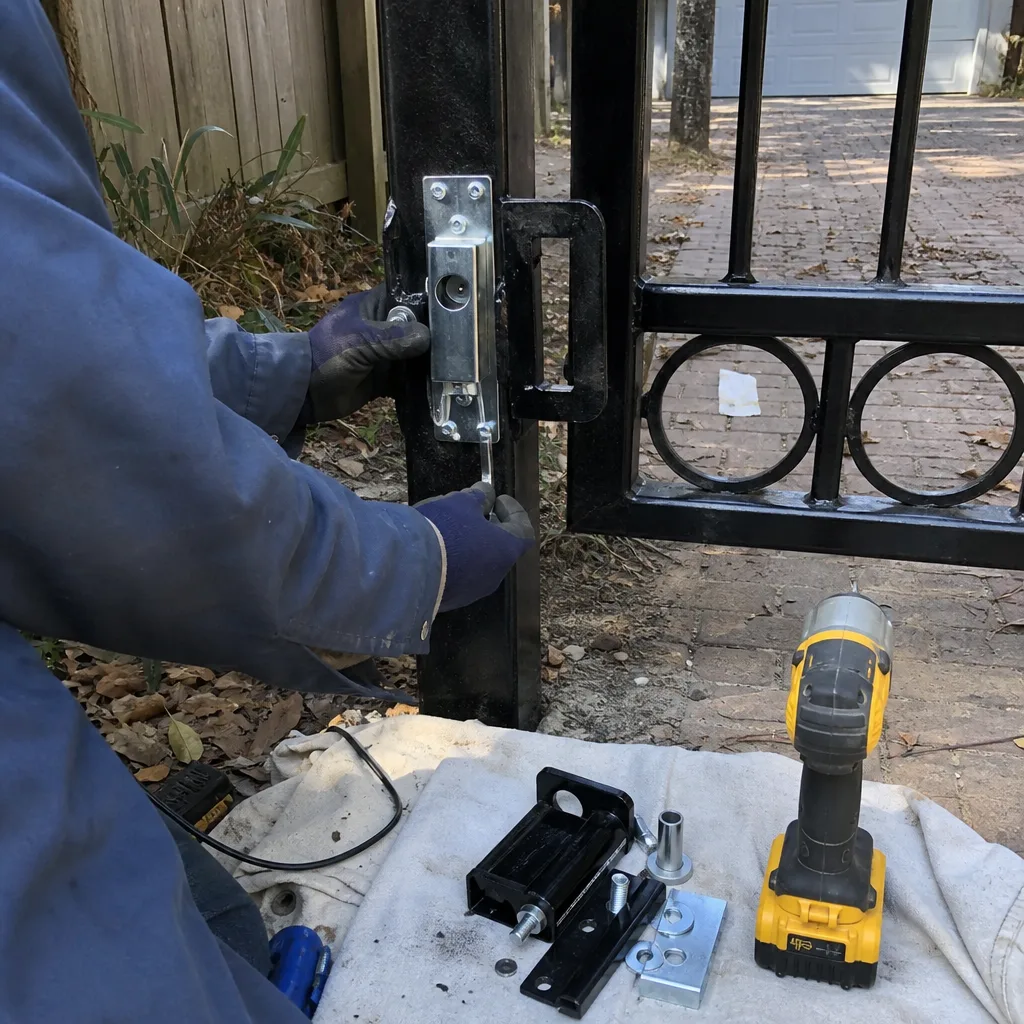
Most repairs we perform in The Woodlands fall entirely inside this category. A failed control board replacement, a limit switch adjustment, a photo-eye realignment, a new keypad, a receiver swap, a hinge replacement on an existing post, a wheel replacement on a sliding gate: none of these require a permit anywhere in Texas. They are repairs to existing low-voltage systems and existing structural components.
The technical reason is straightforward. The Texas Electrical Safety and Licensing Act (Texas Occupations Code, Chapter 1305) governs electrical work performed by licensed electricians. Low-voltage work, defined generally as circuits operating below 50 volts, falls outside the electrical contractor licensing requirement for most residential applications. Gate automation runs on 12V or 24V DC for control circuits. Motors on residential swing and slide gates in The Woodlands are typically 24V DC or 24V AC, with a transformer stepping down from house current.
Here’s what typically requires no permit:
- Control board replacement (LiftMaster, FAAC, Elite, Mighty Mule units all use low-voltage control logic)
- Limit switch adjustment or replacement
- Photo-eye alignment or replacement
- Keypad, receiver, or remote programming
- Hinge, roller, or wheel hardware replacement on existing posts
- Track repair for sliding gates where the track bed is not being excavated or re-poured
- Welding repair to an existing gate leaf where the gate’s footprint does not change
One caveat: some municipalities require a “low-voltage permit” for new installations even when the voltage is low. The key distinction in practice is new versus existing. A brand-new gate installation with a new operator typically includes wiring a new transformer to an existing outlet. If the electrical circuit already exists, no electrical permit is triggered. If the installation requires a new circuit or a new dedicated outlet at the post, that portion of the work crosses into licensed territory. We keep this line explicit on every written estimate in The Woodlands, so the homeowner knows exactly which portion of the job is low-voltage and which, if any, requires an electrician.
Line-Voltage Work: When the Texas Electrical Safety and Licensing Act Triggers
The moment a new 120V circuit is involved, everything changes. Running power from a subpanel to the gate post, adding a dedicated outlet at the gate location, or replacing the transformer housing where the line-voltage side is modified: these are electrical contractor tasks under Texas law. The licensed electrician pulls the permit, the work is inspected, and the homeowner receives a final sign-off.
In Montgomery County, this is not a gray area. The county requires electrical permits for new circuits, and the City of The Woodlands (where incorporated) adopts the National Electrical Code with local amendments. A gate technician who is not a TECL-licensed electrician cannot legally run a new 120V circuit. Some gate companies do it anyway, and that’s the scenario that causes problems at resale and at inspection.
What line-voltage work actually looks like on a gate project:
- Running a new circuit from the main panel or a subpanel to the gate post
- Installing a new dedicated outdoor outlet at the gate location
- Modifying or relocating the transformer that steps 120V down to control voltage
- Repairing damaged line-voltage wiring that feeds the gate operator
- Installing a new disconnecting means or service receptacle required by code
The practical split on a typical operator swap: if a LiftMaster or FAAC operator is being replaced and the existing transformer and outlet remain untouched, the job is low-voltage only. If the existing circuit is damaged, undersized, or absent, the homeowner now has a line-voltage scope. On any job where line-voltage work is required, the right sequence is: electrician does the circuit work under permit, inspection happens, then the gate technician completes the operator installation. Skipping the permit to save time is a false economy – the cost of retroactive permitting in Montgomery County can exceed the original permit fee several times over. Our guide on How to Hire a Gate Repair Contractor in The Woodlands: A Step-by-Step Guide can help you find qualified professionals.
Structural Changes: Footings, Posts, and Building Permits in Montgomery County
Structural gate work triggers a different set of rules. In Montgomery County, setting a new gate post in concrete, enlarging a footing, replacing a column, or relocating a hinge point can require a building permit depending on the scope. The threshold in practice: if concrete is being poured or a structural element is being altered in a way that changes load path, the county wants to see it.
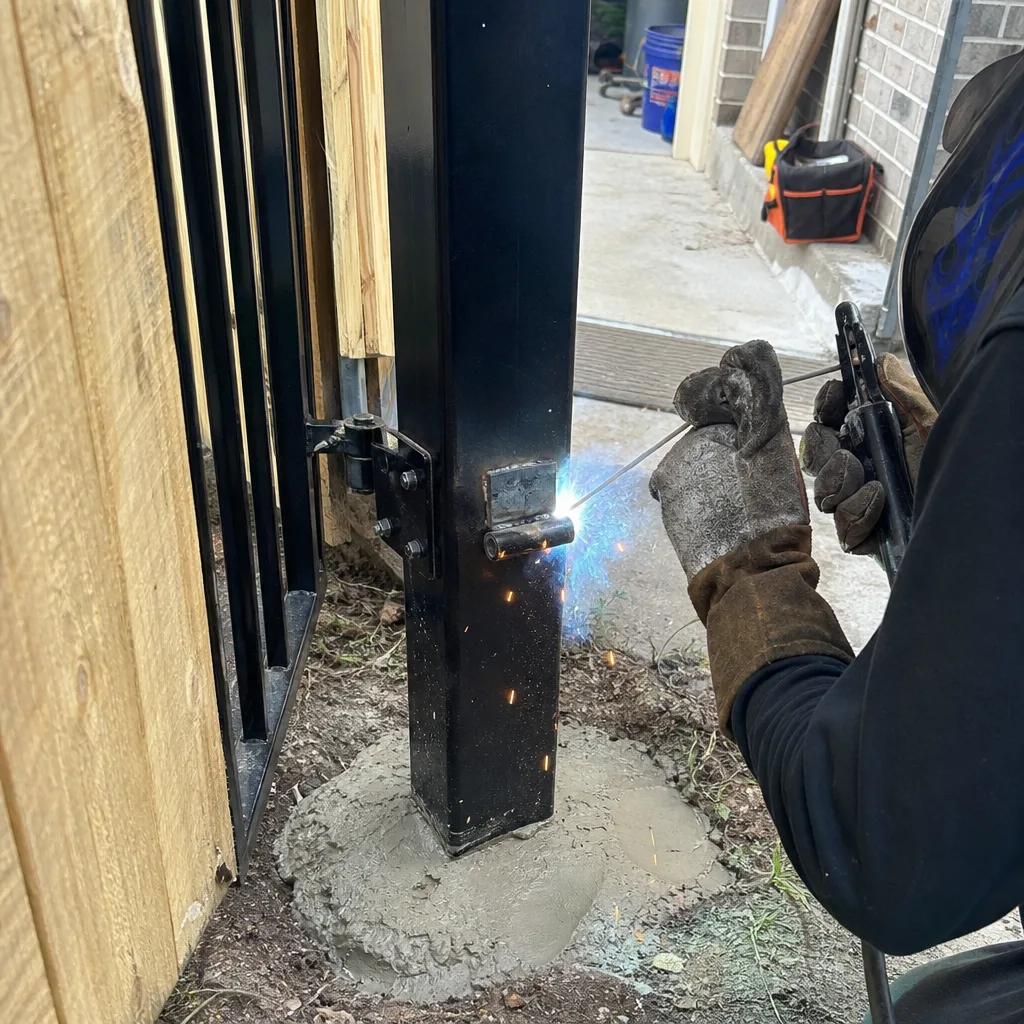
The most common structural trigger on gate projects in The Woodlands is a failed hinge post. When a post rots, shifts, or cracks, the repair often means cutting out the old post, excavating the footing, setting a new post, and pouring new concrete. That is a structural change. Some contractors treat it as a like-for-like repair and skip the permit. Montgomery County’s position is that a new footing is a new footing, regardless of what was there before.
What typically requires a structural or building permit:
- New gate post set in concrete where no post previously existed
- Fully replacing a hinge post, including new footing excavation and pour
- Widening or deepening an existing footing to correct a lean or sag
- Replacing a masonry column that supports gate hardware
- Adding a structural steel frame or changing the gate’s attachment method to the house or column
What typically does not require a building permit:
- Replacing hinges, brackets, and hardware on an existing, stable post
- Welding repair to a gate leaf where the footprint and attachment points are unchanged
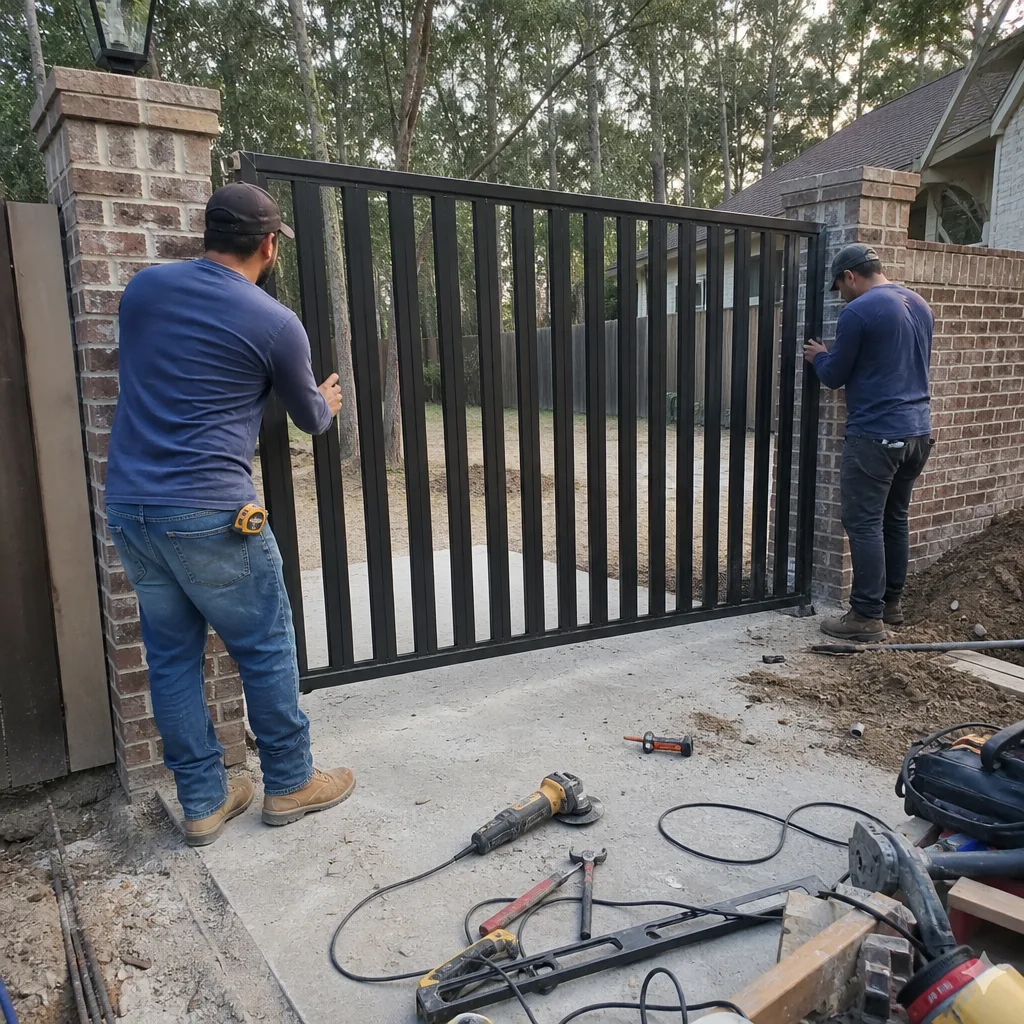
- Swapping a gate leaf (hinge-to-hinge replacement) using existing posts and footings
- Adding a gate operator where no structural modification is required
The safest sequence when structural work is required: have the contractor determine whether the footing change crosses the county threshold, then pull the permit before excavation begins. At Gate Repair in The Woodlands, we identify the structural scope on our written estimate so there’s no ambiguity about who is responsible for what.
HOA Architectural Review in The Woodlands Villages
The Woodlands operates under a layered governance structure that most Texas suburbs don’t have. Beyond county permits, the villages enforce residential design standards through covenants and design review committees (DRCs). These are not building code bodies, but they carry legal weight through deed restrictions. A homeowner can pass county inspection and still be in violation of village standards.
How this plays out on gate projects:
- New gate installation almost always requires DRC approval in The Woodlands villages. Height, material, color, and setback from the street are common review criteria.
- Gate replacement with like-for-like materials may be exempt from full review, but a change in gate height, material, or style (wood to iron, for example) usually requires resubmission.
- Gate operator addition is typically not a design review issue on its own, but if the operator requires a new post or changes the gate’s appearance, the DRC may want to see it.
- Driveway gate vs. pedestrian gate can be treated differently by village standards, particularly where gates face a golf course, a greenbelt, or a major thoroughfare.
The practical lesson: ask your village association before you pour anything. The DRC process in The Woodlands villages can take weeks. Starting construction before receiving written approval is the single most common compliance mistake we see on residential gate installation projects in The Woodlands. The county permit and the DRC approval are separate documents with separate timelines, and neither replaces the other.
What Unpermitted Gate Work Means at a Home Sale
This is where the permit question stops being theoretical. When a home sells in Texas, the seller completes a Seller’s Disclosure Notice. The form asks, in substance, whether the seller is aware of any improvements made without required permits. A gate installation with a new 120V circuit that was never permitted is an improvement made without a required permit. Check the wrong box, and the seller has created a misrepresentation claim. Check the right box, and the buyer can demand retroactive permitting before closing.
What a home inspector actually looks at:
- Whether the gate operator is connected to a proper GFCI-protected outdoor circuit
- Whether the operator has a proper disconnect within sight of the motor
- Whether structural posts are plumb and footings show signs of settlement
- Whether the gate has the required safety devices (photo-eyes, reversing edges) for an automated installation
- Whether visible electrical work looks professionally done or improvised
Home inspectors are not code enforcement officers, but they flag conditions that suggest unpermitted work. A gate operator wired to an extension cord stapled to a fence post is a red flag that leads to further questions. Title companies may ask for permit records if the transaction involves improvements disclosed by the seller. The cleanest path is to have permits where permits were required, and the paperwork to prove it.
For homeowners who bought a home with an existing gate and don’t know whether the work was permitted, Montgomery County maintains permit records by address. A phone call to the county permits office can answer the question in most cases. If the answer is “no permit on file,” the realistic options are to leave it as-is and disclose properly at sale, or to pursue retroactive permitting. We’ve seen both paths work in The Woodlands; the wrong path is claiming a permit exists when it doesn’t.
Documentation to Retain After Any Permitted Gate Work
A permit is only as good as the paperwork trail behind it. Homeowners who keep the right documents make their own lives easier at resale, and they protect themselves if an inspection question ever comes up. Here’s what belongs in the file after any permitted gate project in The Woodlands:
- Final inspection sign-off. The green tag or signed inspection report that closes the permit. Without this, the permit looks open on county records, which can stall a title review.
- Permit number. The reference number that lets any future party pull the county record. Write it on the invoice.
- Licensed contractor name and license number. For electrical work, the TECL license number of the electrician who performed the line-voltage portion. For structural work, the contractor’s name as it appears on the building permit.
- Electrical wiring diagram. If a new circuit was run, a simple one-line diagram showing the circuit path, breaker size, and connection points. Any electrician leaves this; any homeowner should ask for it.
- Photo documentation of the completed work. Before backfill, before trim, before the inspector left. These photos answer questions that documents can’t.
- HOA approval letter if village design review was required. This is a separate document from the county permit and is just as important at resale in The Woodlands.
Under our own standard at Vance Gate Repair The Woodlands home, every visit leaves a documented record: what was found, what was adjusted, what was installed. That includes the permit number when a permit was pulled and the inspector’s sign-off date when the inspection cleared. The file you keep should be complete enough that a title company can verify compliance without a single follow-up phone call.
Common Mistakes to Avoid
- Asking “do I need a permit?” instead of “does this job include line-voltage or structural work?” The first question gets a binary answer from a contractor who may prefer to say no. The second question draws the legal line and forces the contractor to be specific.
- Letting a gate-only company run a new 120V circuit. Under the Texas Electrical Safety and Licensing Act, this work requires a TECL-licensed electrician and a permit. We see this most often in The Woodlands neighborhoods where a gate company promises “we’ll handle the power” as part of a package price.
- Treating HOA approval as optional. In The Woodlands villages, the DRC review is enforceable through deed restrictions. A county permit does not cure a DRC violation, and the DRC does not care that the county already signed off.
- Pouring a new footing without checking the county threshold. The assumption that “it’s just a gate post” is exactly the assumption that trips homeowners up. In Montgomery County, a new footing is structural work.
- Losing the final inspection sign-off. An open permit on county records reads like an unpermitted improvement at resale. The sign-off is the most important piece of paper in the file.
- Confusing the transformer with the circuit. The transformer steps 120V down to control voltage. Replacing a transformer on the low-voltage side is not the same as modifying the 120V circuit that feeds it. Know which side of the transformer your repair actually touches.
- Assuming a home inspector will catch everything. Home inspectors are generalists. They flag obvious issues but are not gate specialists and not code enforcers. The cost of a missed gate defect falls on the buyer, not the inspector.
When to Call a Professional
If your gate project includes any line-voltage electrical work, call a licensed electrician before calling a gate company. The electrician’s permit is the legal foundation for the rest of the project. If your project includes structural changes like a new post or footing, call a gate contractor who can identify whether the county threshold applies and who will put the scope in writing before work starts. If you’re in The Woodlands and you’re not sure which category your job falls into, Gate Installation in The Woodlands work starts with the same question every time: what does the existing circuit look like, and what is changing structurally. Vance Gate Repair The Woodlands offers free estimates in The Woodlands – call (346) 296-3138 and we’ll walk through the decision tree with you on the phone.
Frequently Asked Questions
Replacing a gate operator using the existing electrical circuit and existing mounting points does not require a permit in most Texas jurisdictions, including Montgomery County. If the replacement requires running a new 120V circuit or modifying the existing circuit, that portion of the work requires a TECL-licensed electrician and an electrical permit. Call (346) 296-3138 and we can tell you which category your specific operator swap falls into based on the existing wiring.
Montgomery County electrical permit fees for a single new circuit typically run between $60 and $150 depending on the valuation of the work. Building permit fees for structural changes like a new gate post footing vary by scope and are calculated based on project valuation. HOA design review fees in The Woodlands villages are typically under $100 and are separate from county fees. The total permit cost is almost always a small fraction of the project cost, and retroactive permitting costs more than doing it right the first time.
Only if the gate company holds a TECL electrical contractor license. Under the Texas Electrical Safety and Licensing Act, line-voltage electrical work requires a licensed electrician. Low-voltage control wiring (12V or 24V) does not require an electrical license. At Gate Motor & Opener in The Woodlands, we handle all low-voltage work in-house and coordinate with a licensed electrician when the job scope crosses into line-voltage territory.
The seller must disclose improvements made without required permits on the Texas Seller’s Disclosure Notice. Failing to disclose creates legal exposure. A buyer discovering an unpermitted circuit can demand retroactive permitting before closing or negotiate a price reduction. The cleanest path is to either permit the work correctly at the time it’s done or disclose it accurately at sale.
A like-for-like gate replacement using the same materials, height, and footprint may not require full DRC review, but every village in The Woodlands has its own design standards. A change in material, height, style, or setback typically does require approval before work begins. Check with your village association first, and get the approval in writing.
Keep the final inspection sign-off, the permit number, the licensed contractor’s name and license number, a wiring diagram if new circuits were added, photo documentation of the completed work, and any HOA approval letter. This file protects you at resale and answers any future inspection question.
The Bottom Line
The Texas permit question for gate repair is not yes or no. It’s a three-question decision tree: does the job touch line-voltage wiring, does it change structural elements, and does your HOA require design review. Most repairs in The Woodlands never trigger a permit because they stay on the low-voltage side of the transformer and reuse existing posts and footings. The jobs that do trigger permits are the ones where an electrician’s license matters and where the paperwork belongs in your permanent home file. Know which side of the line your project falls on, keep the documentation, and you’ll never pay twice for the same gate problem – or the same permit problem. Explore our more guides & resources for additional homeowner tips.
Written by Adrian Vance, Owner at Vance Gate Repair The Woodlands, serving The Woodlands since 2014.