
Free on-site gate assessment - hinges, posts, and your LiftMaster or Nice gate operator checked before anything is quoted
The assessment is free and the quote is the invoice.
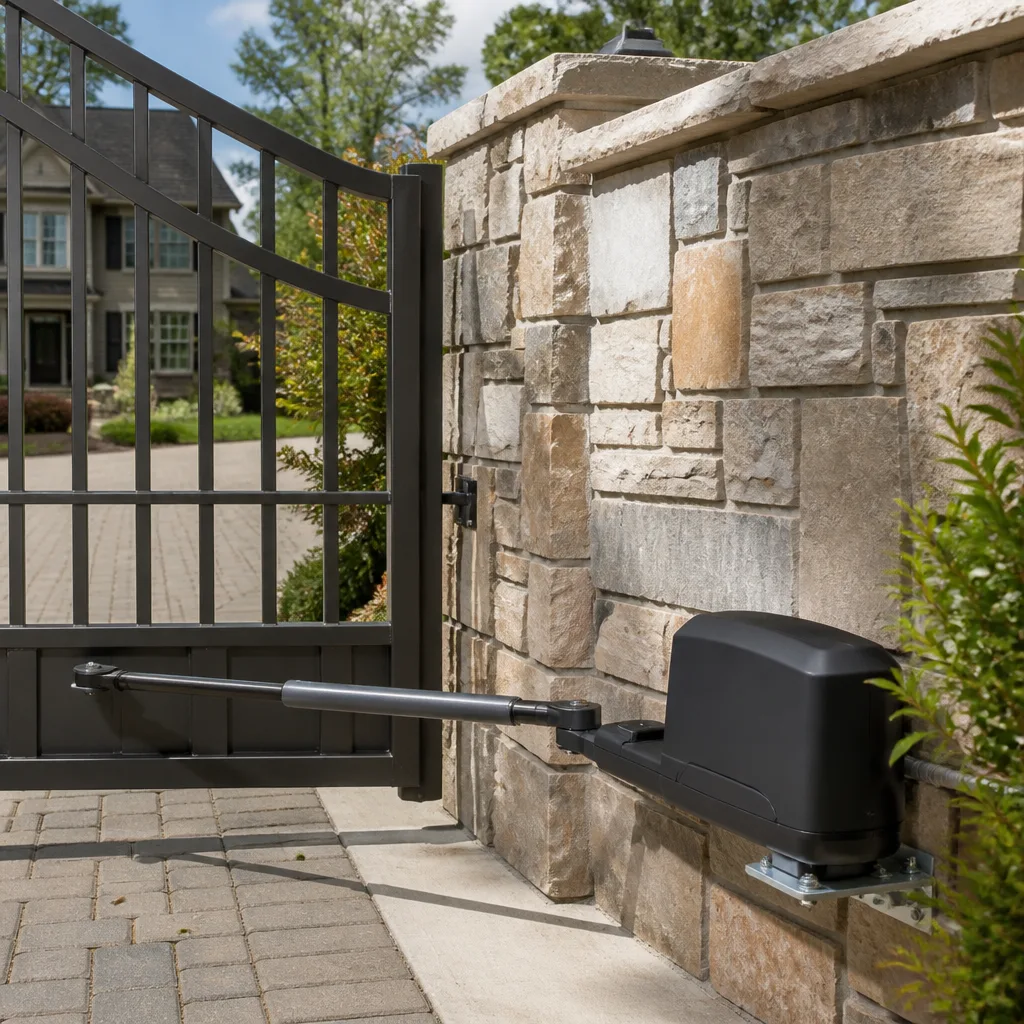
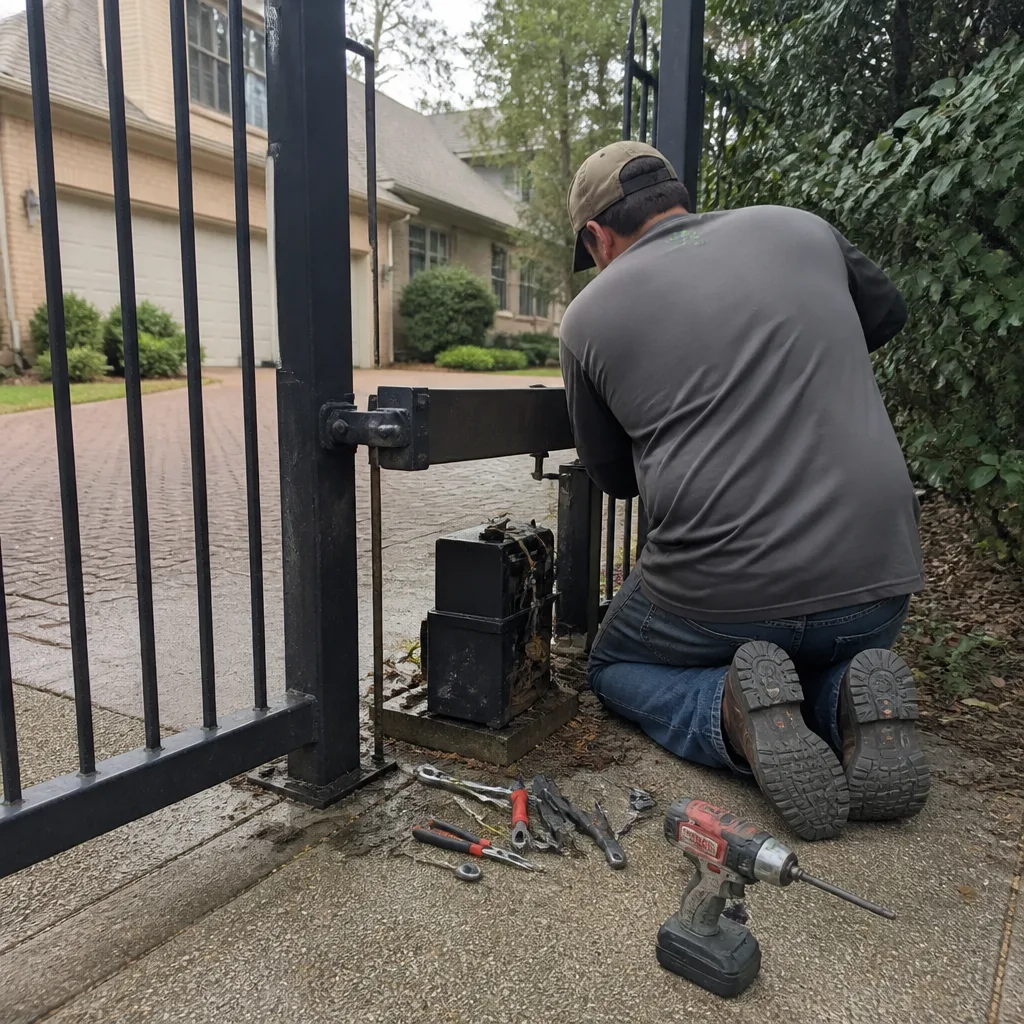 Before
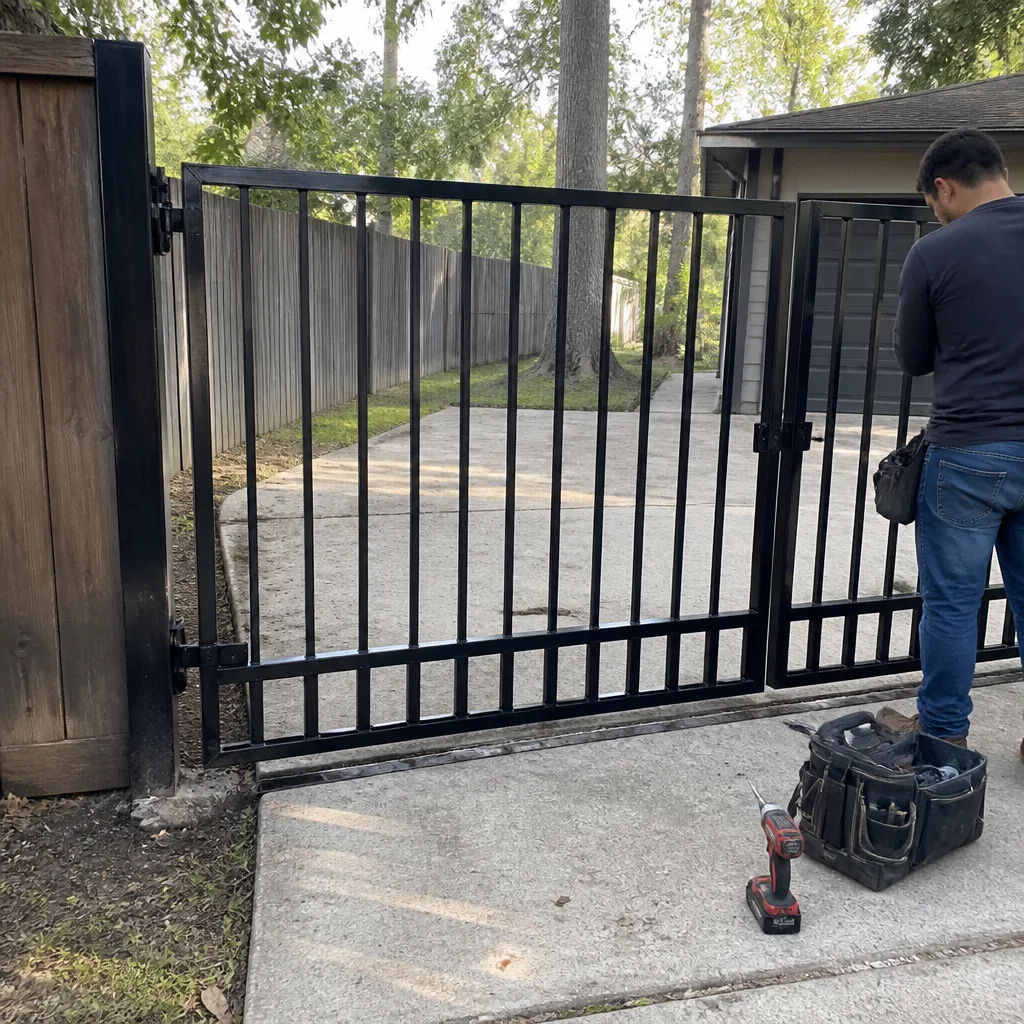 After
After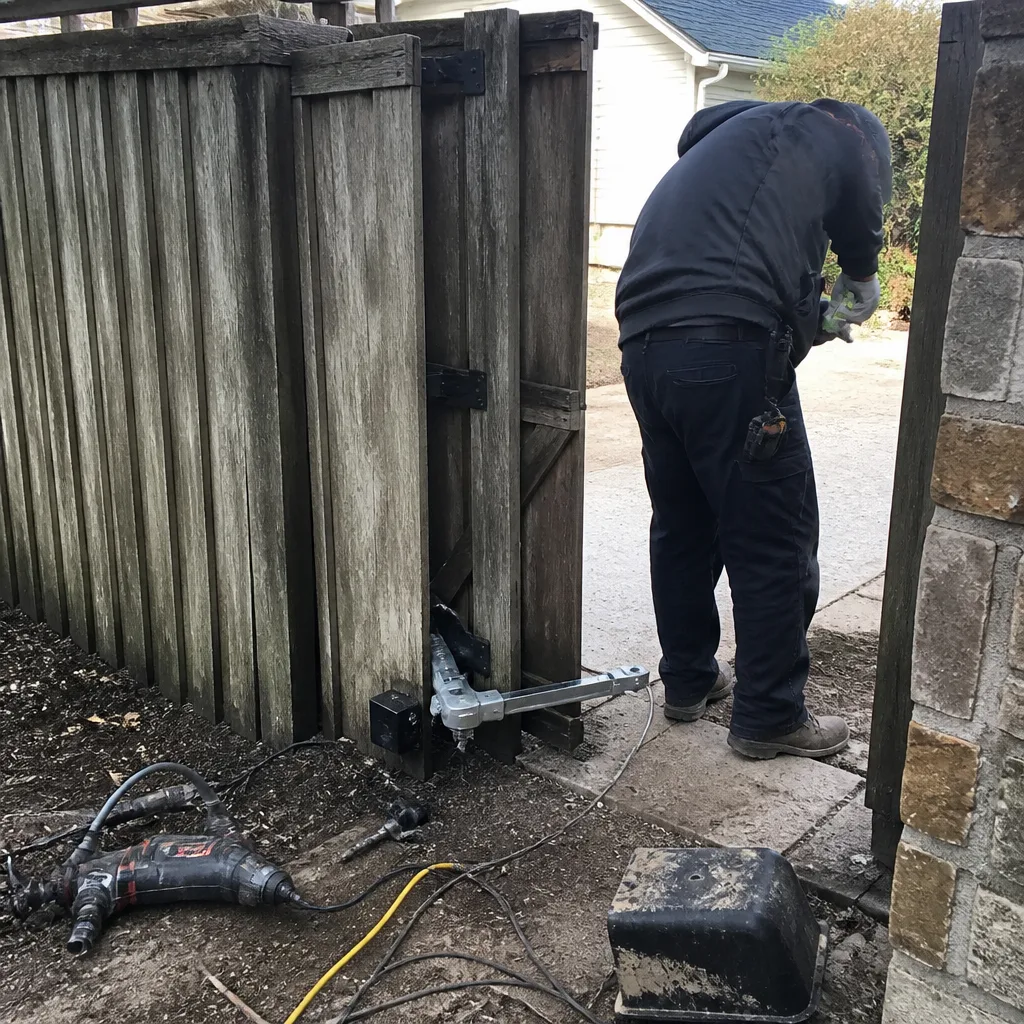 Before
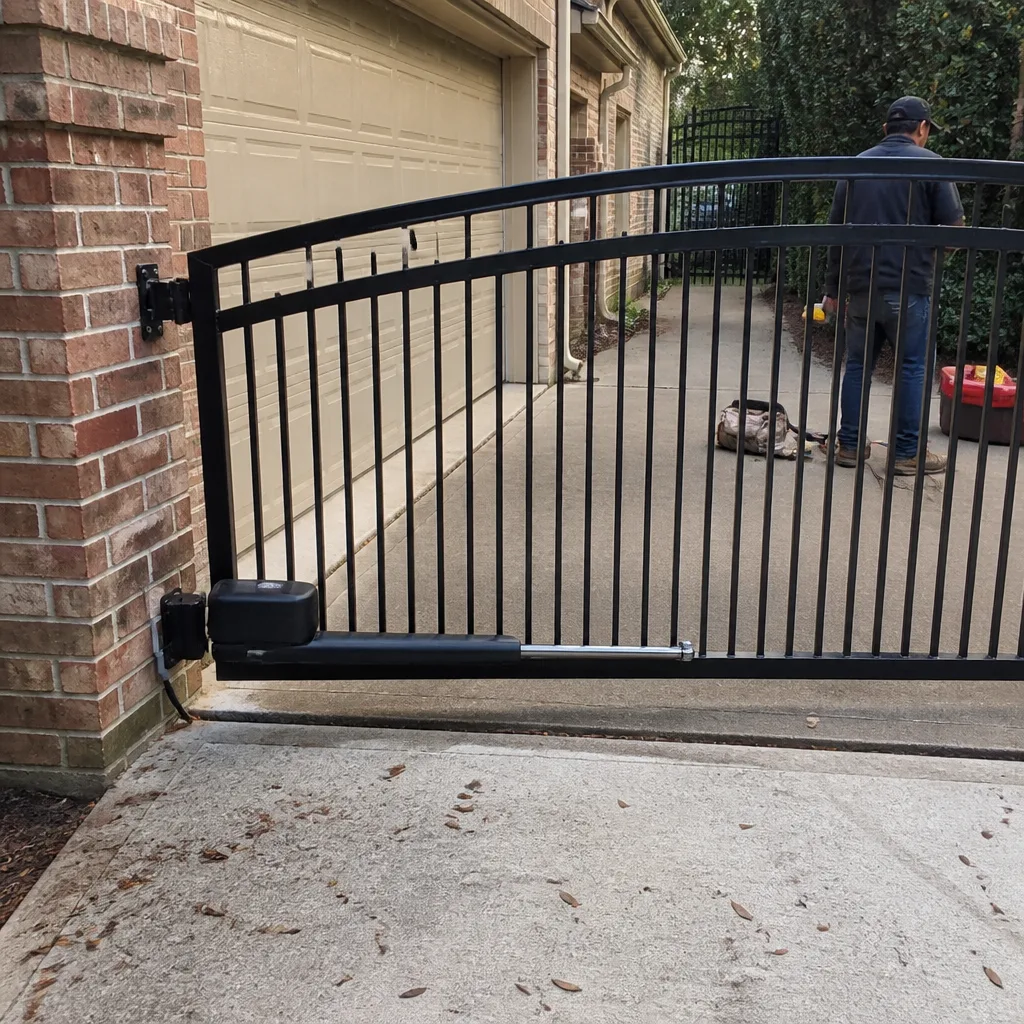 After
After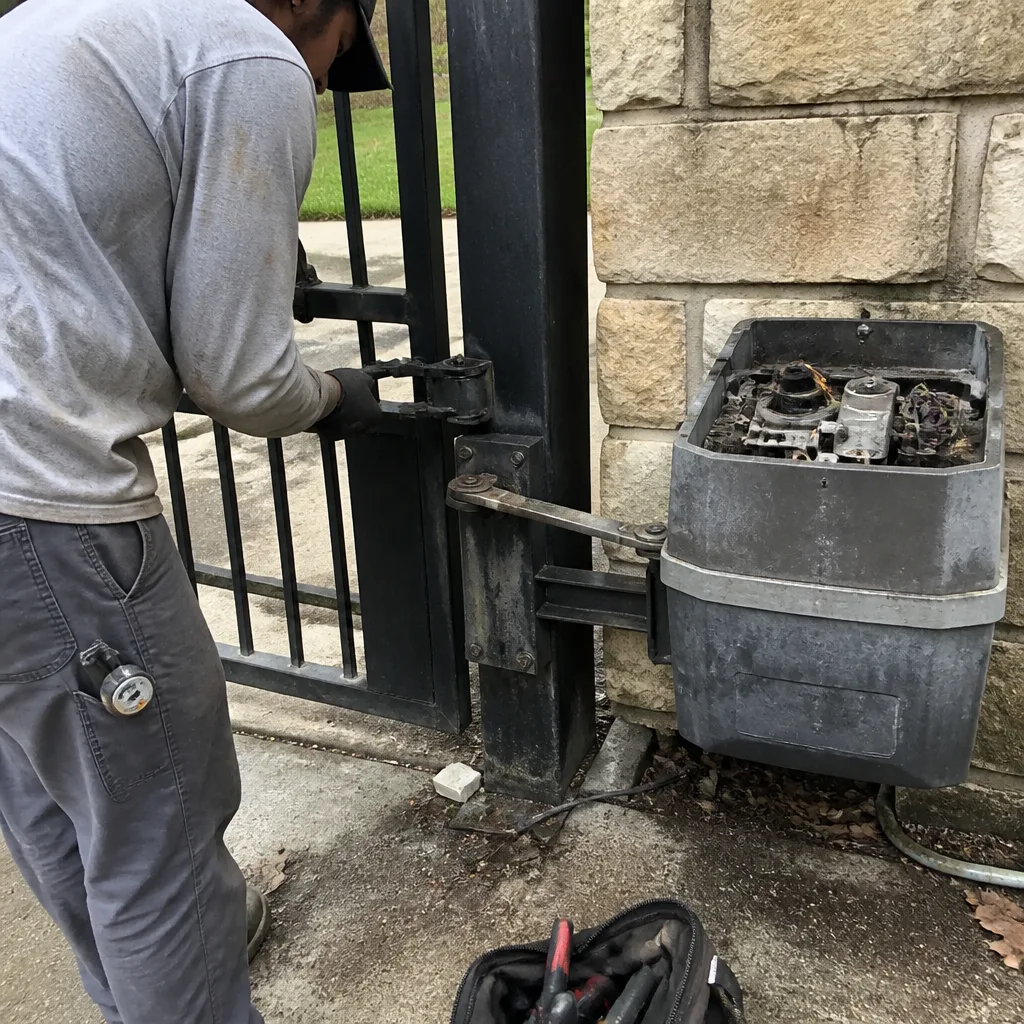 Before
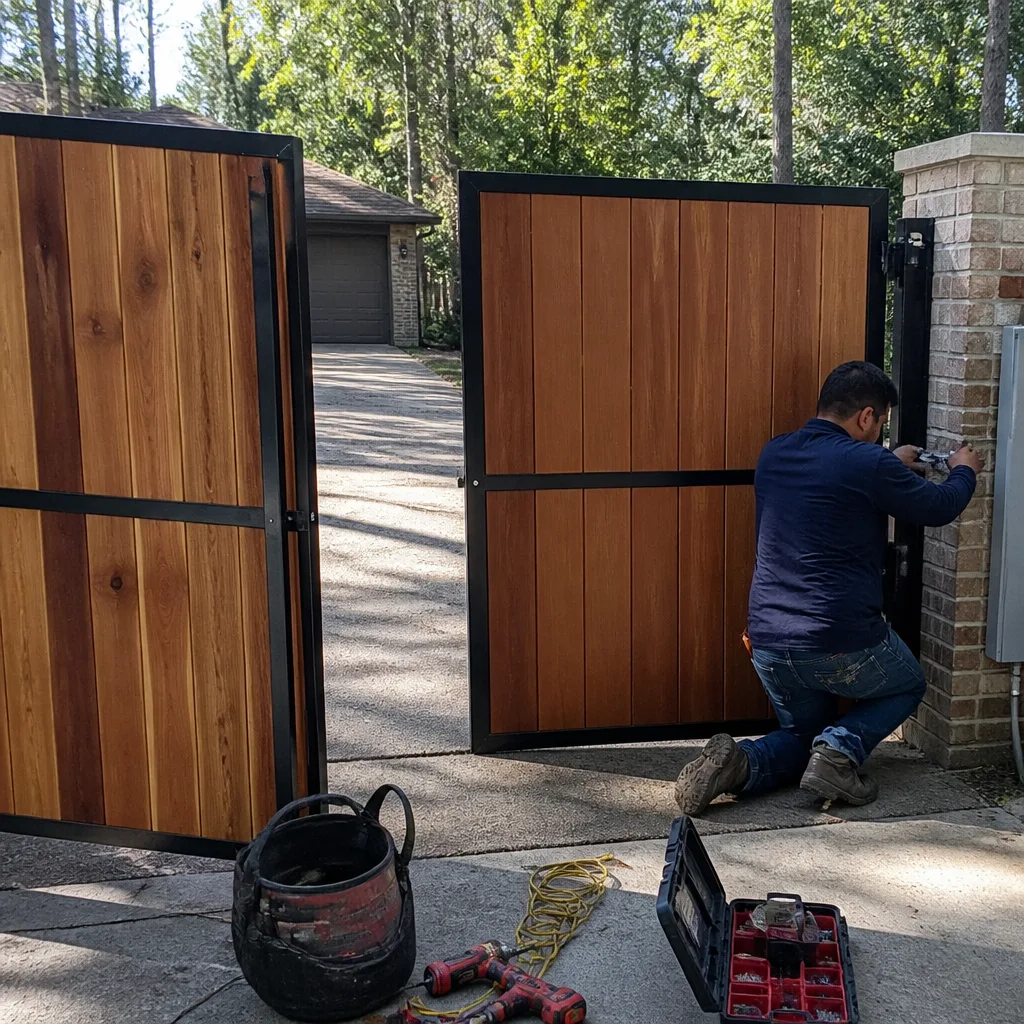 After
AfterFAAC Gate Parts & Welding in The Woodlands: What to Know First
We repair and weld FAAC gate components across The Woodlands, including hinge replacements, post resets, rail repairs, custom bracket fabrication, and roller swaps. Most FAAC parts-and-welding jobs are quoted in writing on the first visit and completed within 3 to 7 days, depending on whether the part is on the truck or ordered from FAAC’s Texas distribution channel. The price you see before we start is the price you pay when we leave.
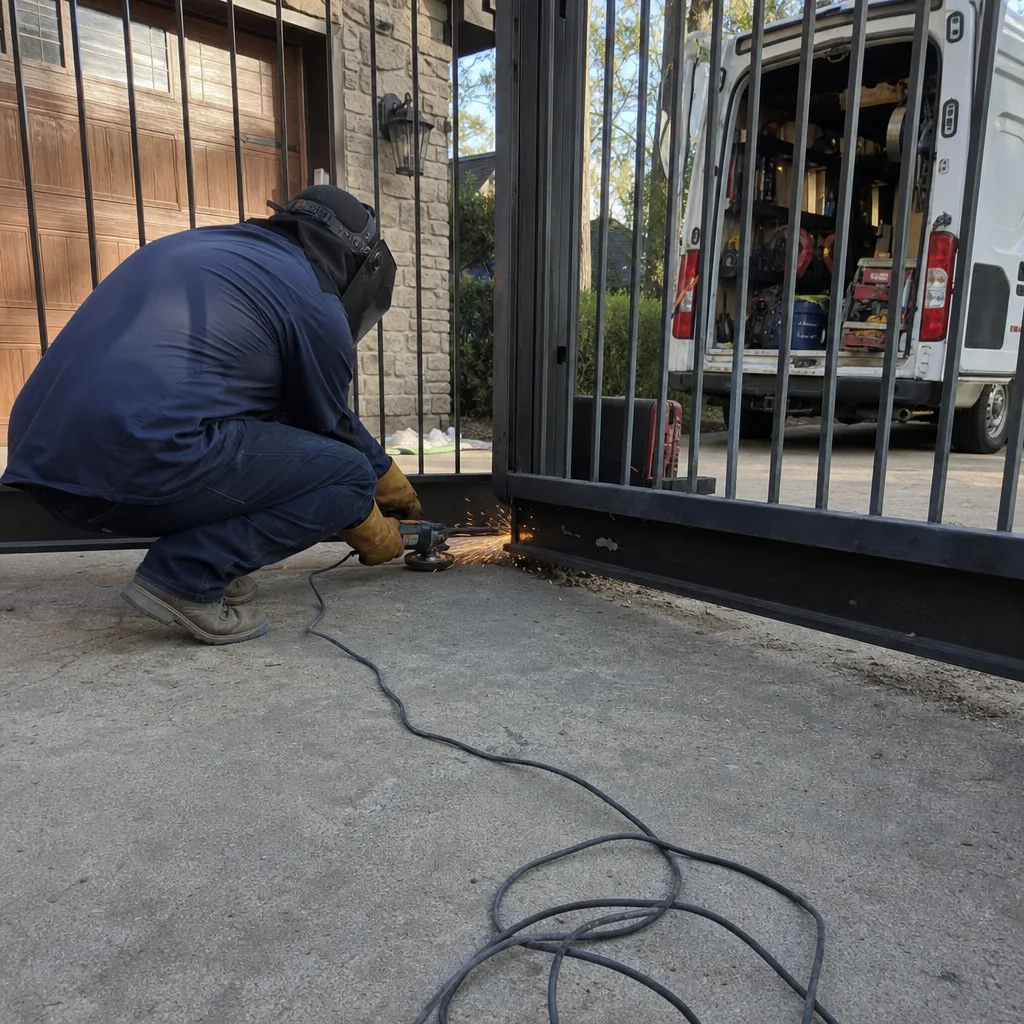
This page is for FAAC owners who need gate parts and welding done right, not a sales pitch. If your FAAC swing arm is sagging, your hinge has cracked loose from a shifting post, or a weld has failed at the gate frame, call us at (346) 296-3138 and we’ll name what we found, name what it costs to fix, and put both in writing before anyone picks up a tool.
How FAAC Products Fail - and How We Fix Them
FAAC builds solid operators. The failures we see in The Woodlands are rarely the motor itself. They’re the mechanical connections around it: hinges, brackets, posts, and welds. Here are the five FAAC-specific failure patterns we document most often:
- Worn pivot hinges on FAAC swing-gate arms (400 and 415 series). The hinge pin on the operator-to-gate bracket takes the entire thrust load every cycle. After five or six years of daily use, the pin wallows out the bracket hole, and the gate starts to droop half an inch before the arm even moves. We hear a clunk at cycle start on these calls. The fix is usually a replacement hinge kit plus a field weld to build the bracket hole back to tolerance, not a new operator.
- Gate-frame weld fatigue at the operator mounting point (C720/C721 slide operators). FAAC slide gates put torque into the frame where the chain or rack attaches. If the original gate builder stitched a light weld there instead of a full-penetration bead, it cracks at the heat-affected zone, usually on the bottom rail where nobody looks. We grind out the failed weld, re-weld with proper penetration, and add a gusset plate so the repair outlives the original.
- Post shift and caliche movement (all FAAC swing operators). The soil in The Woodlands is clay over caliche. It swells after rain and shrinks in July. Gate posts set without deep footings move, and when a post moves, the FAAC operator’s geometry goes wrong: the arm binds, the limit switch trips early, and the homeowner hears a groan from the gearbox. We reset and plumb the post, weld the hinge points square again, and photograph the new positions for your file.
- Rack-and-pinion wear on FAAC slide gates (844 and 884 series). FAAC slide operators drive a nylon pinion against a steel rack. The pinion is designed to be the sacrificial part. What surprises owners is how fast it wears once grit gets embedded in the rack teeth. If you wait until the gate jerks mid-travel, the rack is usually scored too. We check rack tooth wear with a gauge, replace the pinion, and only weld in a new rack section if the wear depth says so. More than half the time, a pinion replacement and a rack cleaning solve the jerking.
- Latch misalignment after a gate settles (Swing and slide models with electric locks). When the gate drops even three-eighths of an inch, the FAAC electric lock solenoid fights the strike plate. The lock burns out faster, and the homeowner notices the gate “double-hits” when it closes because the limit switch is chasing a position the latch no longer matches. We realign the latch plate, shim or weld the striker to match the settled gate position, and verify the release works cleanly before we leave.
One more note, specific to our experience in this market: FAAC operators rated for residential use don’t tolerate commercial cycle counts. A household that buzzes in a dozen deliveries a day, every day, runs a gate motor harder than its duty cycle allows. When we weld and rebuild the mechanical connections, we also photograph the cycle settings and leave those numbers in your job record so the next technician knows what the gate has actually been doing.
Our FAAC Gate Parts & Welding Process
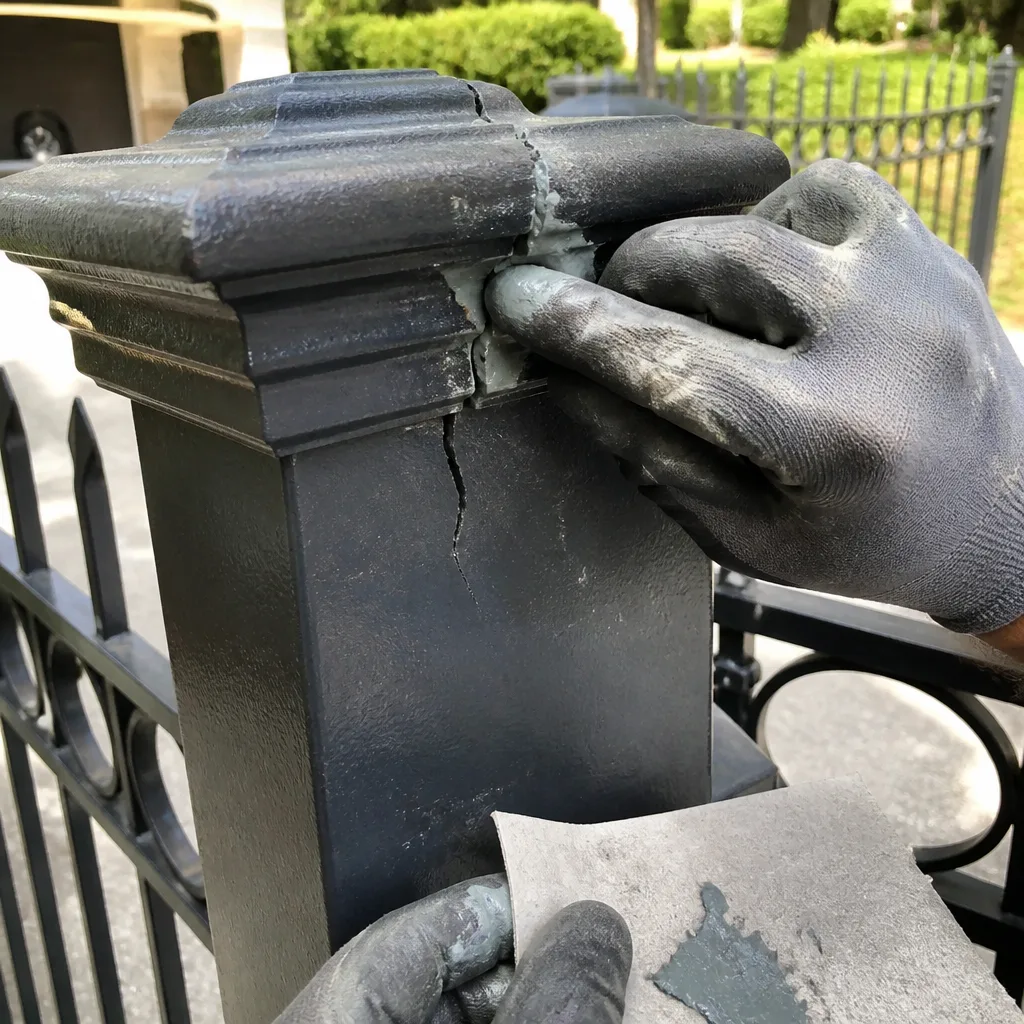
Every FAAC job follows the same sequence. No exceptions for weather, schedule, or convenience. Here’s how a typical parts-and-welding visit runs:
- 1
We listen, then look. You tell us the symptom: grinding, sagging, clunking, gate not closing square. We inspect the gate, the operator mount, the hinges, the posts, and the welds before touching anything. We photograph what we find.
- 2
We write the condition report. You get a written list of what’s wrong, what caused it, and what we recommend. The report is yours whether or not we do the work. That’s Haven Standard Clause 4: Evidence on every job.
- 3
We price the repair in writing. We name the parts we need (OEM FAAC or quality aftermarket, stated on the quote), the labor, and the welding time. That number doesn’t move unless we find something structural that wasn’t visible on the first inspection, and if that happens we stop and get your sign-off before proceeding.
- 4
We do the work. Welding is done to the repair, not around it. Hinges are replaced with new hardware or rebuilt in the shop if the gate frame needs the added strength. Parts go in clean, torqued to spec, and photographed.
- 5
We test and document. The gate runs through full cycles, including safety-edge and photo-eye checks. We photograph every adjustment and every installed part, and we hand you the photo log along with the written record of part numbers used.
- 6
We stand behind it. Every FAAC repair we complete is covered by the 365-Day Done Right Promise. If it’s not right, we make it right. No argument, no fee, no expiration in that window.
BeforeAfterWhat FAAC Gate Parts & Welding Costs in The Woodlands
We price flat. Not hourly-plus-materials, not a range we narrow after we “dig into it.” Here’s where most FAAC parts-and-welding jobs in The Woodlands land, all-in, written before we start:
| Job | Typical Cost Range | What Moves the Price |
|---|---|---|
| Hinge kit replacement (single FAAC swing gate) | $285-$490 | Gate weight, whether the hinge post needs clean-up welding |
| Bracket weld repair (operator mounting point) | $180-$360 | Access to the weld site, whether the gate must be removed |
| Post reset and re-plumb (with welding) | $450-$900 | Depth of excavation, concrete removal, whether the hinge must be repositioned |
| Slide gate rail repair (weld-in straightening) | $350-$750 | Length of rail, number of weld repairs needed |
| Custom bracket or gusset fabrication | $200-$500 | Material thickness, finish matching, powder coat or paint |
| Gate roller replacement (with welding as needed) | $250-$550 | Roller series, whether the track is damaged |
| Latch and electric lock realignment | $150-$300 | Whether bracket welding is required to hold the new position |
The estimate is free, it’s written, and it doesn’t change because we found something we didn’t expect while the gate was apart. If we find something structural we couldn’t see from the outside, we stop, we photograph it, and we explain the new number before we cut or weld. Call (346) 296-3138 and you’ll have a written price in hand before any work begins.
Why The Woodlands Homeowners Call Vance Gate Repair The Woodlands for FAAC Work
We’re not a parts counter and we’re not a one-brand shop. We service nine gate automation brands: LiftMaster, FAAC, BFT, Linear, Viking, Ghost Controls, DoorKing, Elite, and Mighty Mule. That matters on a FAAC job because we’re not trying to sell you a new operator. We’re trying to make the one you already own work properly, and we know exactly what FAAC parts are worth replacing versus rebuilding.
Since 2014, our crew has logged more than 22,000 gate repairs and installations across The Woodlands, every single one with a written price before the job started and a documented photo record when the technician left. Adrian Vance established the Haven Standard because too many homeowners were paying someone to rediscover the same problem a previous company had already diagnosed. We leave the wiring diagram. We leave the part numbers. We leave the photo log. You don’t pay twice.
Our technicians are background-checked and uniformed. You get the name and photo of the technician before they arrive. And when you call at 2 a.m. because the gate won’t close and the dog is in the yard, a live person answers. Not a voicemail. Not a callback queue. A person.
Bring us a written estimate from another company and Adrian Vance will review it with you at no cost. If we can’t beat it, we’ll tell you the job is priced fairly and you should take their offer. We’d rather win your next repair than inflate this one.
FAQs
We use OEM FAAC parts for anything electronic or mechanical that affects operator function: limit switches, motors, control boards, hinge kits, and rack and pinion sets. For welded components like brackets, gussets, and frame repairs, we fabricate in-house from steel matched to your gate’s gauge and finish. We state on every written quote whether a part is OEM FAAC or quality aftermarket, and we don’t substitute without telling you first.
Depends on the repair location and the gate material. Bracket repairs at the operator mount can usually be done in place with proper heat shielding around wiring and the operator housing. Frame crack repairs, especially on slide gates, often require lifting or pulling the gate to control the weld position and prevent distortion. We’ll tell you before we start whether the gate stays on or comes off. Call (346) 296-3138 for a written assessment.
Common FAAC parts like swing hinges, pinions, and limit-switch kits are available through FAAC’s Texas distribution network in 1 to 3 business days, and we keep the highest-wear items stocked on our trucks. Less common parts for older FAAC 400-series systems may take 5 to 10 business days. We don’t quote a completion date until the parts are in hand or verified as in-stock.
If the motor is solid and the control board is healthy, repair is almost always the better financial decision. A hinge kit, roller replacement, or bracket weld costs $180-$550. A new FAAC operator starts above $1,400 before installation. We’ll tell you plainly when an operator is not worth rebuilding: if the gearbox is showing metal in the oil, if the motor windings are shorting, or if the control board has failed twice. Call (346) 296-3138 and we’ll give you our honest recommendation with the numbers in writing.
Yes. Every FAAC repair and weld we complete is covered by our 365-Day Done Right Promise. If the repair is not right within one year, we make it right at no additional charge. Parts carry their manufacturer warranty where applicable, and our workmanship is documented with a photo record on every visit so there’s no dispute over what was done.
Written by Adrian Vance, Owner, Vance Gate Repair The Woodlands at Vance Gate Repair The Woodlands, serving The Woodlands and nearby areas.