
Last updated September 20, 2026
Free on-site gate assessment - hinges, posts, and your LiftMaster or Nice gate operator checked before anything is quoted
The assessment is free and the quote is the invoice.

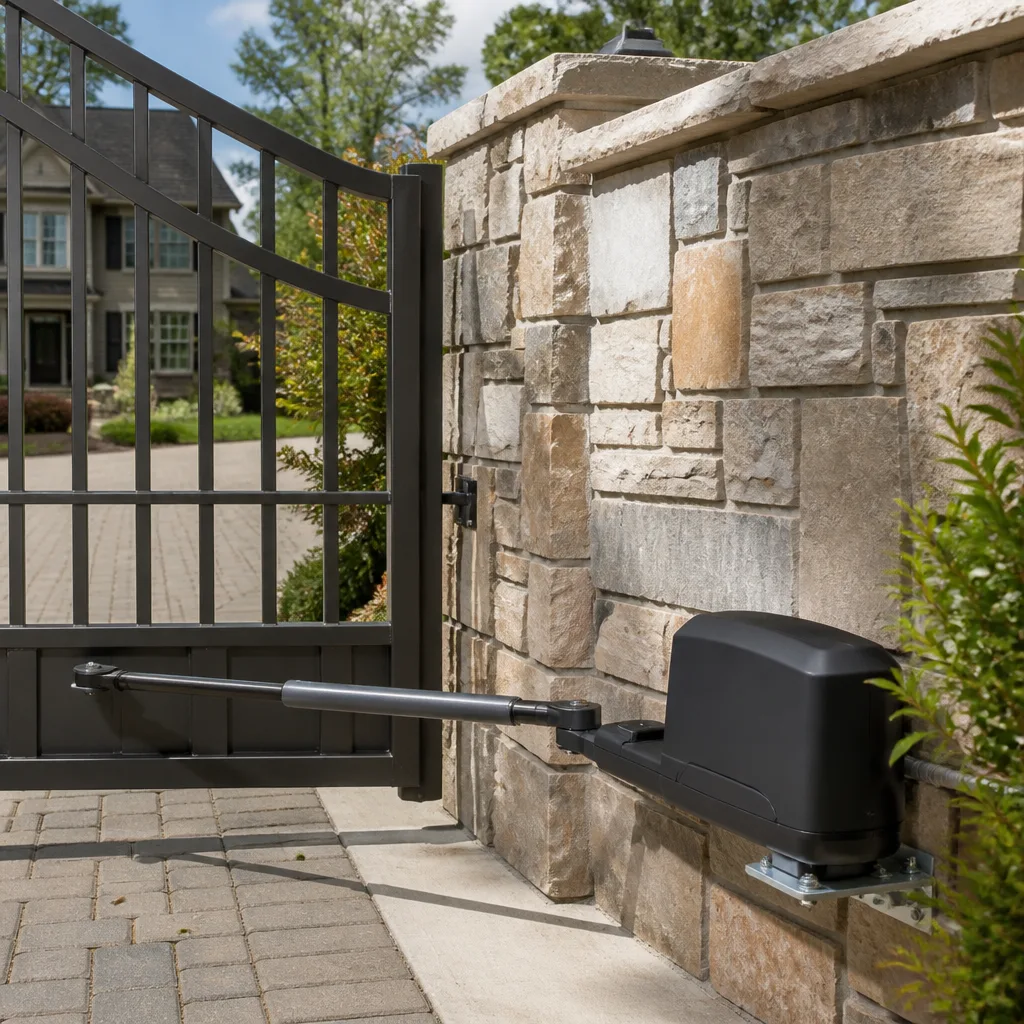
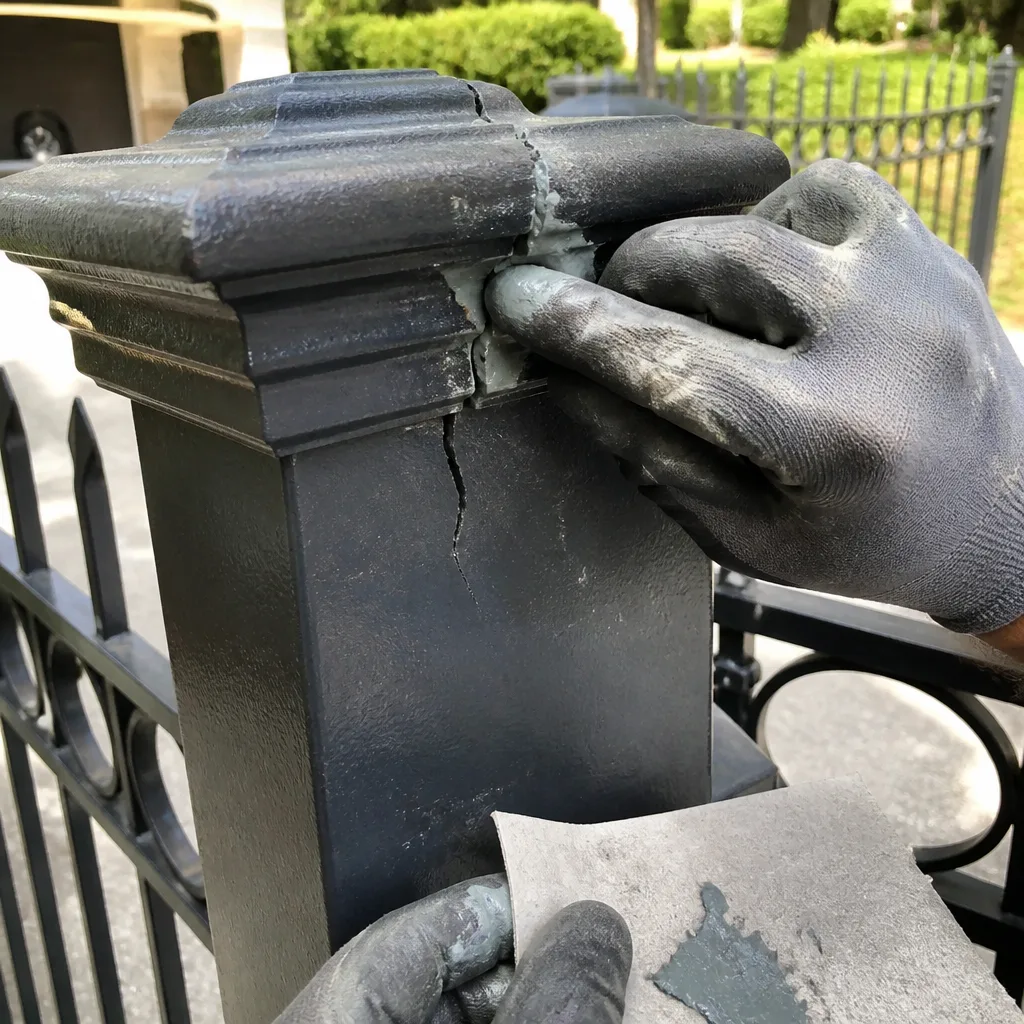
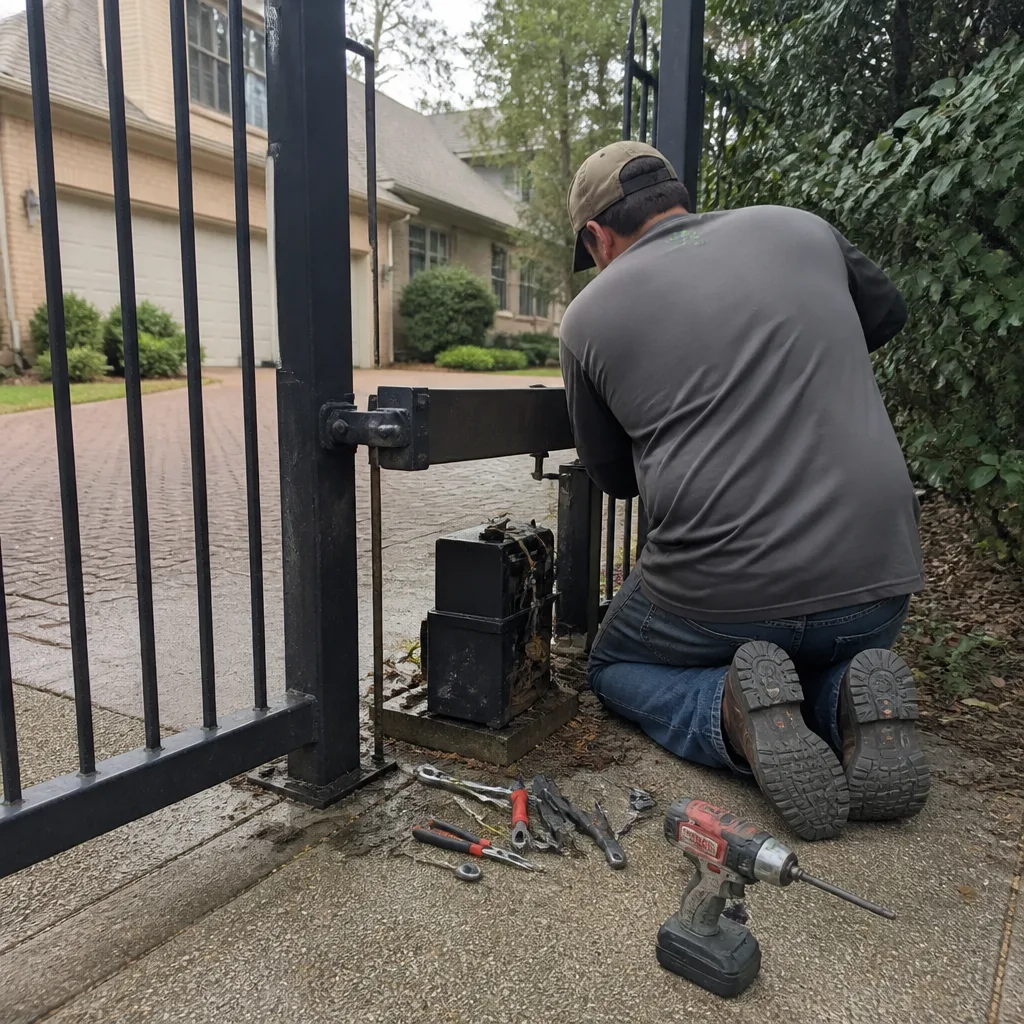 Before
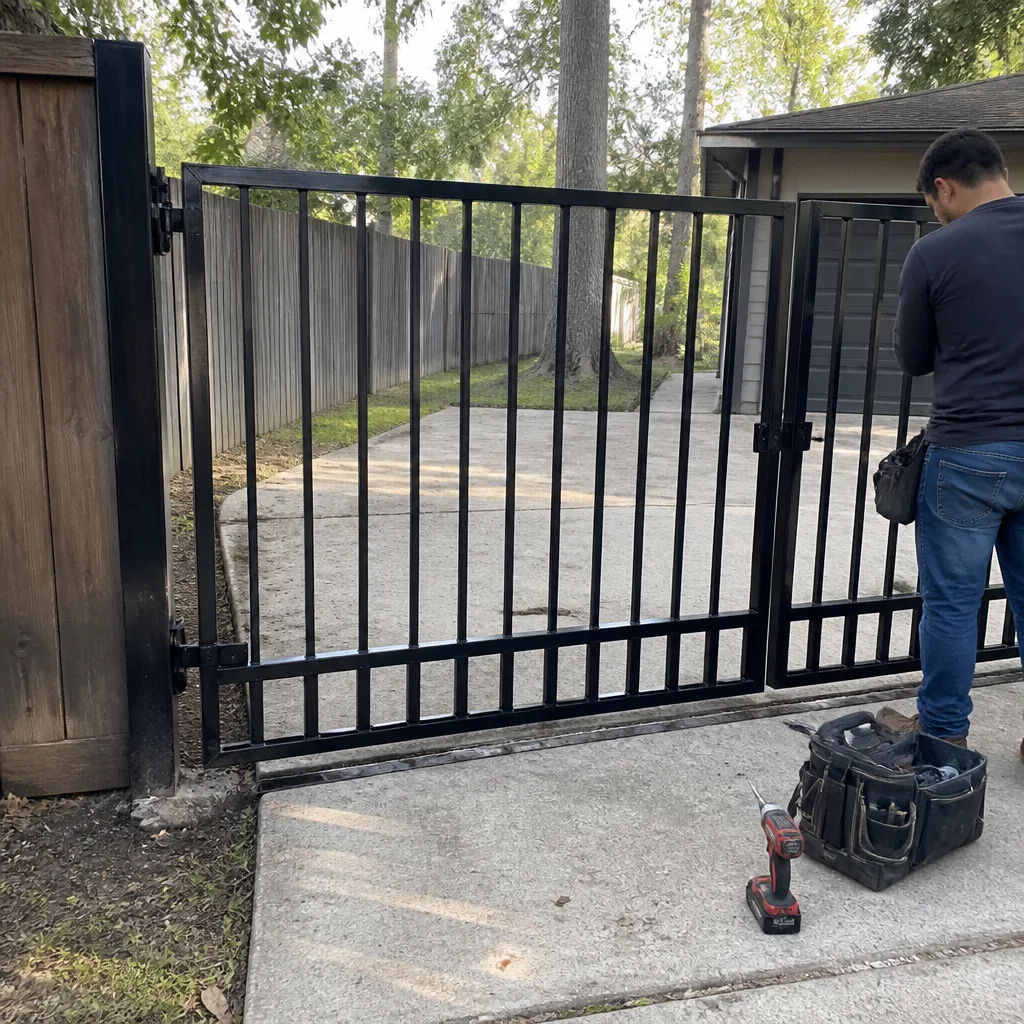 After
After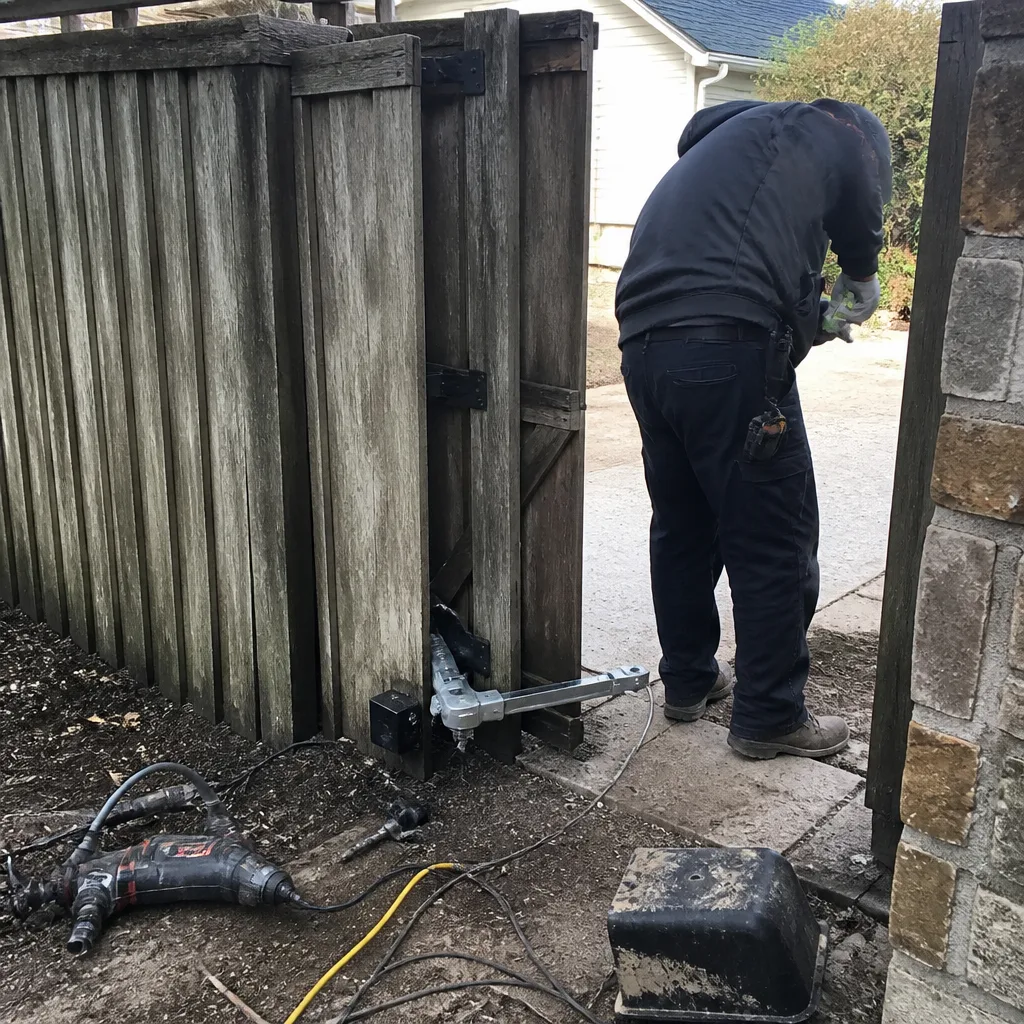 Before
 After
After Before
 After
AfterHow to Hire a Gate Repair Contractor in The Woodlands: A Step-by-Step Guide
Most homeowners in The Woodlands don’t get burned by gate contractors who are incompetent. They get burned by contractors who are vague. The phrase “I’ll know more once I look at it” sounds reasonable until you realize it’s a contractual blank check. The technician arrives, opens the control box, and suddenly the repair costs twice what you expected, and you have no written record of what was actually wrong. This guide is not a generic tips list. It’s a hiring protocol: the exact questions to ask, the specific language to demand in writing, and the verification steps that filter out most risk before anyone sets foot on your driveway. You’ll learn how to read a quote for hidden scope gaps, how to verify brand certification claims in under a minute, and what documentation a qualified technician should leave behind without being asked.
Quick Answer
To hire a Gate Repair services contractor in The Woodlands, demand a written scope of work with itemized parts and model numbers before any work begins, verify the company’s experience with your specific automation brand (LiftMaster, FAAC, BFT, Linear, Viking, Ghost Controls, DoorKing, Elite, or Mighty Mule), and confirm they leave a documented record of what was found and what was installed. Skip any contractor who will only give a verbal estimate. A written price handed to you before work starts is the single best filter for competence and honesty.
Table of Contents
- The Three Questions That Separate Qualified Technicians from Guessing
- What a Written Scope of Work Must Contain to Be Enforceable
- How to Verify a Brand Certification Claim in 60 Seconds
- Red Flags Specific to Gate Repair Advertising in The Woodlands
- How to Read a Quote for Hidden Scope Gaps
- The Complete Hiring Protocol: Six Steps in Order
- Why Documentation Matters More Than the Repair Itself
- Common Mistakes to Avoid
- When to Call a Professional
- Frequently Asked Questions
- The Bottom Line
BeforeAfterThe Three Questions That Separate Qualified Technicians from Guessing
Before you hire anyone, call them. Not email, not a web form. Call. The way a company answers the phone tells you more in 90 seconds than their website tells you in an hour. And the three questions below reveal more about technical competence than any review ever will.
Question 1: “What documentation do you leave behind after a repair?”
A qualified gate technician keeps records the way a commercial access-control contractor does: photographs of the wiring before and after, the part number installed, the limit-switch readings, and a written summary of what was adjusted. If the person on the phone hesitates, or says something like “we’ll explain everything when we’re done,” that’s your signal. Verbal explanations evaporate. In The Woodlands, where humidity and heat accelerate wear on gate motors and control boards, a documented record means the next technician doesn’t have to rediscover what the last one already found. Commercial-grade documentation on a residential gate is not standard in this market. It should be.
Question 2: “Which automation brands do your technicians work on, and can you name the last three motor replacements you did by brand?”
This question does two things. First, it reveals whether the company actually services existing equipment or just replaces everything with whatever brand they happen to sell. Second, it forces specificity. A technician who has genuinely worked on a BFT slide gate operator or a Linear swing arm can tell you exactly what went wrong with it. Someone who’s guessing will say “all brands” without naming one. Most gate automation brands, including FAAC and Viking, have different limit-switch configurations and control-board logic. A technician who treats them as interchangeable is a technician who will misdiagnose your problem.
Question 3: “Will the price be in writing before you start, and what triggers a change order?”
This is the question that separates a contractor from a gambler. In gate repair, the difference between a $250 limit-switch adjustment and a $1,400 motor replacement is sometimes not visible until the cover comes off. A technician who gives a verbal estimate and then discovers the motor is shot now controls the entire negotiation, because the gate is already disassembled in your driveway. The answer you want is some version of: “The price is handed to you in writing before we touch anything, and if we find something unexpected, you sign a change order before we do that additional work, at a price you approve.” Under Haven Standard Clause 1, a written price before any work starts is the entire basis of the agreement. No written price, no work. It’s that simple.
What a Written Scope of Work Must Contain to Be Enforceable
A written scope of work is not a fancy invoice. It’s a contract. And like any contract, its enforceability depends on specificity. “Repair gate motor, $800” is not a scope. It’s a handshake wearing a costume. Here’s what a real written scope contains, line by line.
Itemized parts with model numbers. If the quote says “replacement motor,” that’s a red flag. You want the exact model number: “LiftMaster LA400 replacement arm, part number K75-37260.” Why? Because model numbers are checkable. You can Google them. You can verify the price. You can confirm it’s compatible with your existing system. “Replacement motor” is a blank check. In our experience in The Woodlands, a significant portion of “motor replacement” quotes are actually failed capacitor or limit-switch jobs that a competent diagnostic would have caught for a fraction of the price.
Labor time estimate. Not a flat “labor: $300.” You want “labor: 2 hours at $150/hour, including removal of old operator and installation of new one, wiring reconnection, and limit-switch calibration.” This tells you what you’re paying for and prevents the “oh, that took longer than expected” surcharge at the end. If the technician says the job took longer than estimated and wants more money, that’s a change order conversation, not a surprise invoice. It’s agreed before the clock keeps running.
What triggers a change order. A written scope should state, in plain language, what happens if the technician finds something unexpected. The standard in this industry is: additional work requires a new written approval before it starts, at a price you see and sign for first. If the scope doesn’t mention change orders, assume the contractor believes the original quote is flexible. It is not. Not for you, not in your driveway.
What’s included and what’s excluded. Does the quote include post-repair testing? Limit-switch calibration? Photo-eye alignment? Lubrication of the gate hinges and track? Removal of the old part? A written scope that lists inclusions and exclusions is evidence the contractor has done this before. A one-line quote suggests they haven’t thought past the moment you say yes.
How to Verify a Brand Certification Claim in 60 Seconds
Gate repair advertising in The Woodlands is full of phrases like “certified technician” and “factory-authorized.” Many of these claims are real. Many are not. The good news: verifying a certification claim is faster than reading a review.
Most major gate automation manufacturers maintain public dealer locator or technician lookup tools. LiftMaster has a dealer locator on their site. FAAC lists authorized distributors by region. BFT and Linear do the same. These tools are free, they take about a minute to use, and they tell you whether the company claiming “factory-certified” status is actually in the manufacturer’s database. If the company isn’t there, the claim is either outdated or invented.
Here’s the more nuanced part: a company that services nine major gate-automation brands – LiftMaster, FAAC, BFT, Linear, Viking, Ghost Controls, DoorKing, Elite, and Mighty Mule – is not necessarily “certified” by all nine. Certification is a manufacturer-specific credential. What matters more is demonstrable experience with the specific motor on your property. A technician who has replaced 40 LiftMaster LA400 arms is more valuable to you than one who took a manufacturer webinar three years ago. Ask for the brand name, ask how many of that specific model they’ve worked on, and ask if they have photos from previous jobs. A technician who can show you photos of a Viking operator they repaired last month is telling you something true. A technician who says “we’re certified for everything” is telling you something false.
One more thing: if the contractor’s quote steers you toward replacing your motor when the problem is a $60 capacitor or a misaligned photo-eye, that’s not a certification issue. That’s an honesty issue. Brand certification means the technician knows the equipment well enough to diagnose it accurately. If the recommendation is always “replace it,” the certification isn’t doing you any good.
Red Flags Specific to Gate Repair Advertising in The Woodlands
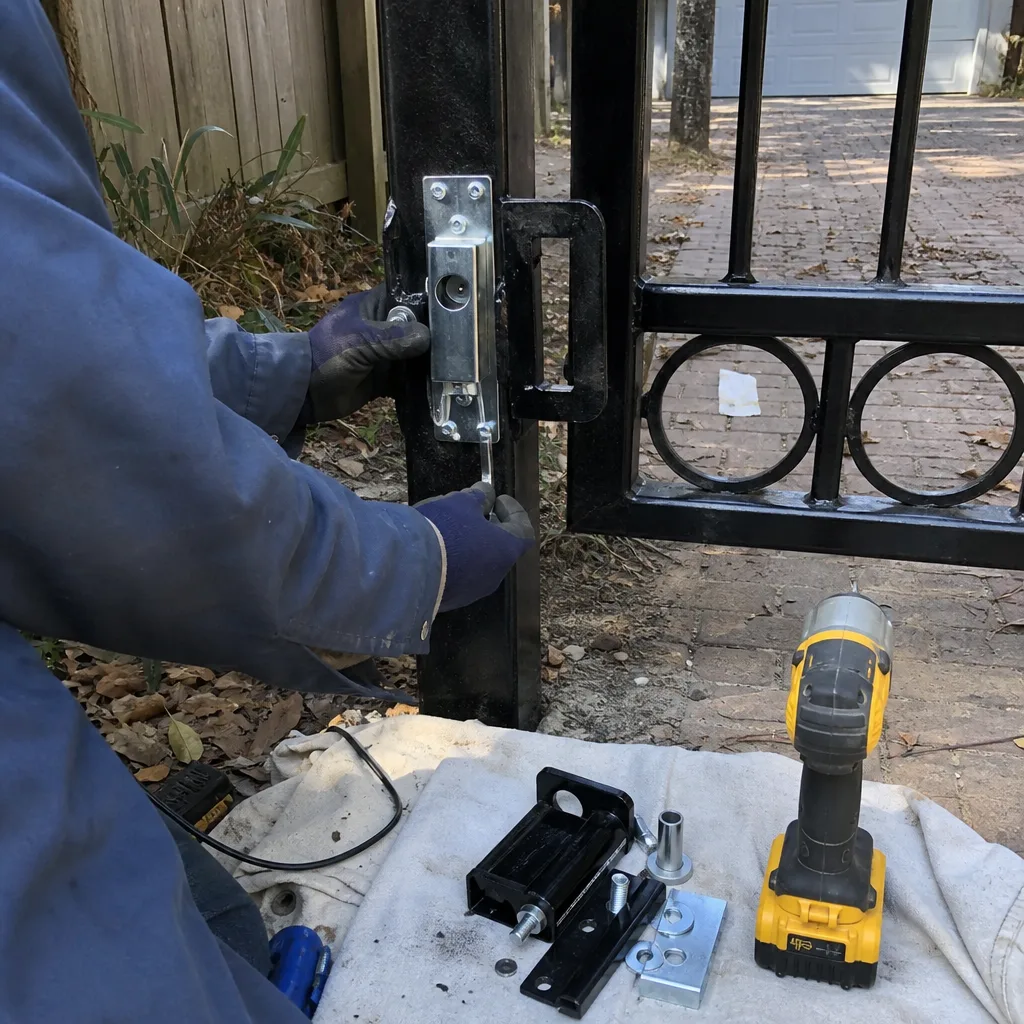
Every market has its own patterns. The Woodlands has a few worth naming specifically, because we’ve seen them repeatedly across the villages and gated communities in the area.
Unlicensed electricians advertising “gate automation.” Gate automation involves low-voltage wiring, control boards, photo-eyes, and sometimes high-voltage power runs from the house or a nearby panel. An electrician who doesn’t work on gates specifically can wire a motor, but they may not understand limit-switch logic, safety-edge circuits, or the force adjustment settings that prevent a gate from closing on a car or a child. In Texas, gate contractors are not all required to hold an electrical license for low-voltage work, which means the barrier to calling yourself a “gate automation specialist” is essentially zero. Ask directly: “Are you licensed for low-voltage gate work, and what training do your technicians have on automation systems?” A licensed electrician is fine if they also work on gates daily. An electrician who’s “done a few gates” is not.
Handymen quoting operator replacements without diagnosing the actual fault. This is the most common pattern in The Woodlands, and it’s expensive. The gate stops moving. The homeowner calls someone from a neighborhood app. The person shows up, looks at the motor, and says “you need a new operator, about $1,500.” They never check the capacitor. They never test the limit switch. They never look at the photo-eye alignment. They don’t because they can’t – they don’t know how. Replacing a motor is a parts swap. Diagnosing a fault is a skill. The written-scope requirement filters these people out instantly, because a handyman who doesn’t know how to diagnose a gate can’t itemize parts and labor with confidence. They’ll write “new motor, $1,500” and hope you don’t ask questions.
The “we service all brands” line without a single brand name mentioned. Every gate company in The Woodlands claims to service all brands. Ask them to name five. If they say “you know, all the major ones,” that’s the end of the conversation. A company that works on BFT, Linear, FAAC, and Viking systems can tell you the difference between them, because the difference is real. The control board logic is different, the wiring color codes are different, the limit-switch mechanisms are different. “All brands” without specifics means “whichever brand we happen to sell.”
How to Read a Quote for Hidden Scope Gaps
You’ve asked the right questions. You’ve verified the brand claim. You’ve got a written quote in your hand. Now you need to read it carefully, because this is where contractors hide the gaps that turn a $600 repair into a $1,200 surprise.
Check whether post-repair testing is listed. After a gate motor is replaced or a control board is swapped, the technician must run the gate through its full cycle multiple times to verify the limit switches are set correctly, the auto-close timing works, the photo-eye stops the gate mid-cycle, and the safety edge reverses the gate if it contacts an object. This testing takes 20 to 30 minutes and should be a line item on the quote. If it’s not there, you’re going to get a call in two weeks saying the gate is acting up and “we’ll need to come back out.” That call will not be free.
Check whether limit-switch calibration is listed or implied. The limit switches tell the gate motor where the open and closed positions are. If they’re not calibrated after a motor replacement, the gate will either stop short, slam into the end stop, or reverse for no reason. Calibration requires a specific process and sometimes a multimeter reading. “We’ll get it working” is not calibration. The quote should say something like “limit-switch calibration and travel adjustment included.” If it doesn’t, ask.
Check whether photo-eye alignment is mentioned. The photo-eye is the infrared beam that sits on either side of the gate opening. If it’s misaligned by even two inches, the gate will refuse to close, or it will reverse every time. Photo-eye alignment is a 10-minute job, and it’s often the actual problem when a gate won’t close. If your quote says “motor replacement” but doesn’t mention photo-eye testing, the technician may be replacing a motor that was never the problem. In The Woodlands, where afternoon heat can cause slight shifts in gate post alignment, photo-eye misalignment is one of the most common faults we diagnose.
Look for the part number. We said this in the scope section, but it bears repeating here because it’s the single most telling detail on any gate repair quote. A quote with a specific part number like “DoorKing 8060-081 circuit board” is evidence of a diagnosis. A quote that says “control board” without a number is evidence of a guess. Guessers cost more in the long run, because they install the wrong part, the gate still doesn’t work, and now you’re paying twice to rediscover the same problem.
The Complete Hiring Protocol: Six Steps in Order
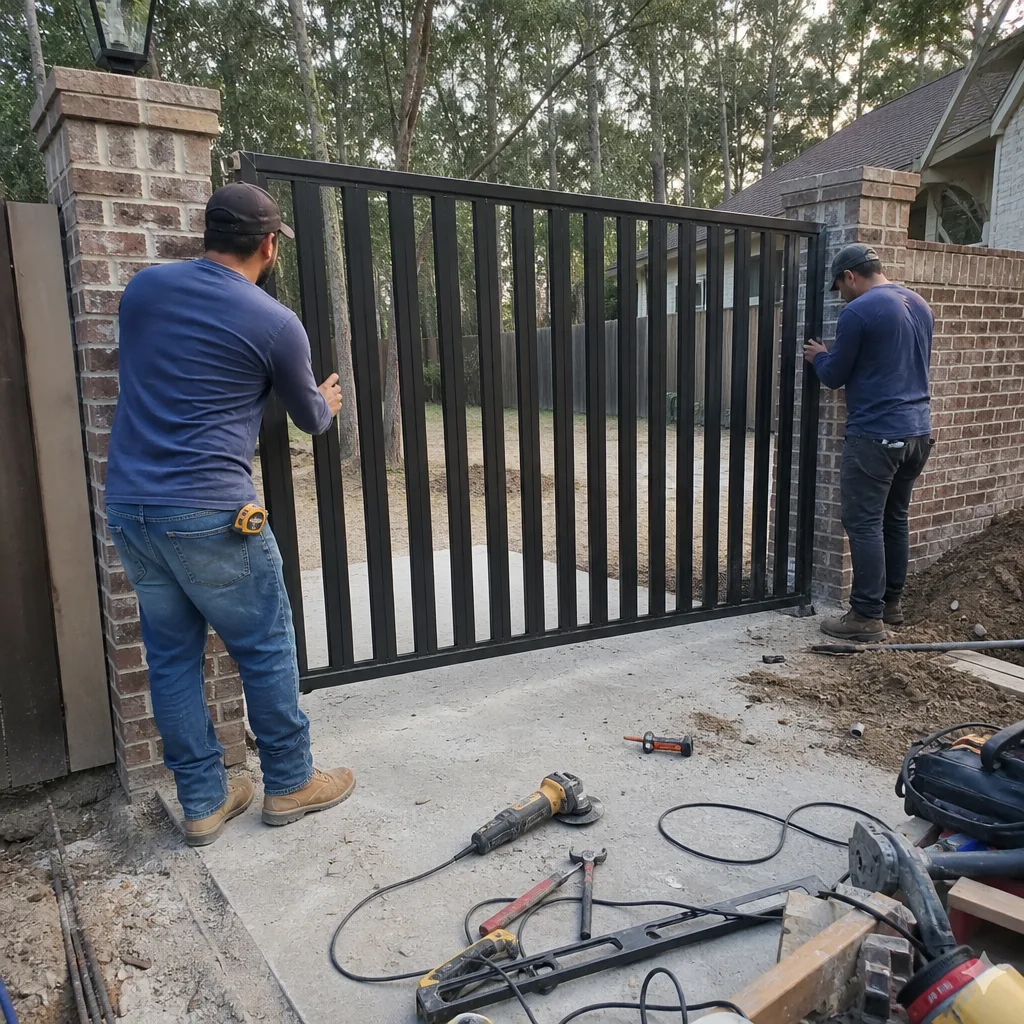
Here is the entire process, condensed into a sequence you can follow from first phone call to final walkthrough. Do these in order. Skip none.
- Call the company and ask the three questions from the first section. Documentation, brand experience, written pricing. If any answer is vague, move on. There are enough gate contractors serving The Woodlands that you don’t need to settle for an ambiguous one.
- Verify the brand claim. Go to the manufacturer’s website, find the dealer locator, and check whether the company is listed. This takes 60 seconds. Do it before you schedule anything.
- Ask for a written scope of work before the technician visits. Some companies will need to see the gate first, and that’s fine. But the written scope should arrive before any work starts, not after. If the technician wants to start working and “get you the paperwork later,” stop them.
- Read the entire quote looking for the gaps described above. Post-repair testing. Limit-switch calibration. Photo-eye alignment. Part numbers. Change order language. If the quote is one line long, that’s not a scope, it’s a suggestion.
- Confirm what documentation you’ll receive when the job is done. Photos of the work, part numbers installed, readings taken, work summary. If the answer is “I’ll tell you what I did,” that’s not enough. In an era where every phone has a camera, there’s no excuse for a gate repair with no visual record.
- Check the warranty terms before you sign. A 365-day promise on all completed work is the standard you want. If the company offers 30 days or “we’ll come back if there’s a problem,” ask yourself why they don’t trust their own work longer than a month.
These six steps take less time than reading this guide. They will save you more money than any coupon, deal, or “seasonal special” a gate company in The Woodlands could ever offer; for additional help, see our Seasonal Gate Repair Care for The Woodlands: Year-Round Homeowner’s Guide.
Why Documentation Matters More Than the Repair Itself
Here’s a statement that sounds backwards until you’ve lived through a bad gate repair: the documentation matters more than the repair. Because a repair is a moment. Documentation is the evidence of what happened in that moment, and it’s the thing that saves you money six months later when something else goes wrong.
Imagine this. Your gate motor is replaced in July. The technician hands you a quote, does the work, and leaves. Six months later, the gate stops responding again. You call the same company. The technician arrives, opens the control box, and says “whoever worked on this last didn’t wire the capacitor correctly.” Now you’re paying for another repair, and you can’t prove who made the mistake, because you have no record of what was done the first time.
Now imagine the same scenario with documentation. The first technician left you a photo log showing the wiring before and after, a written note with the part number installed and the limit-switch readings, and a summary of the work. When the second technician opens the box, they see exactly what was there. The diagnosis is faster, the repair is more accurate, and if the first company made a mistake, you have the evidence. Under Haven Standard Clause 4, every visit includes a documented photo record at no additional charge. This isn’t a premium service. It’s the minimum standard for any gate work in The Woodlands, where gate failures tend to compound – a misaligned photo-eye strains the motor, a strained motor burns out the capacitor, and before long you’re looking at a $1,200 bill for what started as a $150 fix.
When you hire a gate contractor, you’re not just buying a repair. You’re buying the record of that repair. The record is what protects you when the next thing fails. Any company that doesn’t document its work is asking you to trust them twice: once for the repair, and once for the aftermath. Trust is fine. Evidence is better.
Common Mistakes to Avoid
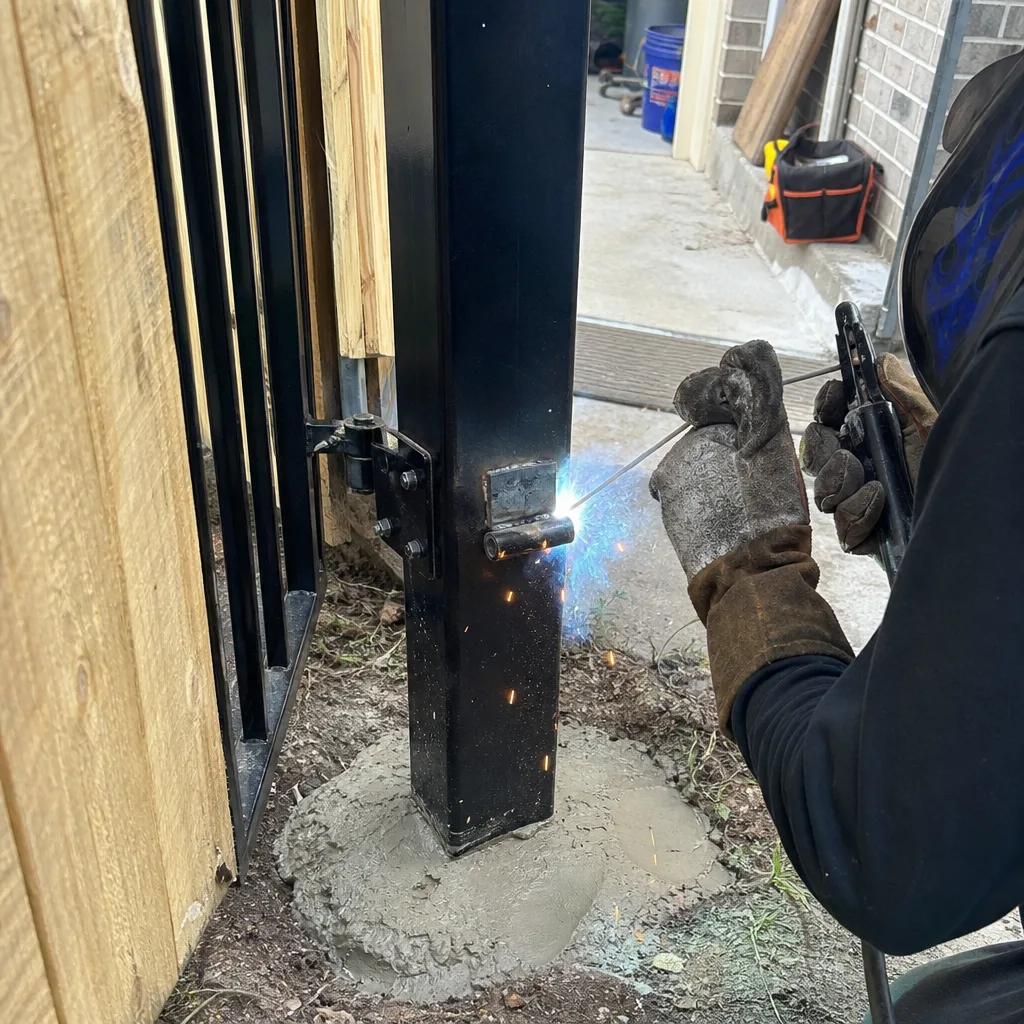
- Accepting a verbal estimate. The verbal estimate is the most expensive thing in residential gate repair. It converts a $300 diagnostic into a $1,400 “discovery” the moment the technician opens the box. Demand writing.
- Hiring a general handyman for automation work. Gate automation involves limit switches, control boards, safety circuits, and photo-eyes. A handyman who can fix a fence panel cannot diagnose a FAAC control board, and shouldn’t try.
- Choosing the cheapest quote without reading it. The cheapest gate quote is often the one with the most scope gaps: no testing, no calibration, no parts list. You will pay the difference on the second visit.
- Replacing a motor without a diagnosis. In The Woodlands, we regularly see motors replaced when the actual fault was a $40 capacitor or a misaligned photo-eye. A written scope with part numbers prevents this. If the quote doesn’t name the failed component, there was no diagnosis.
- Not asking about documentation before the work starts. By the time the technician is packing up, it’s too late to ask for a photo log. Ask during the phone call, before you schedule anything.
- Believing “factory-certified” without checking. Certifications are public. Manufacturer dealer locators are free. Unverified certification claims are common in The Woodlands gate repair advertising, and they usually signal something else that isn’t true.
- Skipping the change-order clause in the written scope. If the scope doesn’t state that additional work requires written approval at a price you see first, the original number isn’t binding. It’s an opening bid.
When to Call a Professional
Some gate problems are DIY-adjacent: lubricating hinges, cleaning the track, trimming vegetation away from the photo-eye. Those are maintenance. The moment the problem involves a control board, a motor, a limit switch, or anything wired to a power source, call a professional. Gate motors carry capacitors that can hold a charge even after the power is off. Control boards are sensitive to static and incorrect wiring. A gate that reverses unpredictably is a safety hazard, not a nuisance. If your gate makes a grinding noise, won’t respond to the remote, stops halfway through its cycle, or reverses without reason, that’s a diagnostic call. Gate repair in The Woodlands is not a handyman task. In The Woodlands, where gate failures tend to compound quickly in the heat and humidity of a Texas summer, a small fault left alone becomes an expensive one within a season. Vance Gate Repair The Woodlands offers free estimates in The Woodlands, and a live person answers the phone 24 hours a day. Call (346) 296-3138 for a written price before any work begins.
Frequently Asked Questions
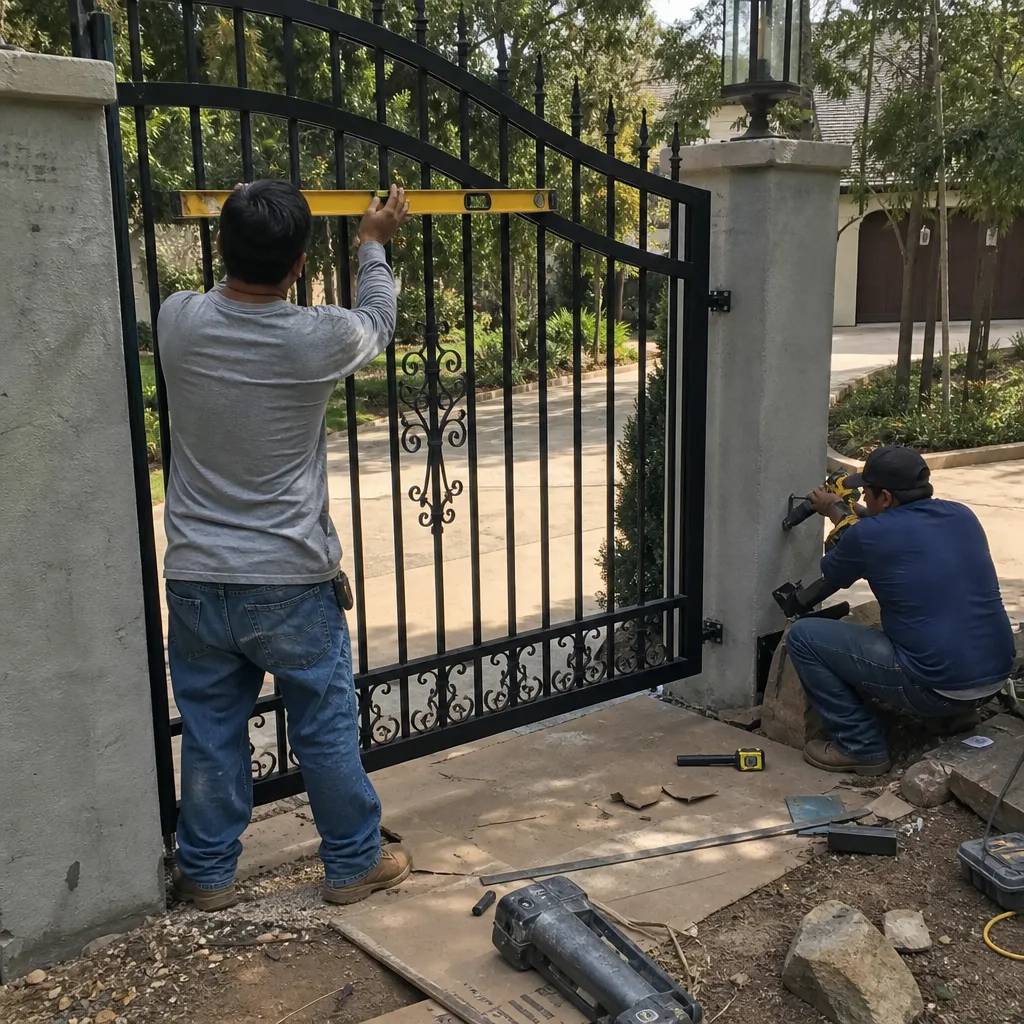
Most gate repairs in The Woodlands run between $180 and $850 depending on the fault. A photo-eye realignment or limit-switch adjustment typically runs $180 to $320, a capacitor replacement $220 to $400, and a full swing-gate motor replacement $600 to $1,800 depending on the brand and whether the arm bracket is intact. You should receive a written price before any work starts, with a change-order process if the technician finds something unexpected. Call (346) 296-3138 for an exact quote on your gate.
Call a technician who can diagnose the specific fault instead of defaulting to replacement. Many “motor replacement” situations in The Woodlands are actually failed capacitors, misaligned photo-eyes, or improperly set limit switches that cost a fraction of a replacement to fix. A written scope with the failed component named in it is evidence of an actual diagnosis. If the quote says “motor replacement” without naming the failed part, get a second opinion before you pay.
Yes, same-day gate repair is available in The Woodlands, and a live person should answer the phone when you call. Gate failures are often security issues – a gate stuck open means your property is exposed. Vance Gate Repair The Woodlands answers calls 24 hours a day, seven days a week, with no voicemail loop and no automated attendant. Call (346) 296-3138 and you’ll speak to a person who can dispatch a technician.
A gate repair quote should include itemized parts with model numbers, labor hours, what triggers a change order, and what’s excluded as well as included. It should state that post-repair testing, limit-switch calibration, and photo-eye alignment are part of the scope. A one-line quote like “repair gate, $800” is not a quote, it’s an opening bid. Demand specificity.
Not necessarily a manufacturer certification, but you do need demonstrable experience with your specific brand. A technician who has replaced 50 LiftMaster LA400 operators is more qualified than one with a BFT webinar certificate and three jobs of experience. Ask how many of your exact motor model they’ve worked on, and ask for photos from previous jobs. A good technician can show you their work.
You should receive a photo log of the work: what was found, what was adjusted, what was replaced, and the readings after installation – limit-switch positions, force settings, photo-eye alignment. You should also receive a written record of the part number installed. If the technician leaves nothing but an invoice, you have no evidence of what happened, and the next technician will have to rediscover the same problem at your expense. Call (346) 296-3138 for gate repair in The Woodlands with documentation included on every visit.
The Bottom Line
Hiring a gate repair contractor in The Woodlands is not about finding the cheapest bid or the best-reviewed company. It’s about finding someone who will put the price in writing before they start, name the specific fault in the quote, and leave behind a documented record of what they did. The verbal estimate is the beginning of every bad gate repair story. The written scope is the end of most of them. Ask the three questions, verify the brand claim, read the quote for scope gaps, and demand documentation. Vance Gate Repair The Woodlands has been serving The Woodlands since 2014 with written pricing on every job and a photo record on every visit. For gate installation in The Woodlands or gate motor and opener service in The Woodlands, call (346) 296-3138 for a free estimate with no surprises and no blank checks.
Written by Adrian Vance, Owner at Vance Gate Repair The Woodlands, serving The Woodlands since 2014. Explore more guides & resources.