
Last updated September 20, 2026
Free on-site gate assessment - hinges, posts, and your LiftMaster or Nice gate operator checked before anything is quoted
The assessment is free and the quote is the invoice.
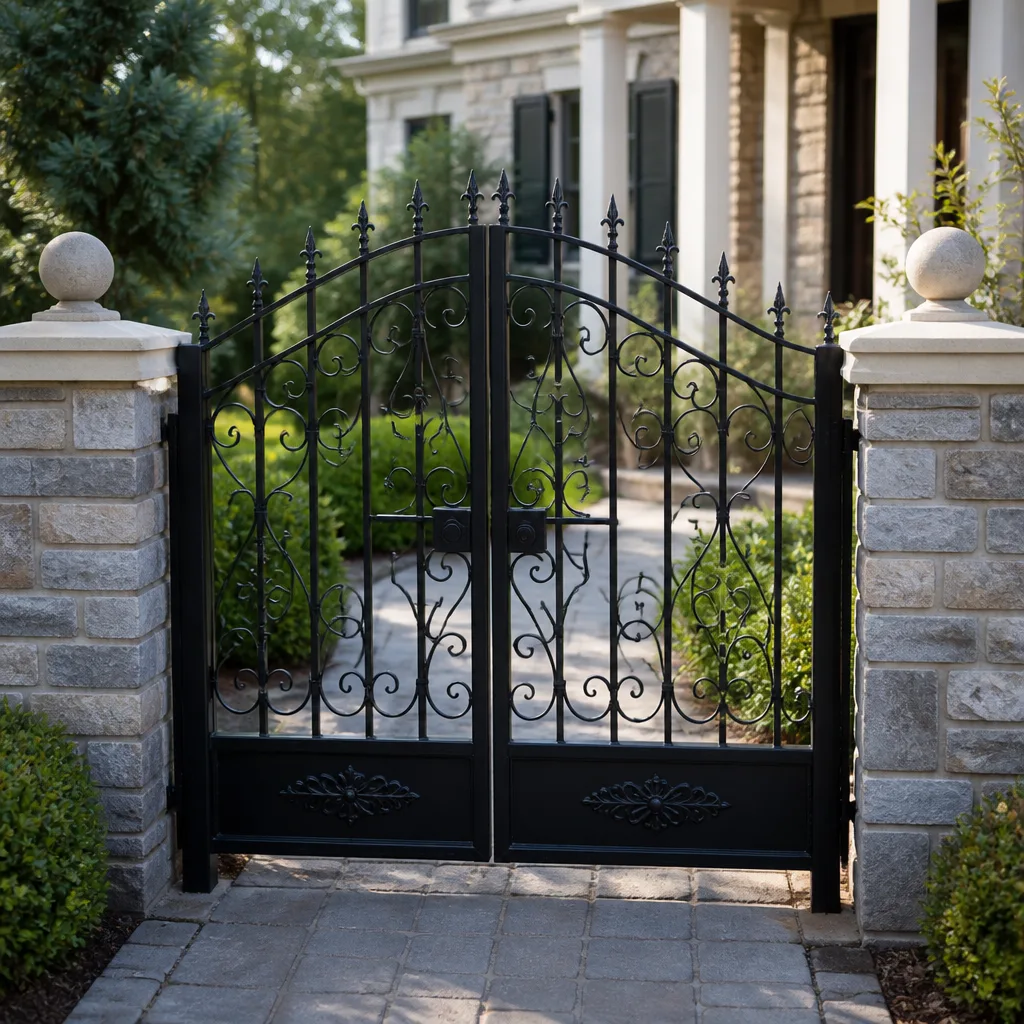
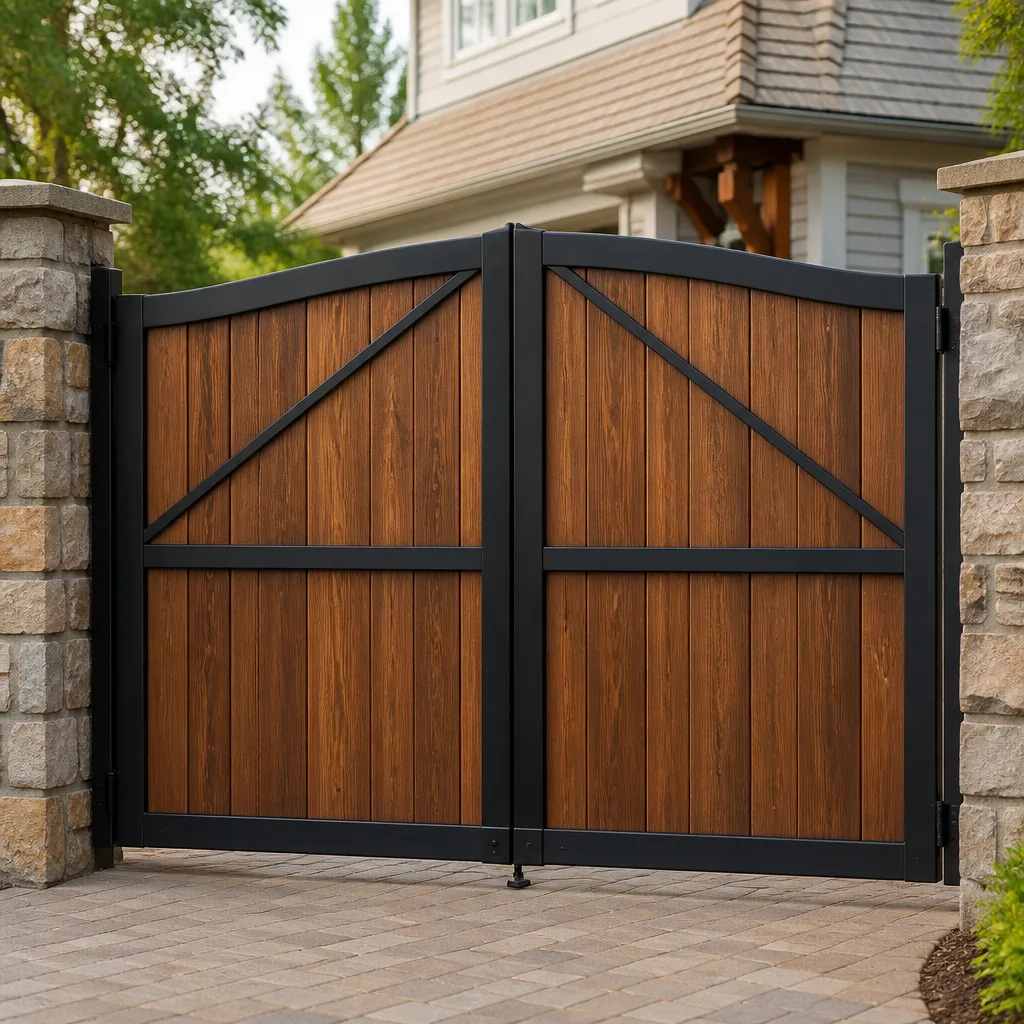
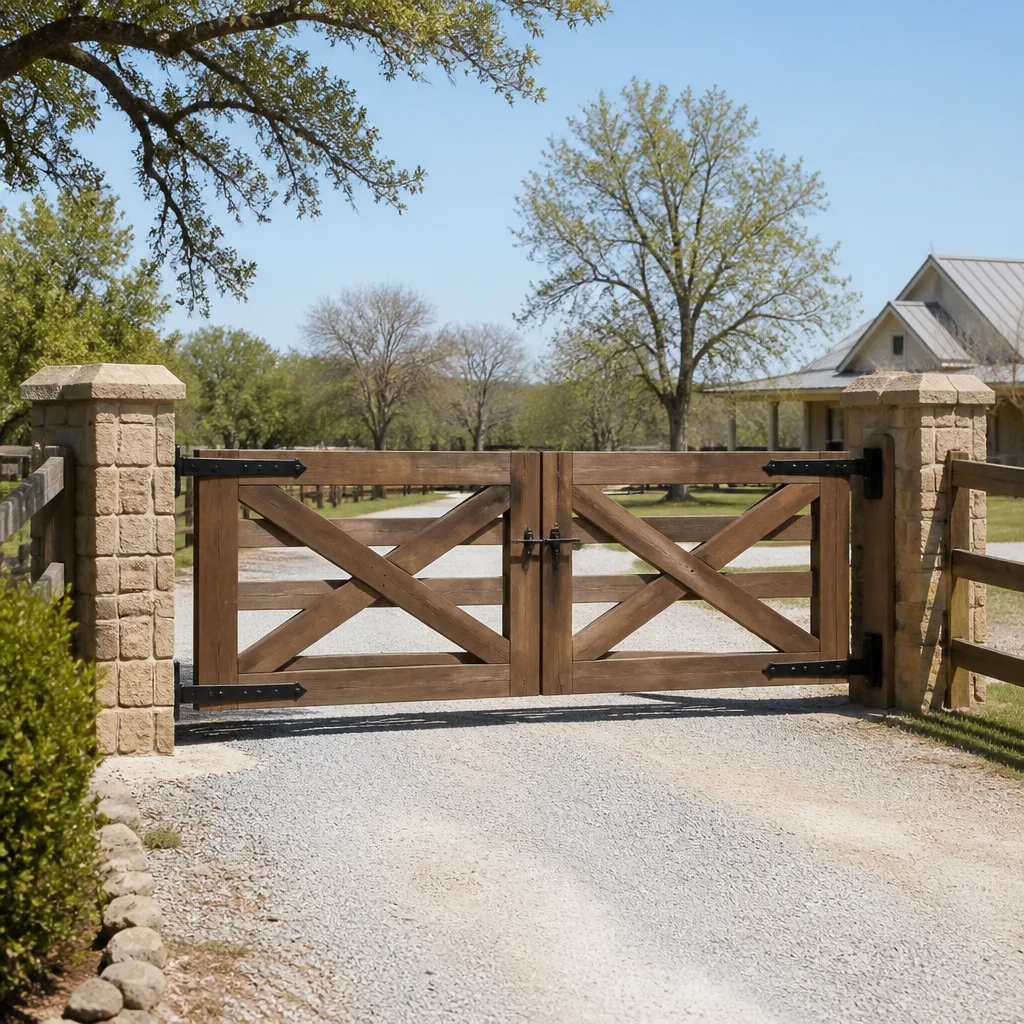
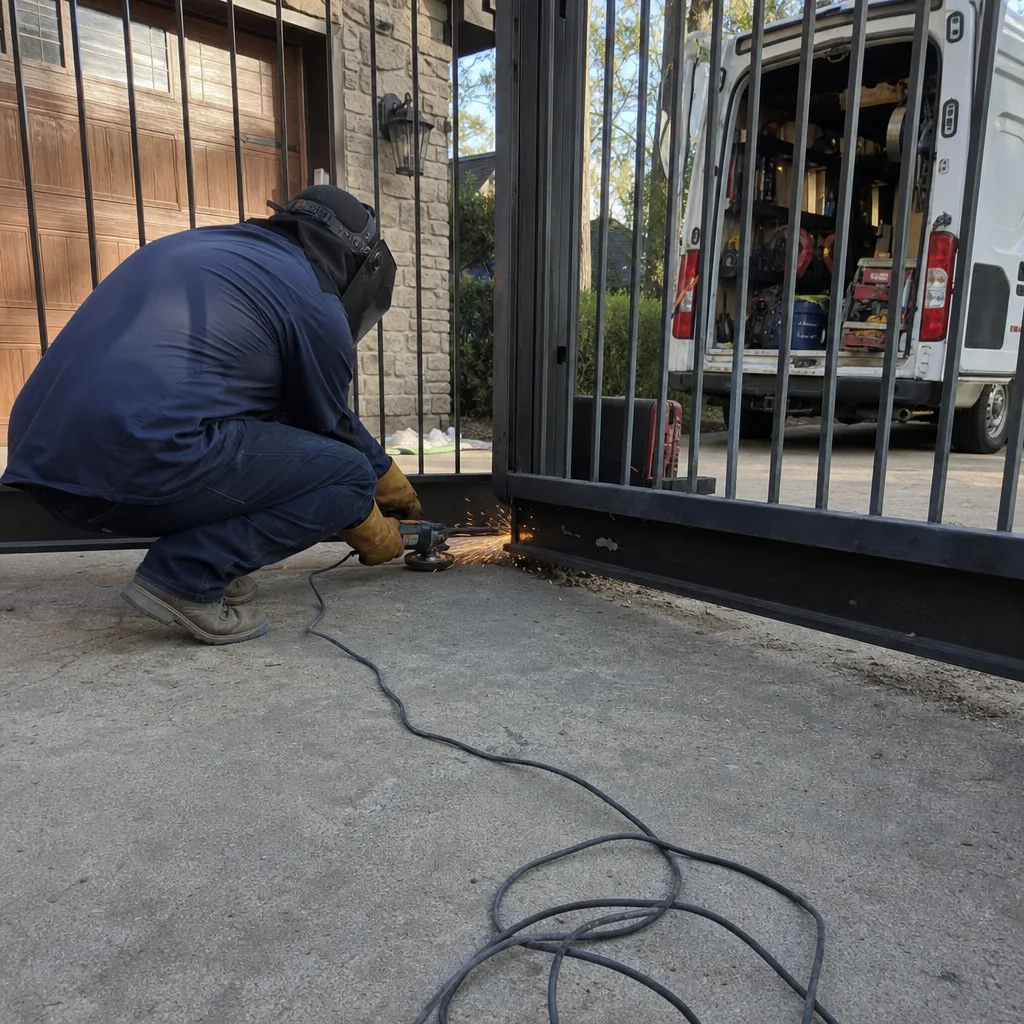
 Before
 After
After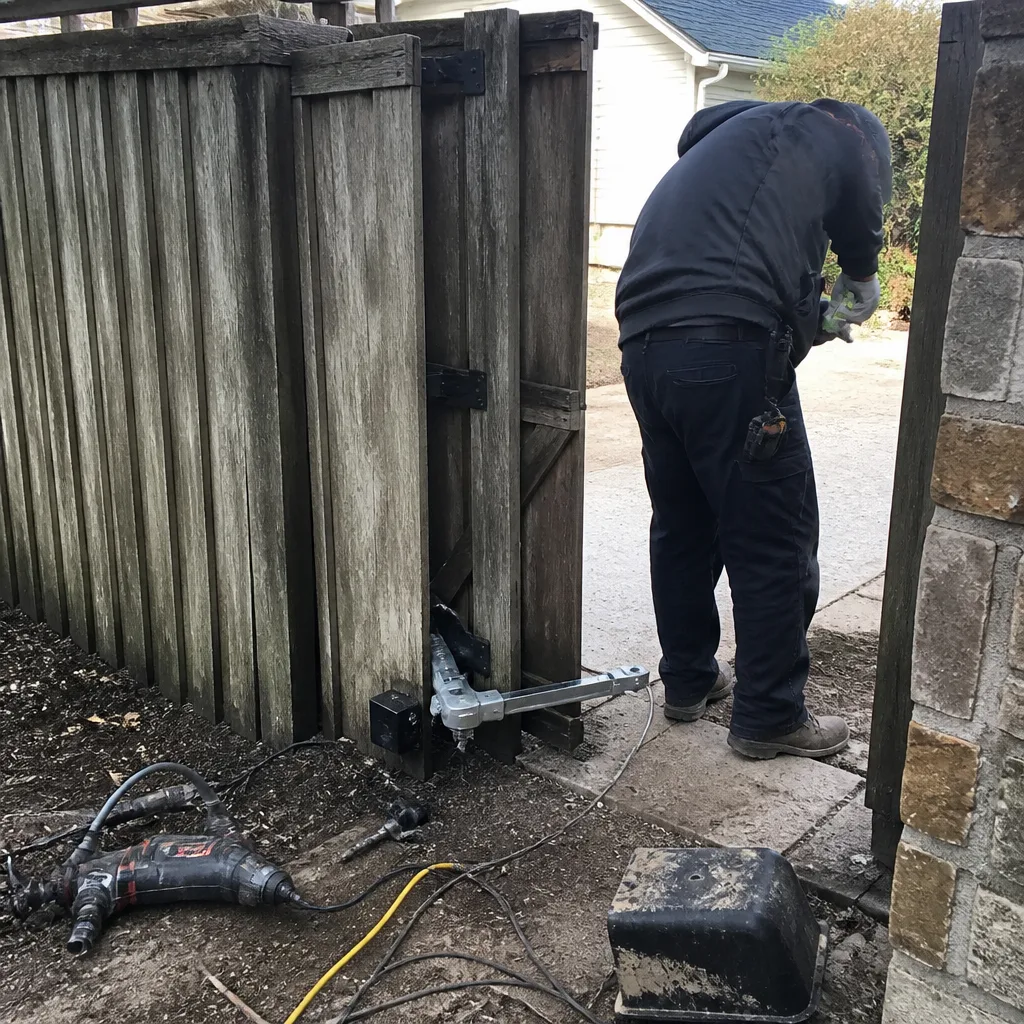 Before
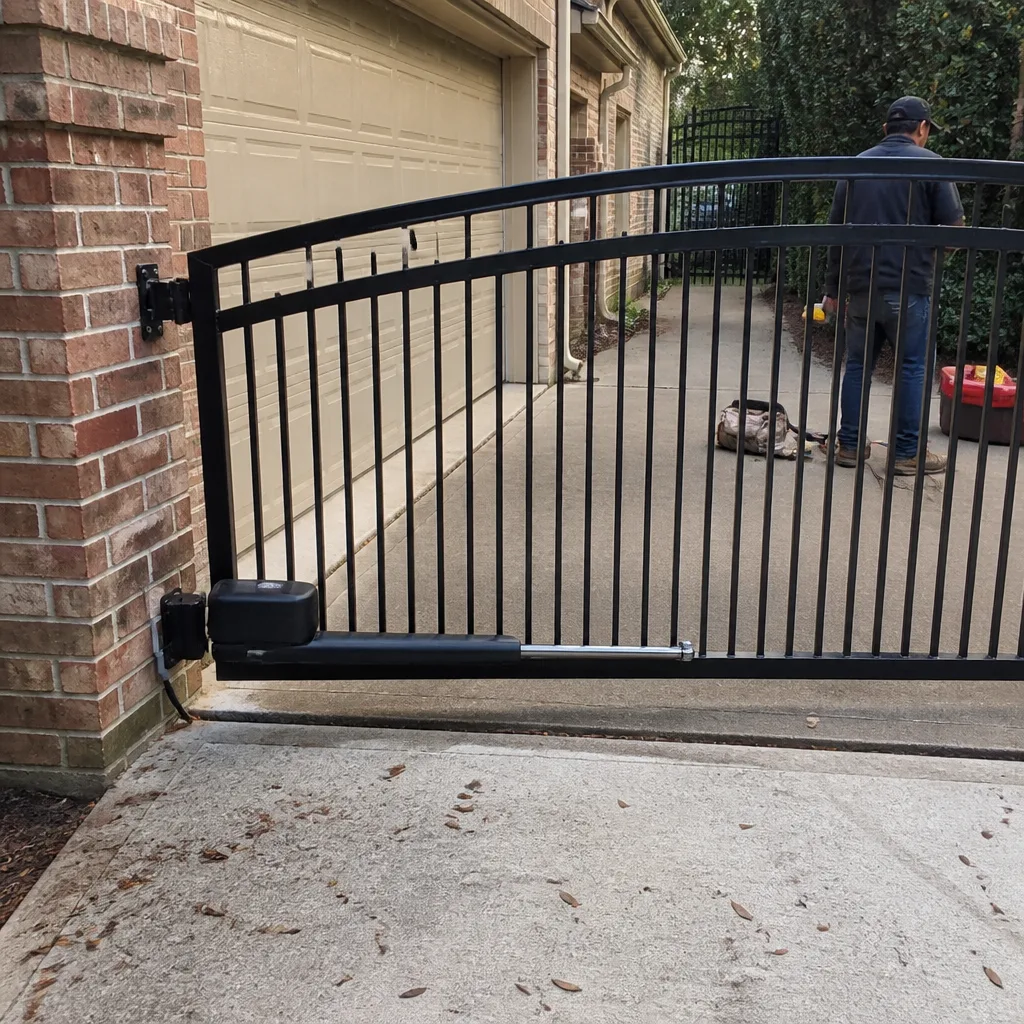 After
After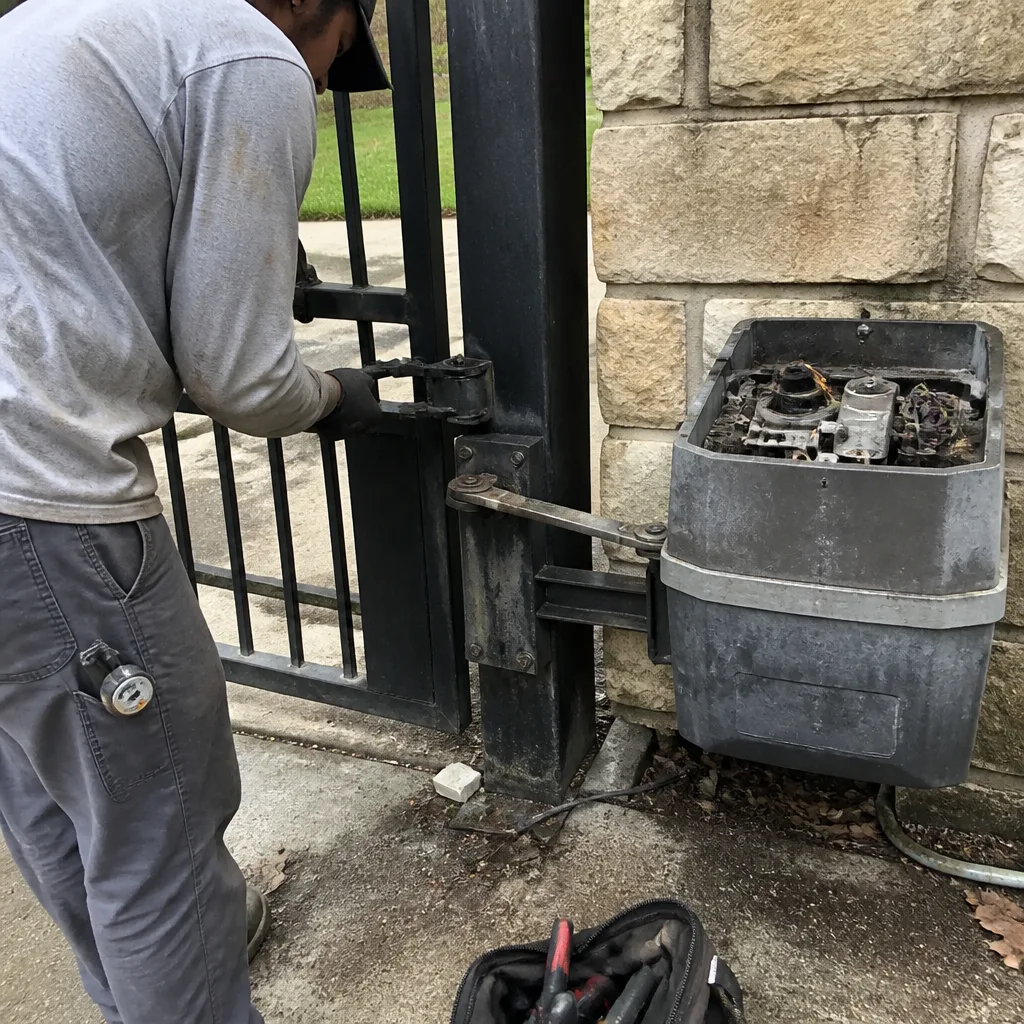 Before
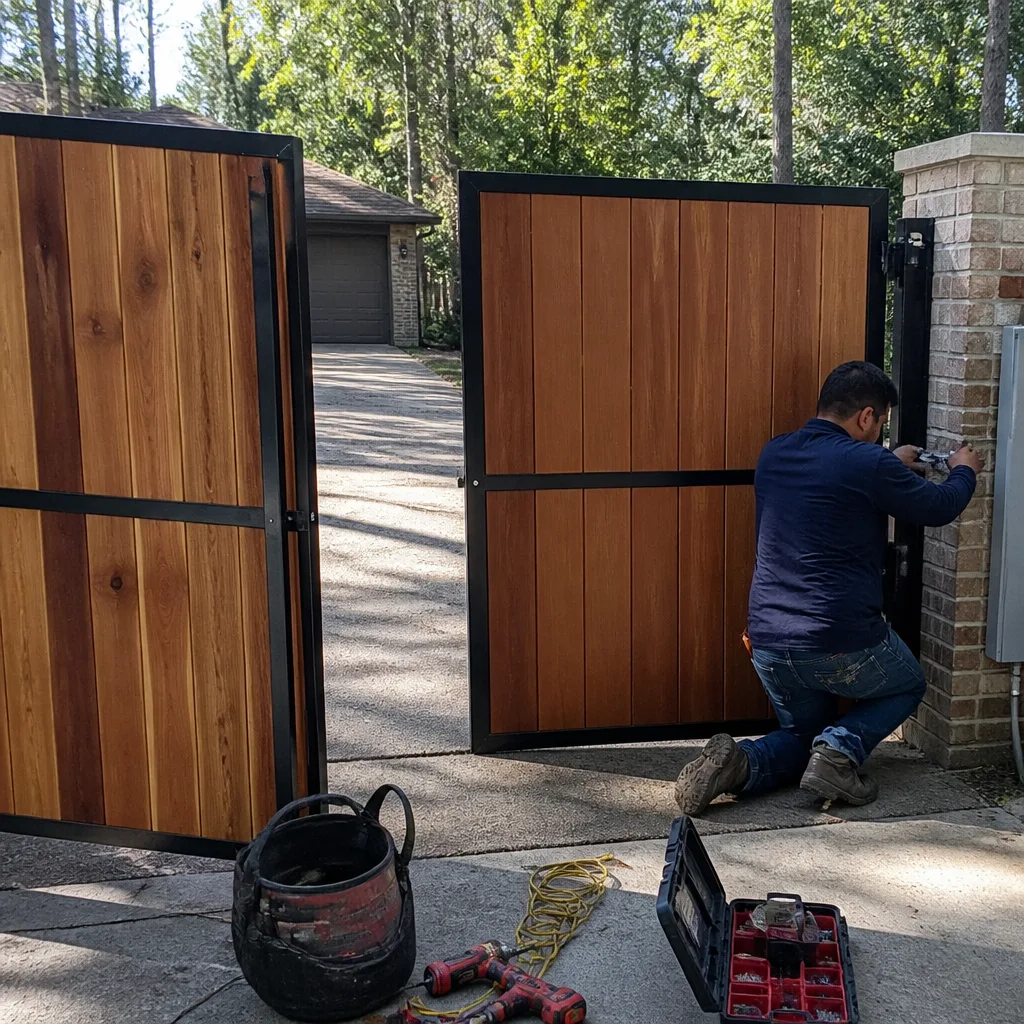 After
AfterSeasonal Gate Repair Care for The Woodlands: Year-Round Homeowner’s Guide
A gate operator capacitor rated for 10,000 cycles at 77°F loses roughly 30 to 40 percent of that lifespan when it runs at sustained 100°F ambient temperatures, which means a late-July capacitor failure in The Woodlands isn’t bad luck. It’s a predictable outcome of a skipped spring inspection. This guide maps the specific ways The Woodlands climate stresses your gate across the calendar year, month by month, so you’re inspecting the right component in the right season instead of reacting to whatever breaks first. For a deeper dive, see The Complete Guide to Gate Repair in The Woodlands. You’ll learn what to check in spring soil saturation, what fails in summer heat, why fall is your lowest-risk repair window, and how winter freezes affect your operator.
Quick Answer
Seasonal gate maintenance in The Woodlands means inspecting different components at different times of year: hinge and post alignment after spring rains, capacitor and photo-eye health before summer heat, lubrication and mechanical repairs in fall’s mild window, and battery and hydraulic checks before winter freezes. A homeowner who follows this seasonal schedule catches most failures before they become driveway-blocking emergencies. The total time commitment runs about 90 minutes per season, and every check produces a dated record that builds a maintenance baseline for future repairs.
Table of Contents
- Spring (March-May): Soil Saturation and Post Shift Season
- Summer (June-September): Heat, UV, and Capacitor Season
- Fall (October-November): The Lowest-Risk Repair Window
- Winter (December-February): Freeze Events and Battery Season
- The 12-Month Task Index: Building a Dated Inspection Log
- Common Mistakes to Avoid
- When to Call a Professional
- Frequently Asked Questions
BeforeAfterSpring (March-May): Soil Saturation and Post Shift Season
The Woodlands sits on soils that expand when wet and contract when dry. Spring brings the wet cycle, and that’s when gate posts begin to move. A post that shifts two degrees out of plumb doesn’t sound like much, but at the top of a seven-foot gate, two degrees translates to roughly three inches of lateral displacement at the latch point. That’s enough to make the gate bind against the striker, drag on the drive, or fail to close fully against the stop.
We’ve pulled gate posts in The Woodlands neighborhoods like Alden Bridge and Cochran’s Crossing after wet springs and found the concrete footing fully intact while the surrounding soil had softened enough to let the whole assembly lean. The post wasn’t failing. The ground was.
Measuring Post Plumb After Heavy Rain
- Place a 4-foot level vertically against the hinge post, checking both the gate-face plane and the perpendicular plane. Read the bubble position in both orientations.
- If the bubble sits outside the center marks, measure the gap at the top of the level in sixteenths of an inch. One sixteenth over four feet equals roughly 0.1 degrees. Two sixteenths equals about 0.2 degrees.
- Repeat the same measurement on the latch post, then compare. If the two posts lean in opposite directions, the hinge-to-latch gap is changing twice as fast as either post individually.
- Record both readings in a dated log. The trend matters more than any single measurement. A post that moves from zero to two-sixteenths in one spring is actionable; the same reading held steady for three years is not.
What to Inspect in Spring
- Hinge gap progression: Measure the gap between gate edge and post at top, middle, and bottom of the hinge side. A difference of more than one-quarter inch from top to bottom means the gate is sagging, and spring soil movement accelerates it.
- Latch alignment: Close the gate gently and watch whether the latch engages the striker on the first pass or scrapes the side. Scraping means something moved.
- Driveway drainage: Walk the gate’s swing path after a rain event. If water pools within three feet of a post footing, that post will move eventually. Fix the drainage now or replace the post later.
- Slide-gate track debris: Spring rain washes soil, pine needles, and leaf litter into slide tracks across The Woodlands. A track packed with debris forces the motor to work against load it wasn’t designed for.
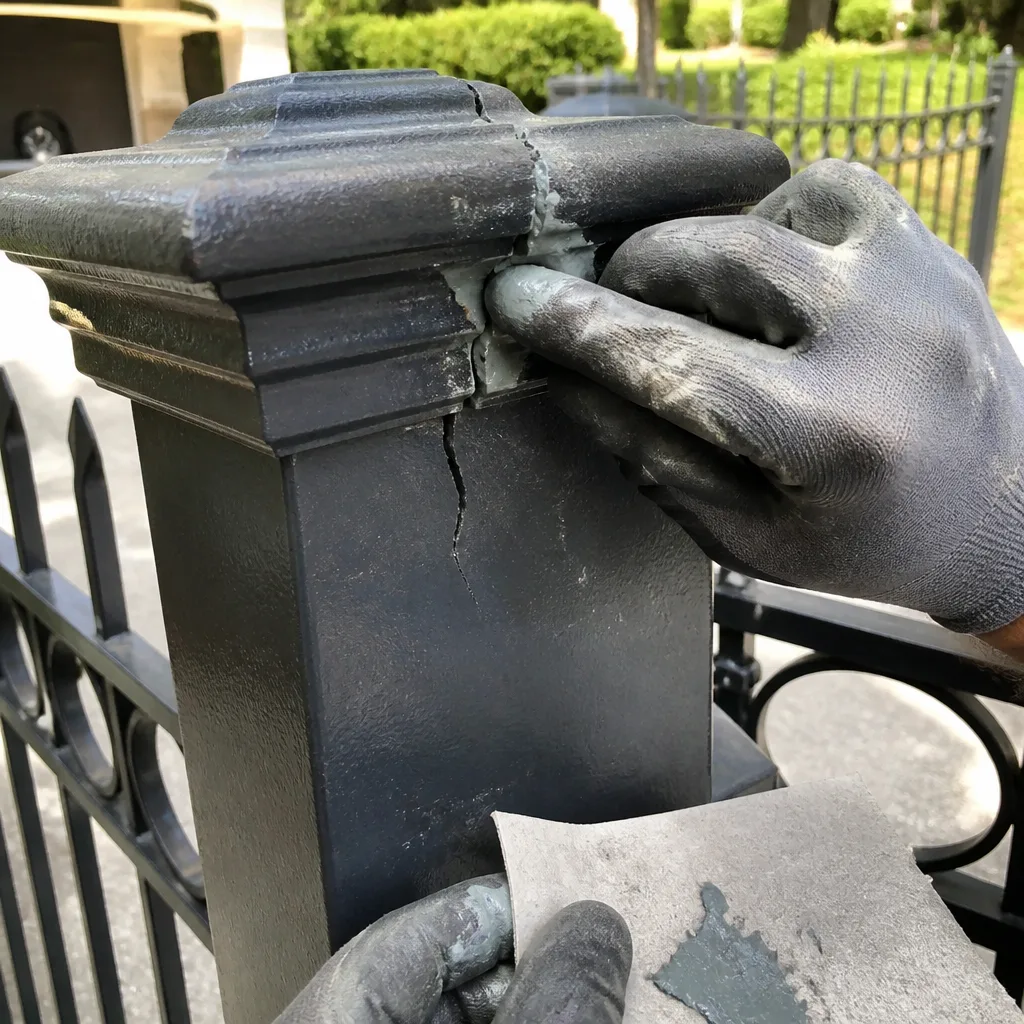
Spring is also the right time to schedule gate repair in The Woodlands for anything that moved over the winter. Catching a two-degree post lean in March is a $400 to $900 re-set and re-bed job. Catching the same lean in August, after the gate has been dragging for three months, often means a new hinge set and a burned-out operator as well.
Summer (June-September): Heat, UV, and Capacitor Season
The Woodlands sees sustained ambient temperatures above 95°F through most of July and August, and the inside of a dark-colored gate operator enclosure runs 15 to 25 degrees hotter than the air around it. When the box hits 115°F, electrolytic capacitors degrade faster, photo-eye lenses yellow faster, and control boards that were marginally specced begin to thermal-cycle into intermittent failures.
This is not a general “heat is bad” observation. It’s a specific failure chronology, and it repeats every year in The Woodlands.
Capacitor Health Check Protocol
- Disconnect power to the operator at the breaker or service disconnect. Verify with a non-contact voltage tester before opening the enclosure.
- Open the control box and visually inspect the motor start and run capacitors. A capacitor that’s bulging at the top, leaking electrolyte, or showing corrosion at the terminals is already failing.
- If you have a capacitance meter, disconnect one capacitor lead and measure microfarads against the rating printed on the can. Anything more than 10 percent below rated value needs replacement before summer heat finishes it.
- Check the enclosure’s ventilation path. The Woodlands’ pine pollen and construction dust coat louvers and screens by mid-June. A clogged vent turns a 115°F box into a 135°F box.
- If the capacitor checks out, photograph the readings and the capacitor’s date code, and record them in your log. That photo becomes the baseline for next year’s comparison.
Most residential gate operators use capacitors rated for 105°C, not 105°F. The rating is not the operating ceiling, and sustained high heat shortens electrolytic lifespan in a measurable, predictable way. This is why we tell The Woodlands homeowners to check capacitors in May, not in July when the gate stops mid-cycle at 2 p.m.
Photo-Eye Lens Yellowing
Photo-eyes, the infrared beam sensors that stop the gate if something crosses the path, sit in direct Texas sun on most installations. The polycarbonate lenses on these units yellow and micro-crack after two to four years of UV exposure, and a yellowed lens scatters the beam enough to cause intermittent safety reversals, the gate reversing for no visible reason, or refusal to close. We’ve measured beam strength on photo-eyes in The Woodlands communities like Grogan’s Mill that dropped by half due to lens degradation alone, with the electronics underneath still perfectly functional.
The fix is a $35 to $90 lens or sensor replacement depending on brand. The confusing part for homeowners is the symptom: an intermittent safety reversal looks like an electronic problem. It’s usually an optical one.
Control Board Ventilation Clearance
Over time, homeowners in The Woodlands tend to landscape around gate operators. Shrubs grow, mulch piles rise, and the enclosure that once had 12 inches of airflow clearance now sits boxed in by plantings that hold humidity against the metal. By July, that enclosure is running 10 to 15 degrees hotter than it would with clear clearance, and the control board’s thermal limits are being tested daily.
Walk the area around your operator in June. Cut back anything within 18 inches of the enclosure. Clear the louvers. If the box faces west and takes direct afternoon sun, consider a simple shade structure that still preserves airflow. The difference inside the enclosure is measurable with a $25 infrared thermometer, and it often means the difference between a board that lasts eight years and one that fails in four.
Fall (October-November): The Lowest-Risk Repair Window
October and November offer the most stable operating conditions of the year in The Woodlands. Soil moisture has dropped, temperatures have moderated, and the punishing summer UV cycle is past. This is the window for mechanical work, lubrication, hinge replacement, track realignment, and any repair that requires disassembly and adjustment.
Here’s the logic homeowners miss: scheduling non-urgent mechanical repairs in fall costs the same as scheduling them in July, but the repair itself is easier to do well. Metals are at predictable expansion states. Grease flows properly. Technicians aren’t rushing to finish before a heat index hits 108. And the repair gets three to four months of moderate weather to prove itself before the next stress cycle begins.
Why Fall Is the Right Time for These Specific Jobs
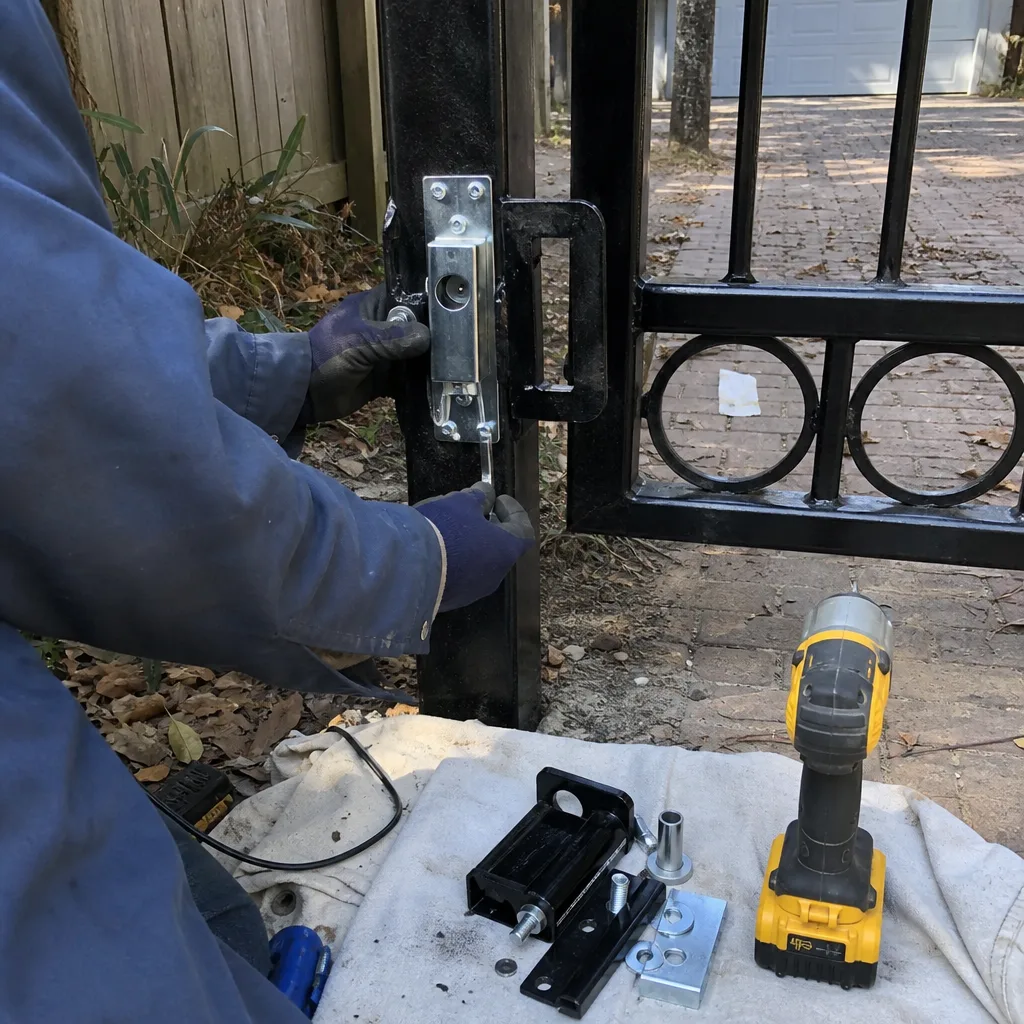
- Hinge replacement: Cold steel compresses slightly. Warm steel expands. Fall temperatures mean hinge pins seat correctly and tolerances stay where the technician sets them.
- Chain and track lubrication: Lubricants applied in summer heat thin out and drip away. Lubricants applied in fall stay in place through winter, which is when cold-weather friction is hardest on motors.
- Slide-gate wheel replacement: This is a full-track-access job, and fall’s dry soil means the track stays cleaner during the work. It’s also the season when the gate won’t be needed every day for school drop-off and pool access.
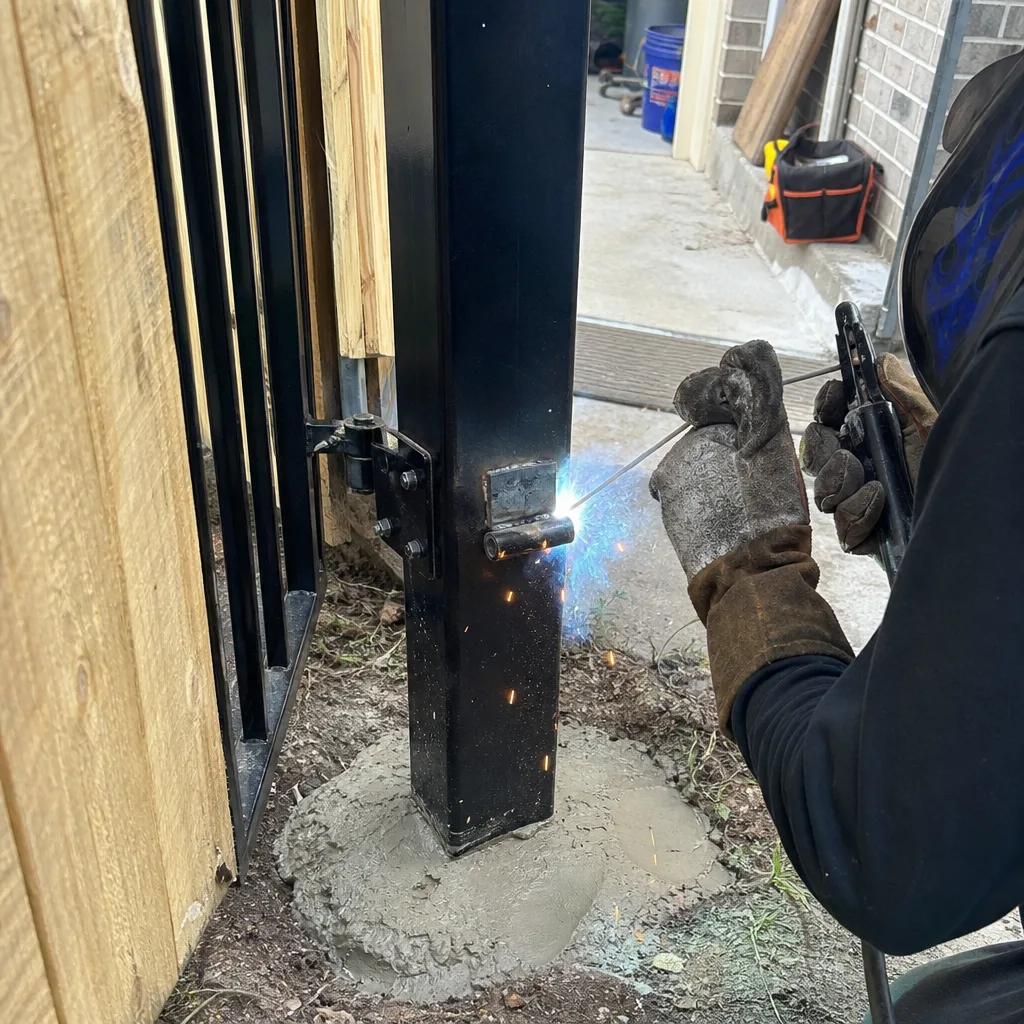
- Weld repairs: Humidity affects both weld quality and paint adhesion. The Woodlands’ fall humidity levels sit in the range where outdoor welding and touch-up painting hold best.
If your gate has been making a new noise, showing a new hesitation, or requiring a second press of the remote, fall is when you investigate it. The mild conditions make diagnosis faster and the repair window more forgiving. It’s also the right time to get a gate installation in The Woodlands quoted if you’re planning a replacement before winter.
Winter (December-February): Freeze Events and Battery Season
The Woodlands doesn’t get hard freezes every year, but when one arrives, it stresses two specific systems most homeowners never think about until the gate won’t open on a cold morning.
Battery Backup Behavior Below 40°F
Sealed lead-acid batteries, the type used in most residential gate operator backup systems, lose approximately 30 to 50 percent of their rated capacity when ambient temperature drops below 40°F. A battery that held a full charge through fall may open the gate six times in October but only twice during a February cold snap. Worse, charging voltage curves shift at low temperatures, so a battery that’s already marginal may not accept a full charge during a week of cold weather at all.
If your gate operator has a battery backup, test it in December, before the first freeze threat. Open the gate on battery power alone by cutting the AC service and cycling the gate five times. If it handles five cycles without slowing noticeably, it’ll get through a short power outage. If it slows after two cycles, replace it now, because the failure will come exactly when the power is out and the temperature is at its lowest.
Hydraulic Operator Fluid Viscosity Changes
Hydraulic gate operators run on oil that thickens as temperatures drop. A hydraulic operator that opens the gate smoothly at 70°F may move noticeably slower at 35°F, and some older units stall entirely below freezing until the pump runs long enough to warm the fluid. This is normal behavior for hydraulic systems, but it’s a different failure profile than an electric operator, and it catches homeowners by surprise every winter in The Woodlands.
If your hydraulic gate runs slow on a cold morning but returns to normal speed after a few cycles, the fluid is cold, not failing. If it stays slow all day regardless of temperature, the pump is wearing or the fluid is contaminated. Both are repairable, but the distinction matters for what the technician replaces and what it costs.
Ground-Heave Recheck Protocol After Hard Freezes
- Wait 48 hours after a hard freeze has ended and the ground has begun to thaw. Checking during the freeze or during the thaw-heavy first day produces readings that won’t hold.
- Repeat the plumb measurements from the spring protocol on both posts. Compare to the previous season’s baseline readings.
- Check the gate’s latch-to-striker alignment. Freeze-thaw cycles move posts vertically as well as laterally, and vertical movement shows up first as a striker that’s suddenly a quarter-inch high or low.
- If either post moved more than one-sixteenth from baseline, schedule a re-level before spring rains push the shift further.
We’ve responded to February service calls in The Woodlands where the gate worked fine through the freeze and then stopped latching in early March. The freeze moved a post a fraction of an inch, the March rain softened the soil, and by April the gate was binding. The fix in March is a post re-set. The fix in May is often a post re-set plus a new hinge set.
The 12-Month Task Index: Building a Dated Inspection Log
The reason most seasonal maintenance programs fail is that they’re too vague. “Check the gate in spring” doesn’t produce a record. A dated, one-line entry every month does, and that record is what makes future repairs faster and cheaper. For more guides & resources, explore our blog. Here’s the month-by-month index for The Woodlands homeowners.
The Woodlands Gate Maintenance Month-by-Month Index
- January: Test battery backup under cold conditions. Log cycle count before slowdown. Check hydraulic fluid response time on first morning open.
- February: Recheck post plumb after any freeze events. Compare to spring baseline. Inspect hinge fasteners for loosening from thermal cycling.
- March: Measure post plumb after first significant rain. Clear drain paths around post footings. Check latch alignment for signs of soil movement.
- April: Inspect slide track for debris accumulation. Lubricate hinges and chain with a cold-rated lubricant. Photograph hinge gap readings.
- May: Run the capacitor health check protocol. Clear operator enclosure ventilation. Test photo-eye alignment and beam strength.
- June: Check photo-eye lenses for yellowing. Measure operator enclosure internal temperature on a 95°F day. Log it.
- July: Inspect capacitors visually after peak heat exposure. Test motor start performance on the hottest afternoon. Listen for laboring under load.
- August: Clear vegetation from around operator enclosure. Check that summer growth hasn’t blocked photo-eye path. Test safety reversal function.
- September: Post-summer capacitor recheck. Compare readings to May baseline. Look for heat-related wire insulation cracking inside the enclosure.
- October: Schedule any deferred mechanical repairs. Replace gate wheels if needed. Lubricate all pivot points before winter.
- November: Test full gate cycle time and compare to the same measurement from spring. Log the number. Check opener force settings.
- December: Battery backup full-load test. Hydraulic fluid viscosity check on first cold morning. Confirm operator heater (if equipped) is functional.
- Treating all seasons as the same maintenance interval. The Woodlands climate applies different stresses at different times of year. A checklist that says “inspect gate quarterly” without specifying what to inspect each quarter misses the capacitor in May and the post in March.
- Ignoring slow degradation because the gate still opens. A capacitor that’s dropped from 30 microfarads to 26 still opens the gate today. It won’t in August. The whole point of seasonal care is catching the decline before the failure.
- Waiting until the gate fails to call anyone. Emergency repair pricing and scheduling constraints exist in every trade. A gate that fails at 6 p.m. on a Saturday costs more to fix than the same gate inspected in October.
- Landscaping too close to the operator enclosure. Every year, shrubs and mulch creep closer to control boxes in The Woodlands. By August, the box is running hot and the lifespan of the board is quietly shrinking. Eighteen inches of clearance is the minimum.
- Skipping the photo-eye test because it’s “just a sensor.” Photo-eyes are safety devices, not convenience features. A degraded lens or a misaligned beam that causes intermittent reversals is also a sign that the safety circuit is barely within spec, which matters more than the inconvenience.
- Treating slow winter operation as a mechanical problem. Hydraulic gates run slower in cold weather. That’s physics, not failure. Replacing a pump because the fluid was cold is a $1,200 mistake a simple temperature log would have prevented.
- Not keeping a written record. The homeowner who can show a technician last year’s measurements saves diagnostic time on every visit. The homeowner who says “it’s been making a weird noise for a few months” pays for the technician to figure out what changed.
Each entry takes minutes. The point is the log itself. When a technician from Vance Gate Repair The Woodlands home service area arrives with 12 months of your readings, diagnosis starts from a baseline instead of from zero. That’s the difference between the customer who gets a $250 repair and the customer who gets the same repair after $400 in diagnostic time.
Common Mistakes to Avoid
When to Call a Professional
Some seasonal checks are homeowner work: measuring, logging, clearing vegetation, testing the remote. Others require a professional, and the line is clear. Any work involving high-tension springs, welded components, or operator internals with exposed capacitors should go to a trained technician. Capacitors store charge even when the power is off, and an un-discharged motor capacitor can deliver a dangerous shock. Gate springs and counterbalance systems operate under tension that can release violently if mishandled. If your seasonal check turns up a bulging capacitor, a shifted post, a cracked weld, or a gate that binds under load, stop and call someone who does this work every day. Our Gate Repair services provide written estimates in The Woodlands, no charge, and every visit includes a documented photo record of what was found and what was done. Call (346) 296-3138.
Frequently Asked Questions
A seasonal inspection and adjustment visit in The Woodlands typically runs between $125 and $250, depending on the gate type and what needs adjusting. The cost stays low when the inspection catches problems early, and rises when deferred repairs surface during the visit. Call (346) 296-3138 for a written quote before any work starts, estimates are free.
Residential gates in The Woodlands should be professionally inspected twice a year, once in late spring after soil saturation and once in early fall before the winter cycle. Homeowner-level checks should happen monthly using a simple index like the one in this guide. The combination catches most failures before they become emergencies.
Hydraulic operators run slower in cold weather because the hydraulic fluid thickens as temperature drops, which is normal behavior and not a sign of failure. If the gate returns to normal speed after several cycles, the fluid is warming up as designed. If the sluggishness persists regardless of temperature, the pump is likely wearing and should be evaluated.
Our technicians service nine major gate automation brands, including Linear, Viking, Ghost Controls, and DoorKing. We work on whatever motor is already installed rather than steering customers toward a replacement, and every repair is documented with the part number and setting changes recorded. For gate motor and opener service in The Woodlands, we repair first and replace only when repair isn’t the right economic choice.
Yes. A live person answers our phones 24 hours a day, seven days a week, and we dispatch technicians for emergency gate failures in The Woodlands as soon as someone is available. For a same-day assessment, call (346) 296-3138 and describe what the gate is doing or not doing.
Yes. A proper seasonal inspection includes photo-eye alignment, lens condition, safety reversal testing, and force-sensitivity verification, because these are the components most likely to be out of spec after UV exposure and soil movement. Every inspection includes a photographed record of what was checked and what was adjusted, filed with your job record.
The Bottom Line
The Woodlands climate doesn’t attack your gate all at once. It runs a seasonal schedule: spring rain moves the posts, summer heat degrades the electronics, fall offers the best repair conditions, and winter cold tests the batteries and hydraulics. A homeowner who responds to each season’s specific stress catches failures early, spends less on repairs over the life of the gate, and builds a written record that makes every future service call faster and cheaper. If you’re weighing whether to handle repairs yourself or hire help, read our DIY vs Professional Gate Repair: The The Woodlands Homeowner’s Decision Guide. None of this requires daily attention. It requires the right attention in the right month, plus a log you keep. The gate will tell you when it’s struggling. The goal is to hear it before the driveway becomes a parking spot you can’t leave.
Written by Adrian Vance, Owner at Vance Gate Repair The Woodlands, serving The Woodlands since 2014.