
Last updated September 20, 2026
Free on-site gate assessment - hinges, posts, and your LiftMaster or Nice gate operator checked before anything is quoted
The assessment is free and the quote is the invoice.
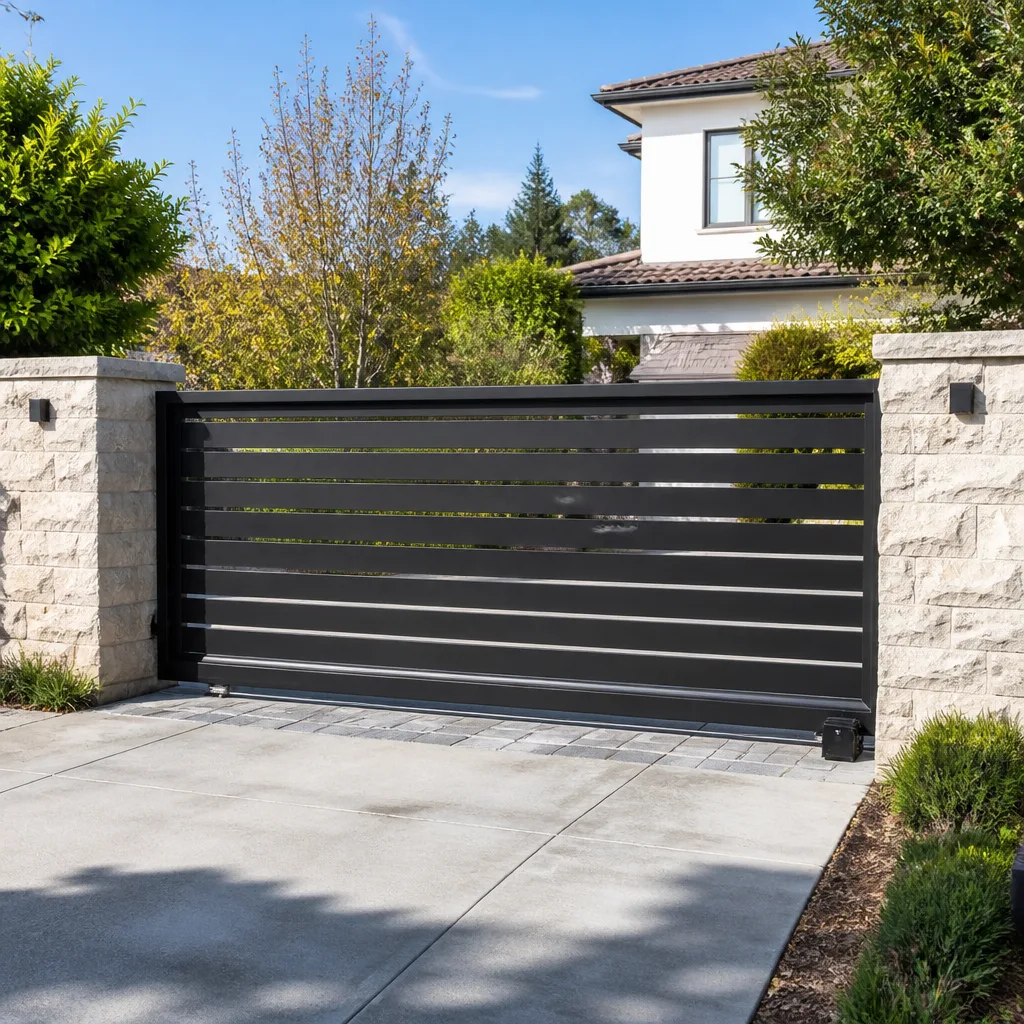
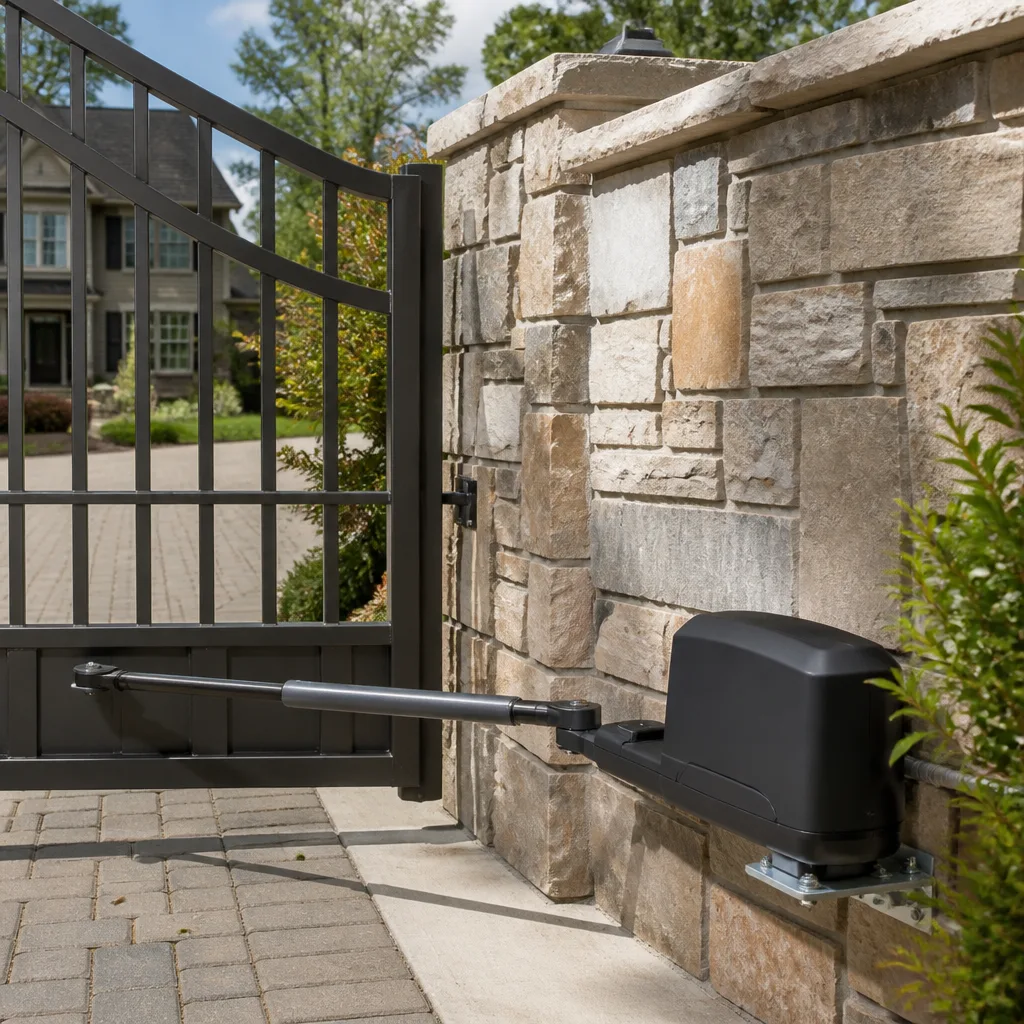
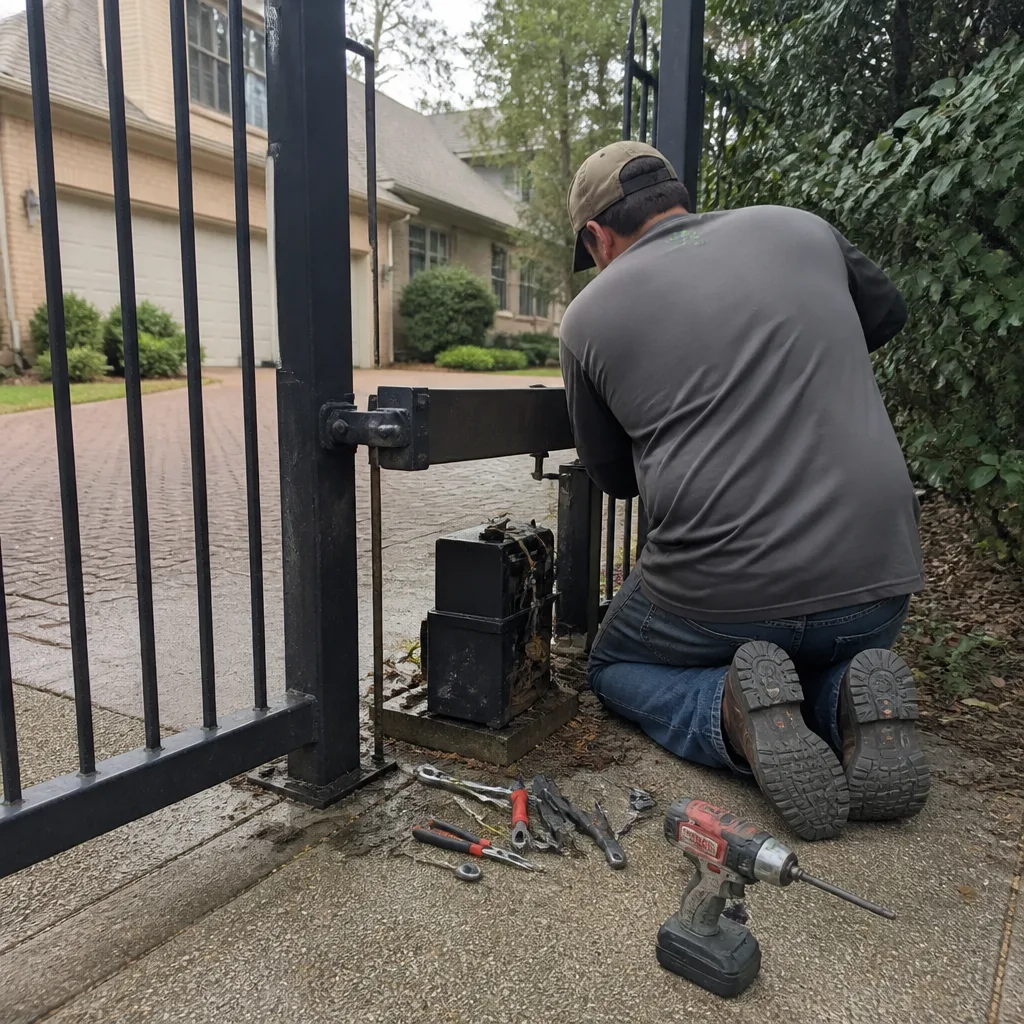 Before
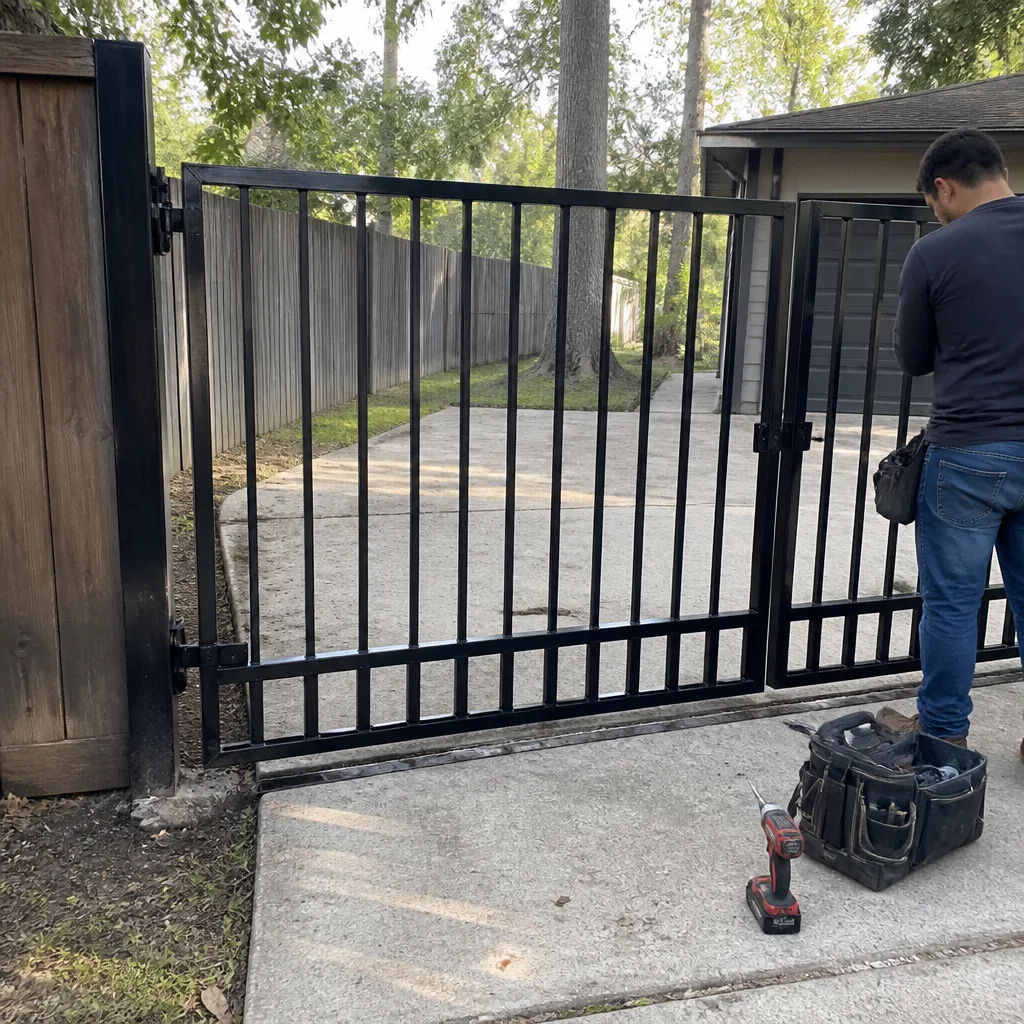 After
After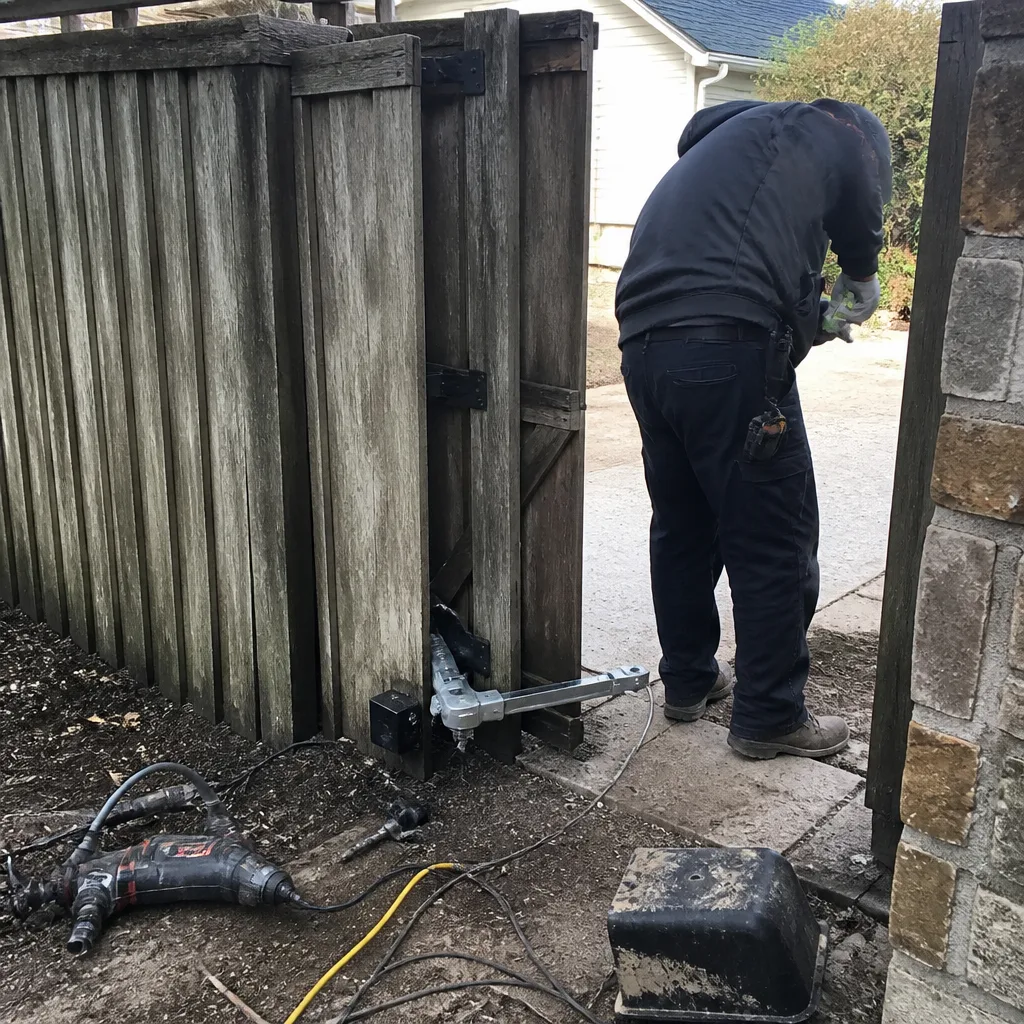 Before
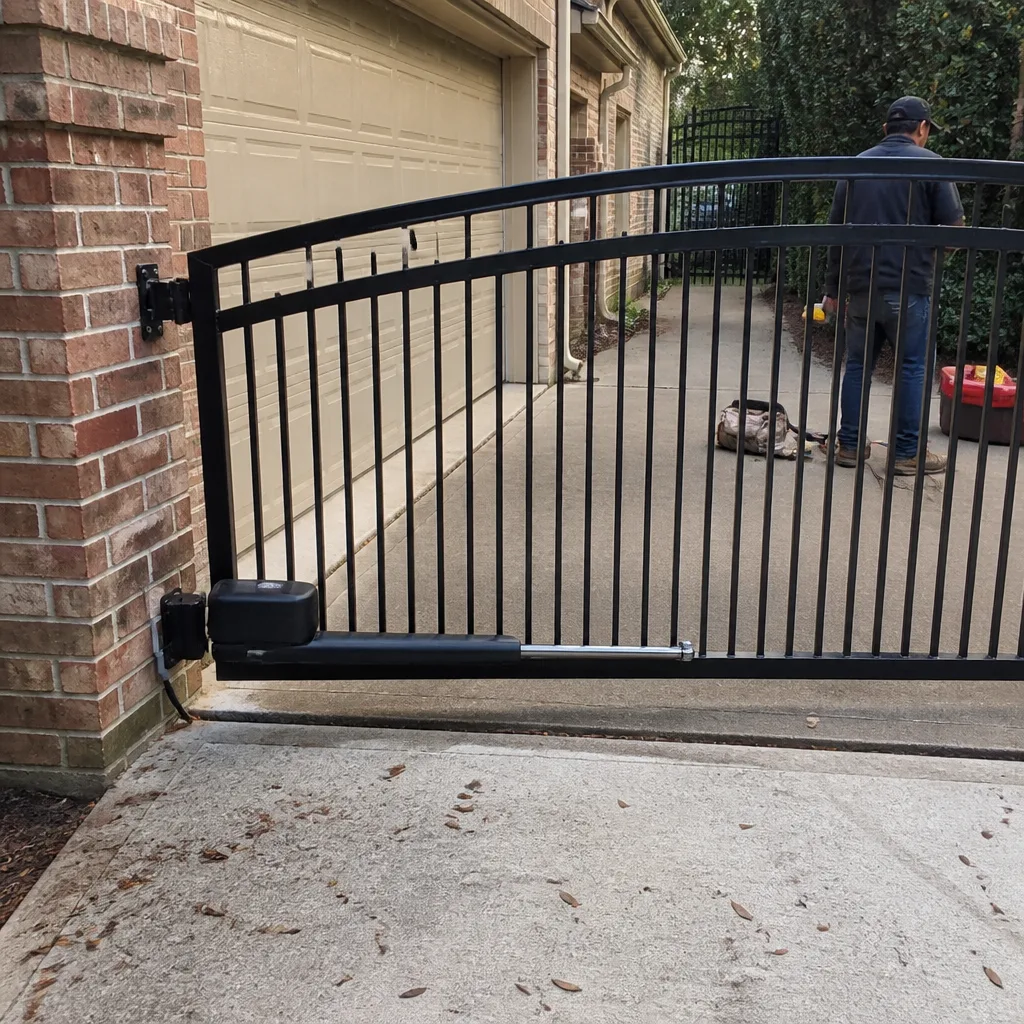 After
After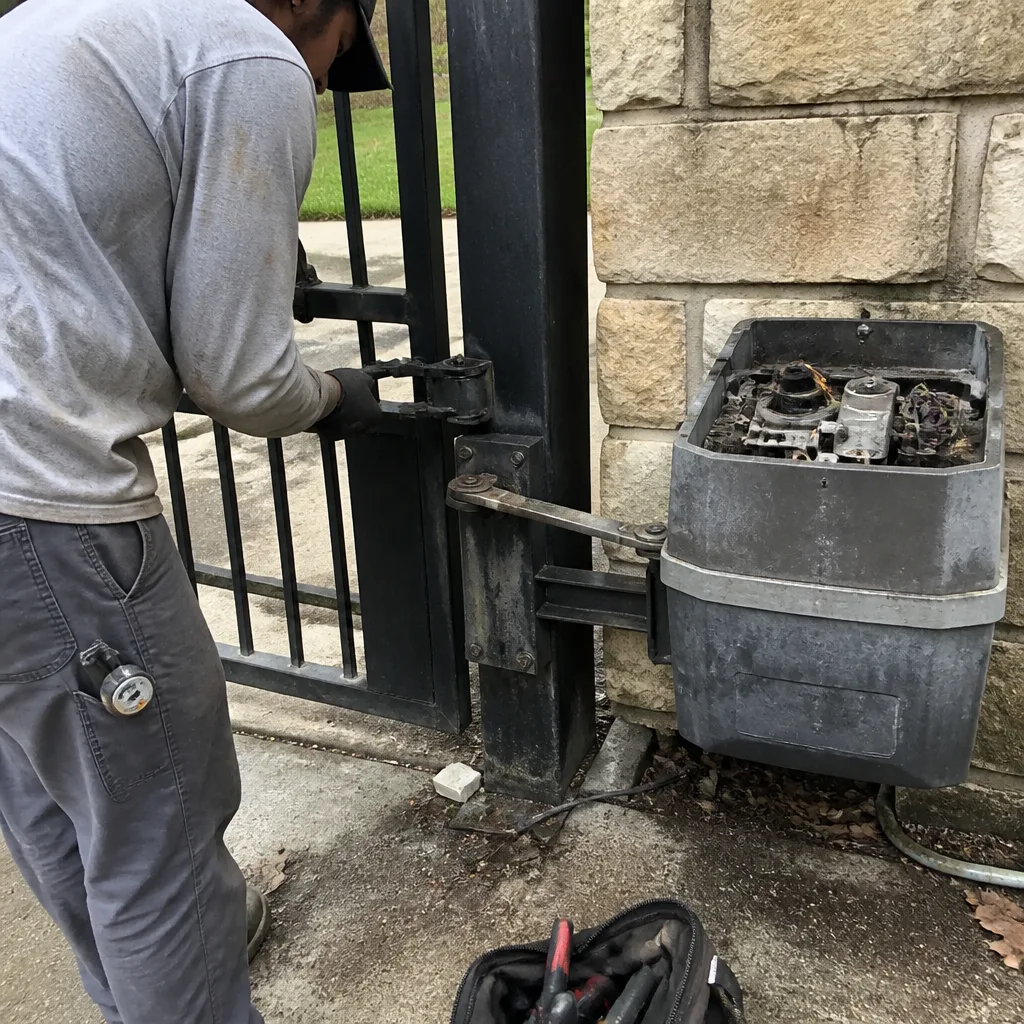 Before
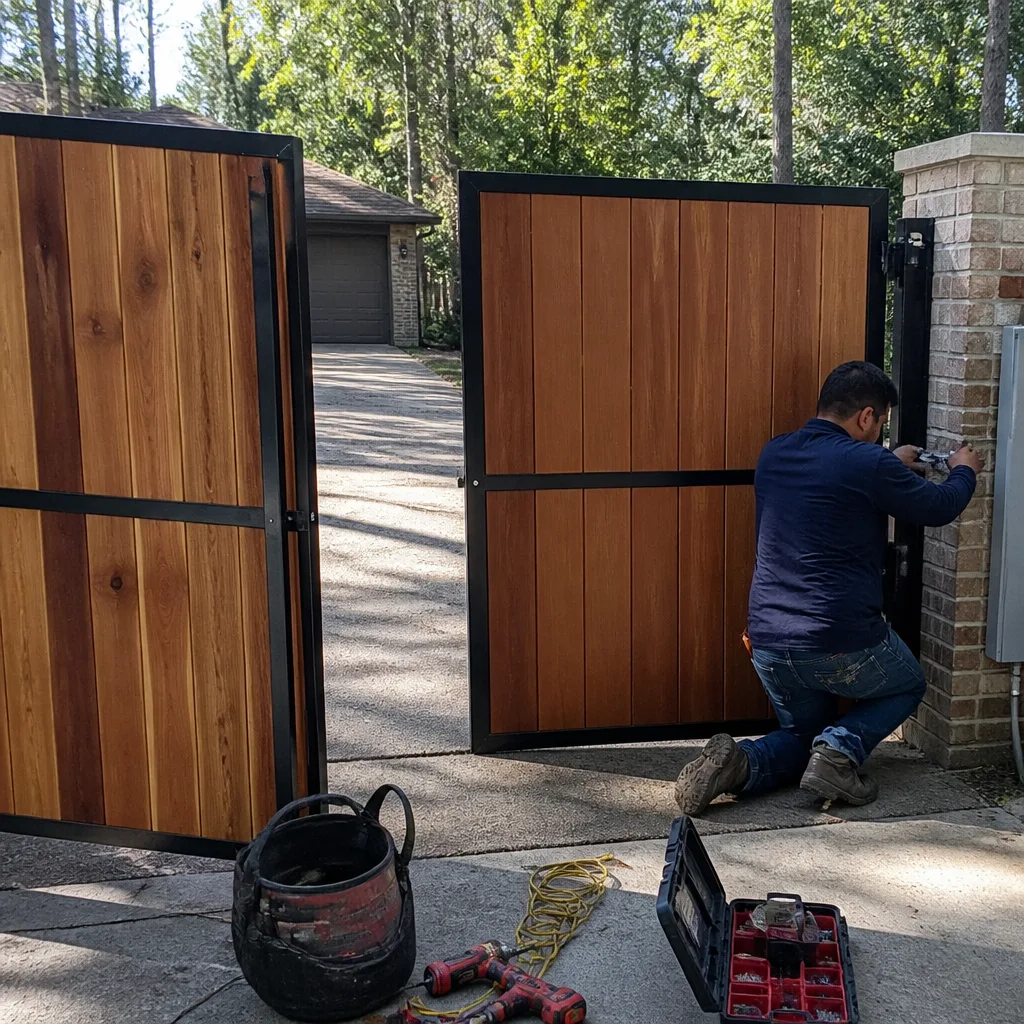 After
AfterGate Repair Warning Signs: A The Woodlands Homeowner’s Reference Guide
A gate that reverses mid-close while nothing is in its path is not malfunctioning – it’s obeying its entrapment-detection circuit, which means something physical has changed enough to trigger a force threshold. Resetting the operator without finding what changed is not a fix; it’s disabling a safety system. This reference guide ranks every common gate warning sign by what actually happens if you wait: which problems are safety emergencies, which ones get more expensive by the week, and which ones you can watch without losing sleep. If you own a driveway gate in The Woodlands, you’ll finish this page knowing exactly what to photograph, what to listen for, and when to call Gate Repair services before a $150 adjustment becomes a $1,800 operator replacement.
Quick Answer
The most urgent gate warning signs in The Woodlands are a gate that reverses without obstruction, a gate that drifts open or closed after reaching its limit, grinding or metallic shrieking during travel, and any visible lean or movement in the gate posts. These four indicate entrapment-sensor faults, failing limit switches, structural wear, or foundation instability. If your gate reverses mid-travel or the posts move when you push on them, stop using the gate and call a technician; if the gate is slow but completes its cycle and holds position, you have time to schedule a diagnostic visit at normal rates.
Table of Contents
- The Three-Tier Urgency Framework: What to Fix Now, What to Schedule, What to Watch
- A Gate That Reverses Mid-Close: The Warning Sign You Can’t Afford to Ignore
- Slow Gate, Three Different Causes: Limit Switch, Capacitor, or Structural Alignment
- Photo-Eye Misalignment and The Woodlands Afternoon Sun: Why Your Sensor Isn’t Failing
- Post and Foundation Warning Signs: The Repair That Costs More Than the Operator
- How to Document a Warning Sign Before You Call: Photographs, Cycle Counts, and Sound Location
- Gate Noises Decoded: Grinding, Squealing, Thumping, and What Each One Means
- Common Mistakes to Avoid
- When to Call a Professional
- Frequently Asked Questions
- The Bottom Line
BeforeAfterThe Three-Tier Urgency Framework: What to Fix Now, What to Schedule, What to Watch
Most gate warning-sign lists fail because they treat every symptom as equally urgent. That’s how a The Woodlands homeowner ends up either ignoring a genuine safety hazard or paying emergency rates for a cosmetic issue that could have waited three weeks. We rank every warning sign into three tiers based on one question: what happens if you do nothing for 30 days?
Tier 1: Stop Using Now
These signs indicate a risk of injury or immediate, compounding damage:
- A gate that reverses direction without anything in its path. This means the entrapment circuit is triggering on false resistance. Two possibilities, both serious: the force threshold is set too low (safety system doing its job too eagerly) or the gate mechanism has developed enough mechanical resistance to trip a properly-calibrated sensor. Either way, the gate is not safe to leave automated.
- Visible post movement. Push on the gate post near the hinge. If it moves at all – a quarter inch, half an inch, any visible deflection – the foundation is compromised. An automated gate on a moving post will eventually bind, throw the operator out of alignment, and in the worst case, fall.
- Sparking or burning smell from the operator. Stop using the gate and cut power at the breaker. This is not a “troubleshooting” situation.
- A gate that keeps running after it reaches the open or closed position. The limit switch has failed. The motor is now stalled against the mechanical stop every cycle, which burns out the capacitor and eventually the motor windings.
Tier 2: Repair Within 30 Days
These signs mean damage is progressing. The gate still works, but every cycle makes the eventual repair more expensive:
- Grinding or metallic scraping during travel. This typically means a roller is failing, a hinge is dry and wearing into its bracket, or the gate has shifted slightly out of alignment and is dragging. Left alone, the worn component fails completely, which can bend other hardware when it lets go.
- A gate that drifts after reaching its limit. The gate closes fully, then eases back open two or three inches. This is a limit switch set too far past the mechanical stop, or a clutch slipping. It’s a $150-300 fix now; it becomes an operator replacement if the motor keeps stalling against resistance.
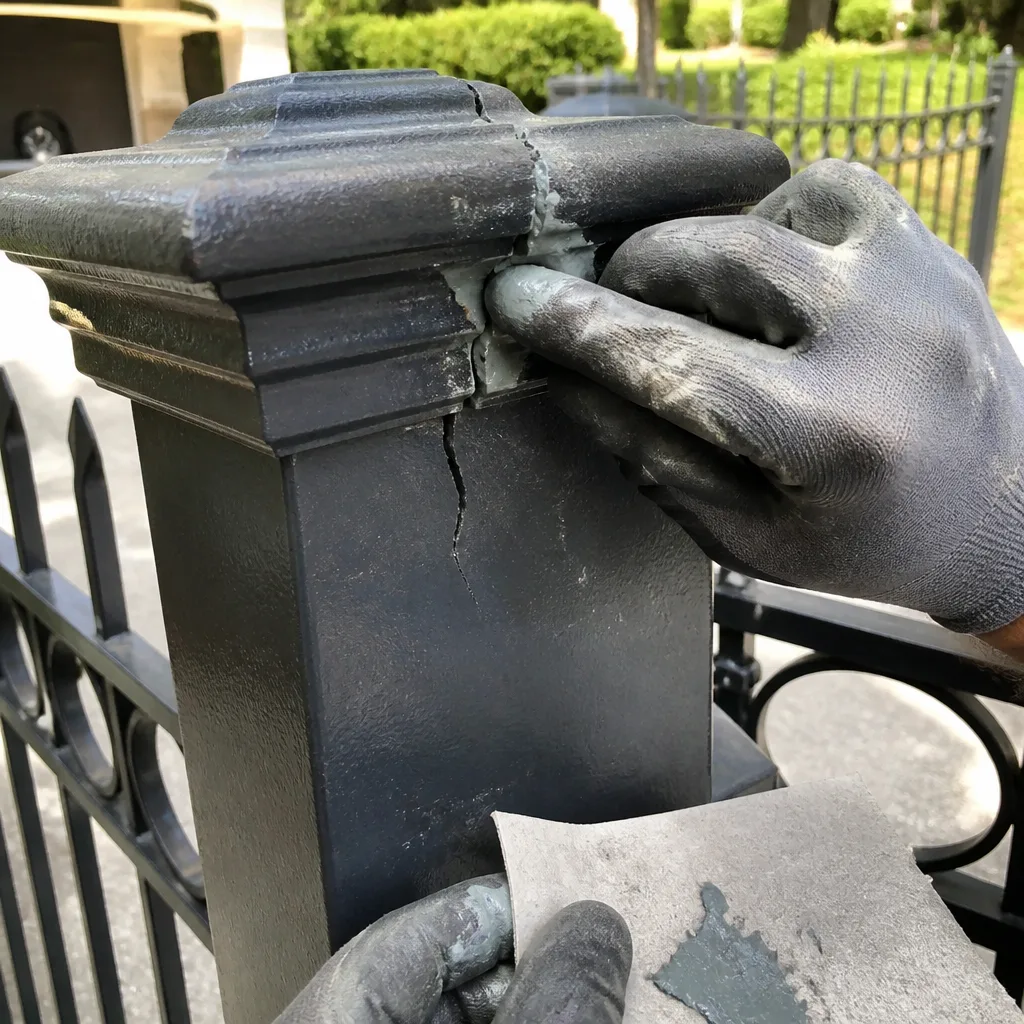
- Visible rust staining on the gate frame or hinges, particularly at welds. In The Woodlands’ humidity, surface rust becomes structural rust faster than homeowners expect. A gate that looks “a little rusty” at the hinge weld often has significant section loss underneath.
- Intermittent remote or keypad failures. Not the “battery’s dead” kind – the kind where the gate opens fine some days and ignores the remote on others. That’s usually a failing receiver board or a loose antenna connection. It won’t fix itself.
Tier 3: Monitor
These are worth noting, worth photographing, but not worth losing sleep over:
- Fading powder coat or paint, with no visible rust underneath.
- Minor gate sag: the gate sits level, but the latch is “stickier” than it used to be.
- A slightly slower open speed with no corresponding noise. Some operators slow down as the capacitor ages before it fails. Note the cycle count and the date; check back in 60 days.
- One wheel rolling smooth, the other showing flat spots. The wheel will need replacement eventually, but if the gate isn’t binding yet, you have runway.
We’ve repaired more than 22,000 gates since 2014, and the pattern holds: Tier 1 problems left alone become injuries or major structural failures. Tier 2 problems left alone become Tier 1 problems. Tier 3 problems left alone become a scheduled repair you handle on your timeline, at standard rates, with a gate repair in The Woodlands technician who arrives with a written price in hand before any work begins.
A Gate That Reverses Mid-Close: The Warning Sign You Can’t Afford to Ignore
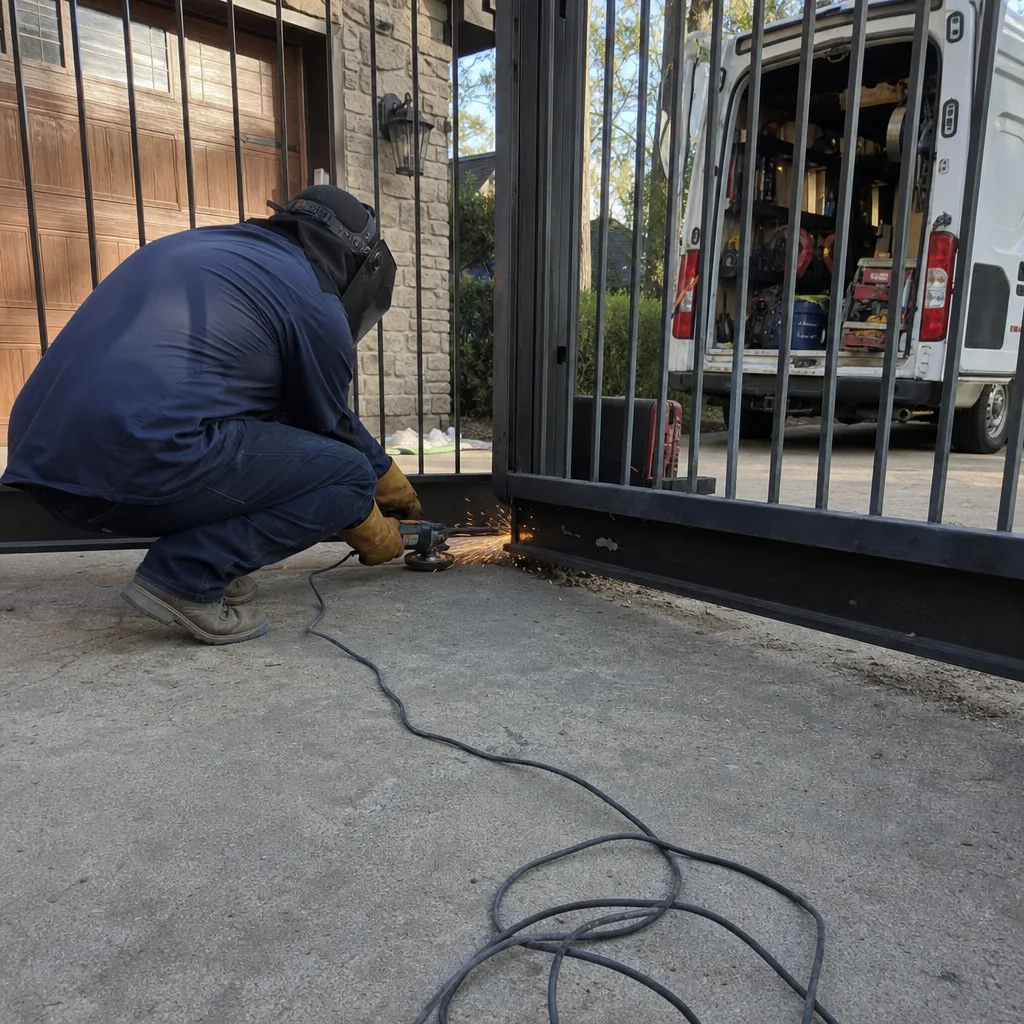
Here’s the counterintuitive part: a gate that reverses mid-close is not broken in the way most homeowners think. The reversal itself is the safety system working. Every automated gate operator manufactured since the early 1990s includes an entrapment-detection circuit that monitors the motor’s current draw. When the gate encounters more resistance than the programmed threshold, the operator reverses rather than push through. This is the same principle as a garage door opener reversing when a kid’s bike is under the door.
What you need to figure out is why the threshold got tripped. Was something actually in the gate’s path? If yes, the system did its job. If no, something changed. Possibilities, in order of how often we see them in The Woodlands:
- Mechanical resistance increased. A hinge is binding, a wheel has gone flat, the gate post has shifted, or the track is clogged with debris. The gate now requires more force to travel, so a properly-calibrated sensor sees a “collision” where there isn’t one.
- The force threshold was set too low. This happens after a previous repair, an aftermarket operator installation, or a DIY adjustment. The sensitivity was dialed in too tight, and now normal operation trips the sensor.
- The operator is overheating. In a The Woodlands summer, an operator mounted in direct southwest sun can hit thermal limits, and thermal shutdown can present as a mid-travel reversal. This is a ventilation and placement issue, not a sensor issue.
- The capacitor is weak. A failing capacitor delivers less starting torque. The motor labors, draws more current, and trips the entrapment threshold. The gate reverses because the motor is struggling, not because something is in the way.
The first three require different repairs. The fourth requires a different part entirely. Resetting the operator to factory defaults without finding what changed is not a fix – it’s a workaround that disables or re-tunes a safety system without addressing the underlying mechanical issue. Under our written-scope policy, we photograph the force readings, document what we found, and hand you a written price for the repair before anyone picks up a tool.
Slow Gate, Three Different Causes: Limit Switch, Capacitor, or Structural Alignment
“My gate is slow” is the most common description on service calls in The Woodlands. The problem is that “slow” is a symptom, not a diagnosis. The same complaint maps to at least three different mechanical or electrical failures, and the repair cost ranges from $80 to $1,200 depending on which one you have.
Here’s how to tell them apart:
- Slow only near the end of travel, then the gate stutters or hums. This is a classic limit-switch failure. The switch that tells the operator “you’re at the closed position” has drifted or failed, so the motor pushes past the proper stopping point and stalls against the mechanical stop. The fix is a limit-switch adjustment or replacement: typically $80-220. Waiting turns it into a burned-out capacitor or damaged motor windings.
- Slow from the moment it starts moving, with no unusual noise. This points to a weak capacitor. The capacitor provides the starting torque; when it’s failing, the motor never gets up to speed. Capacitor replacement runs $120-300 depending on the operator brand. On LiftMaster, FAAC, and BFT operators, this is a 45-minute job with the right part on the truck.
- Slow with a grinding or scraping sound, particularly in the middle of the gate’s travel. This is structural alignment. The gate is dragging somewhere – a wheel, a hinge, a guide track – and the operator is working against it. The limit switch and capacitor may be perfectly fine. The repair involves realigning the gate, replacing the worn component, or both. Cost depends on what’s worn, but it’s always less than an operator replacement, and it’s always more than leaving it alone.
One more note: a gate that runs slower in winter than summer is usually just cold hydraulic fluid or thickened grease. That’s a seasonal variation, not a failure. A gate that gets slower every month, regardless of temperature, is a component failing on a schedule you can observe. Cycle count matters here. If your operator displays one, note it when you first notice the slowdown. In 30 days, check again. If you’ve added 200 cycles and the speed dropped further, you have hard evidence of progression – and you’ll bring that evidence to your diagnostic call instead of saying “it just seems slow.”
Photo-Eye Misalignment and The Woodlands Afternoon Sun: Why Your Sensor Isn’t Failing
Here’s a scenario we see repeatedly in The Woodlands neighborhoods with southwest-facing driveway exposure. The gate stops partway through its closing cycle, reverses, and the homeowner replaces the photo-eye sensors. Same problem the next sunny afternoon. The sensors were fine. The problem is the sun.
A photo-eye is the infrared beam that runs across the gate opening at knee height. When something breaks the beam – a car, a child, a dog – the operator stops and reverses. The sensor on one side sends the beam, the sensor on the other side receives it. In direct afternoon sun, particularly in August when the sun sits low and cuts across the driveway at a shallow angle, solar infrared energy can overwhelm the receiver. The receiver can’t distinguish between the IR beam and direct sunlight, so it defaults to “something is in the way” and halts the gate.
This is not a sensor failure. It’s an alignment and shielding problem. The fix is usually one of four things:
- Rotating the receiver slightly away from the sun’s direct path while keeping it aligned with the emitter.
- Installing a sun shield – a small hood over the receiver lens that blocks direct light without blocking the beam.
- Repositioning the sensors lower or higher on the gate posts to change the sun angle relative to the lens.
- Cleaning the lenses. Dust and pollen buildup on the transmitter and receiver is common in The Woodlands, and a dirty lens scatters the beam enough to cause false readings even without direct sun.
If your gate halts on sunny afternoons but works fine in the morning and after dark, that’s your tell. Note the time of day, the direction the gate faces, and whether the problem persists on cloudy days. Under our documentation standard, we photograph the sensor positions, note the sun angle at the time of the visit, and leave you with a written record of what was adjusted – so if it recurs, the next technician isn’t starting from zero.
Post and Foundation Warning Signs: The Repair That Costs More Than the Operator
Before you order a new operator, check the posts. The single most misdiagnosed gate problem in The Woodlands is a foundation issue presenting as an operator issue. The gate is slow, the operator is working hard, and the homeowner concludes the motor is bad. The motor is fine. The post it’s mounted to has shifted.
Here’s why it matters. An automated gate operator is designed to move a gate in a consistent arc. When the hinge post moves, the gate’s geometry changes. The gate no longer hangs where the operator expects it to hang. The motor works harder, the limit switch reads “not quite there,” the safety sensor trips, and the whole system behaves like an operator failure when the actual problem is six inches of shifting in the concrete footing.
Signs that your problem is the post and not the operator:
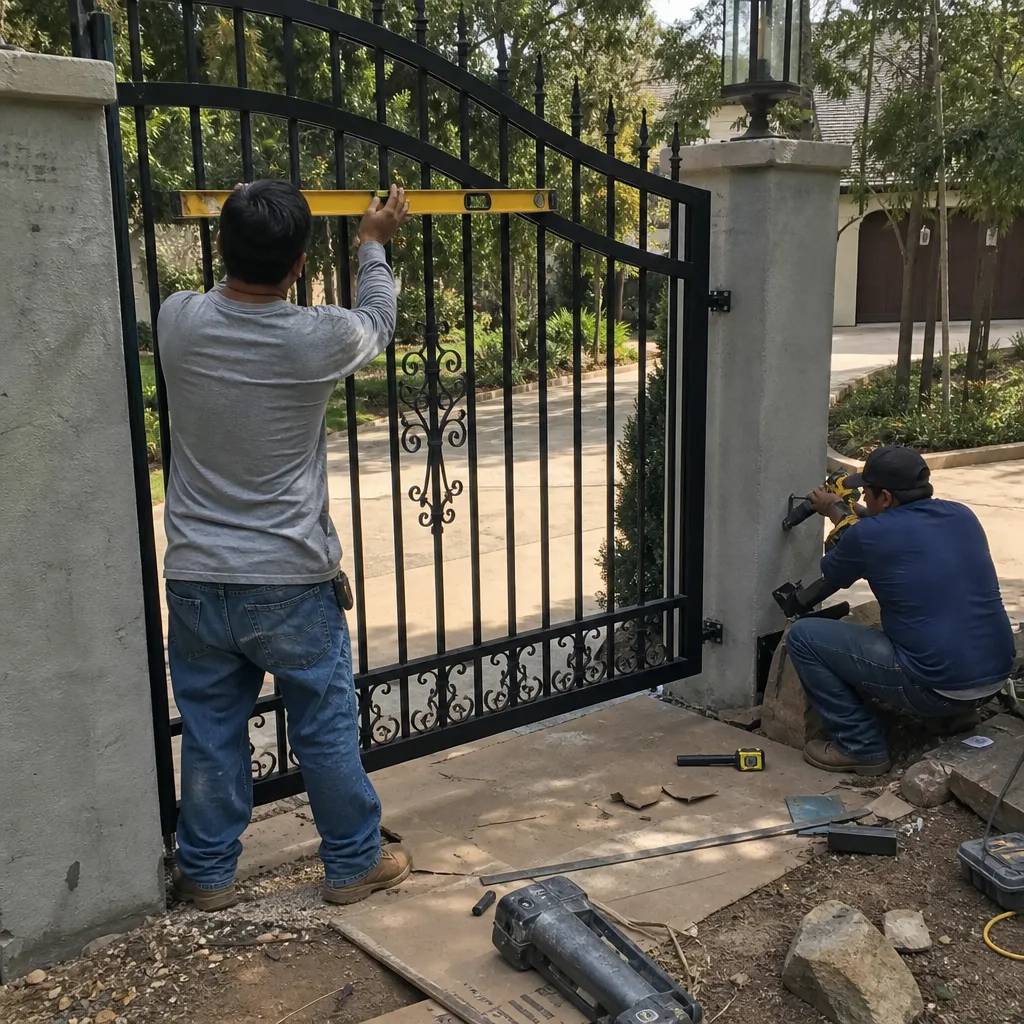
- The gate is visibly lower on the latch side than it used to be. Put a level on the top rail. If it’s not level, the post has moved or the hinges have worn.
- The gate post moves when you push on it with body weight. Any visible movement at all is too much.
- You can see a gap between the bottom of the gate and the ground that’s wider on one side than the other.
- The gate scrapes or drags at a single point in its travel, and that point is consistent – it’s hitting a high spot on the driveway or a low sag in the gate, not a random obstruction.
- The operator’s mounting plate shows fresh stress marks or cracking around the bolts.
In The Woodlands specifically, the clay-heavy soils expand and contract with seasonal moisture. A gate post set in concrete without proper depth or drainage can heave over a wet spring and settle over a dry summer. The result is gradual movement that’s easy to miss until the gate starts binding. Catching a post problem before the gate binds saves the operator. The operator replacement might cost $800-1,800 depending on brand. A post reset might cost $400-900 depending on whether the concrete needs to be redone. But if the post problem goes unaddressed and the new operator is installed on a moving foundation, you’ll be back in the same position in 18 months.
How to Document a Warning Sign Before You Call: Photographs, Cycle Counts, and Sound Location
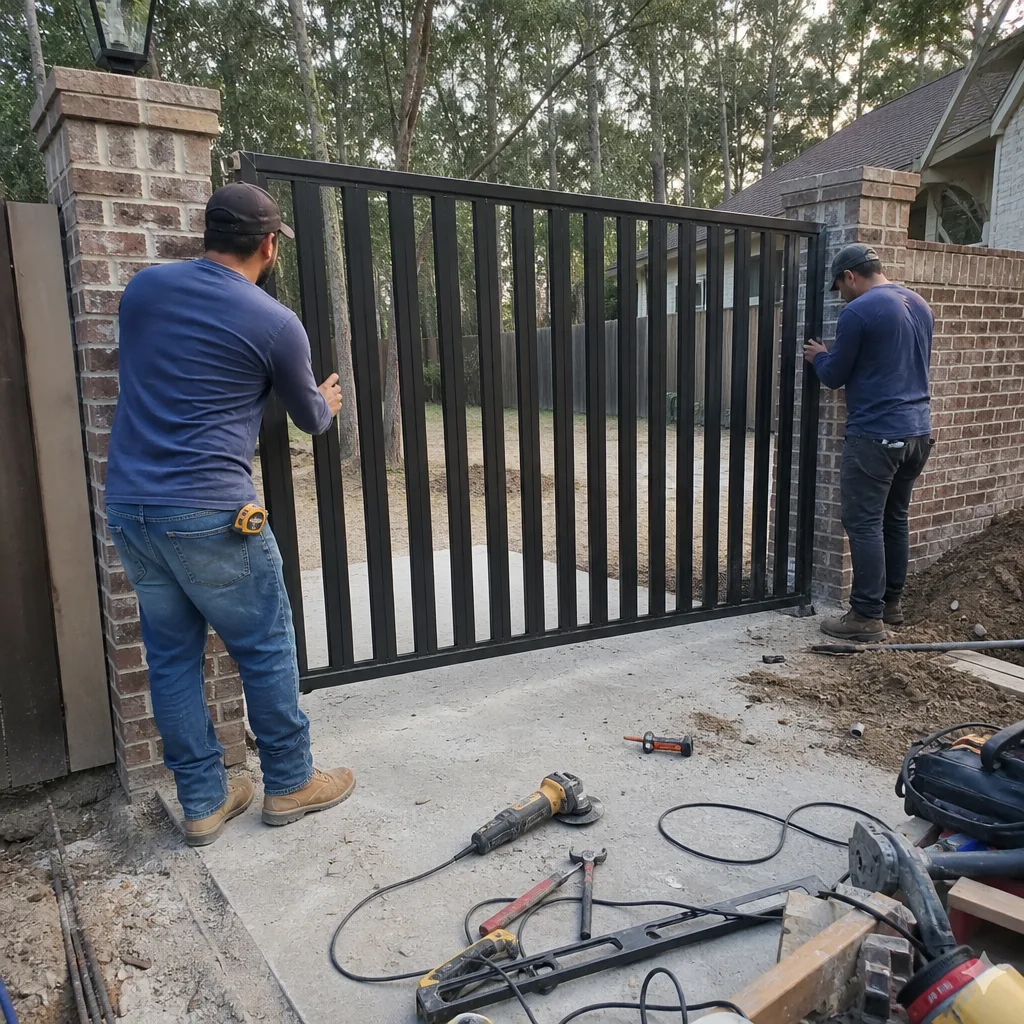
You don’t need to diagnose the problem. You need to document it well enough that the technician who answers your call can bring the right parts on the first trip. For help choosing the right professional, see our guide. Here’s what we ask homeowners in The Woodlands to capture before they call:
- Photograph the gate in its resting position. Stand back and take a full-frame shot of the gate, the posts, and the operator. Then move closer and photograph each hinge, each wheel, and the operator mounting plate. These photos establish baseline condition and often reveal what the spoken description misses.
- Photograph the gate mid-travel, at the exact point where the problem occurs. If it grinds at the halfway point, photograph it there. If it reverses at three-quarters closed, photograph it there. A picture of the gate at the failure point tells us which component is under load at that moment.
- Note the cycle count. If your operator has a display or diagnostic LED, read the cycle count if it shows one. Write it down with the date. This gives us a hard number on how much the gate has run and whether the wear rate lines up with the failure you’re describing.
- Locate the sound. When the gate makes the noise, stand next to it and figure out where the sound comes from: the hinge side, the latch side, the motor housing, or under the gate. “It grinds near the hinge” tells us more than “it grinds.” A video from a phone at waist height, walking alongside the gate as it opens, is the single most useful piece of documentation you can provide.
- Photograph the operator’s brand and model label. The nameplate tells us what’s on the gate without a site visit. Nine major brands – LiftMaster, FAAC, BFT, Linear, Viking, Ghost Controls, DoorKing, Elite, and Mighty Mule – all use different parts and different diagnostic codes. Knowing the brand before we arrive means the right parts are on the truck.
This is the same documentation habit we apply to every visit we make. Before we leave a job, you get a photo log of what was found, what was adjusted, and what was installed, along with a written record of part numbers and settings. If a warning sign recurs six months later, the next visit starts from documented history instead of a fresh guess.
Gate Noises Decoded: Grinding, Squealing, Thumping, and What Each One Means
Sound is the most underused diagnostic tool a homeowner has. Most gate failures announce themselves with a specific noise patterns before the gate stops working entirely. Here’s what the common ones mean:
- High-pitched squeal or shriek during travel. This is metal-on-metal contact. The usual culprits are dry hinge pins, a bearing that’s failed in a roller, or a gate that’s shifted enough to scrape against a post or track. Lubricating a hinge with a dry pin is a temporary fix; the real fix is replacing the pin or the roller before the wear affects the gate’s alignment. In The Woodlands’ humidity, rust accelerates this wear, and a squeal that’s been present for three months has usually done more damage than a squeal that started last week.
- Grinding or metallic rasping, particularly under load. This indicates a component is bearing weight it wasn’t designed to bear. Common causes: a failed wheel that’s now dragging the gate frame on the ground, a hinge bracket that’s cracked and flexing, or a gate that’s sagged enough that the frame is scraping the driveway. This is always a Tier 2 sign – repair within 30 days before the damaged component takes other hardware with it when it fails.
- A single thump or clunk when the gate starts moving. This is usually slack being taken up. The gate was resting against a mechanical stop or a latch, and the motor’s initial torque jerks it free. A small thump is normal. A loud clunk that gets louder over time suggests a failing coupling or a loose mounting bolt.
- A humming sound with no gate movement. The motor is getting power and trying to run, but the gate isn’t moving. On a hydraulic operator, this could mean low fluid or a failed pump. On a mechanical operator, it usually means the clutch is slipping or the gate is bound against an obstruction. Stop using the gate and cut power until this is diagnosed. A stalled motor burns out the capacitor and eventually the windings.
- Clicking from the operator when you trigger the remote, but no motor sound. This is usually an electrical issue, not a mechanical one. On brands like FAAC and BFT, it can indicate a failed relay or a tripped thermal protector. It’s worth a diagnostic visit; it’s not worth trying to troubleshoot with the cover off.
Here’s the practical takeaway: record the sound on your phone. A 15-second video with clear audio, taken from beside the gate while it runs, gives us more information than a verbal description ever will. We can identify the source location, the timing within the cycle, and often the specific component just from the recording. That means a faster diagnosis and a written price delivered sooner – usually before we even arrive for the visit.
Common Mistakes to Avoid
- Resetting the operator to clear the error code without addressing the cause. The error code tells you what the operator detected. Clearing it without fixing the underlying issue just erases the evidence. The next failure is usually worse and harder to diagnose.
- Replacing the photo-eye sensors because the gate halts on sunny afternoons. As covered above, direct southwest sun on The Woodlands driveways overwhelms the receiver. The fix is a sun shield or repositioning, not new sensors. Replacing the sensors is throwing $80-150 at a problem that costs $40 to solve.
- Lubricating a squealing hinge with WD-40. WD-40 is a solvent, not a lubricant. It cleans the pin and removes whatever grease was there, making the wear worse. Use a lithium or moly grease designed for gate hinges, or better, replace the pin and bushing if they’re visibly worn.
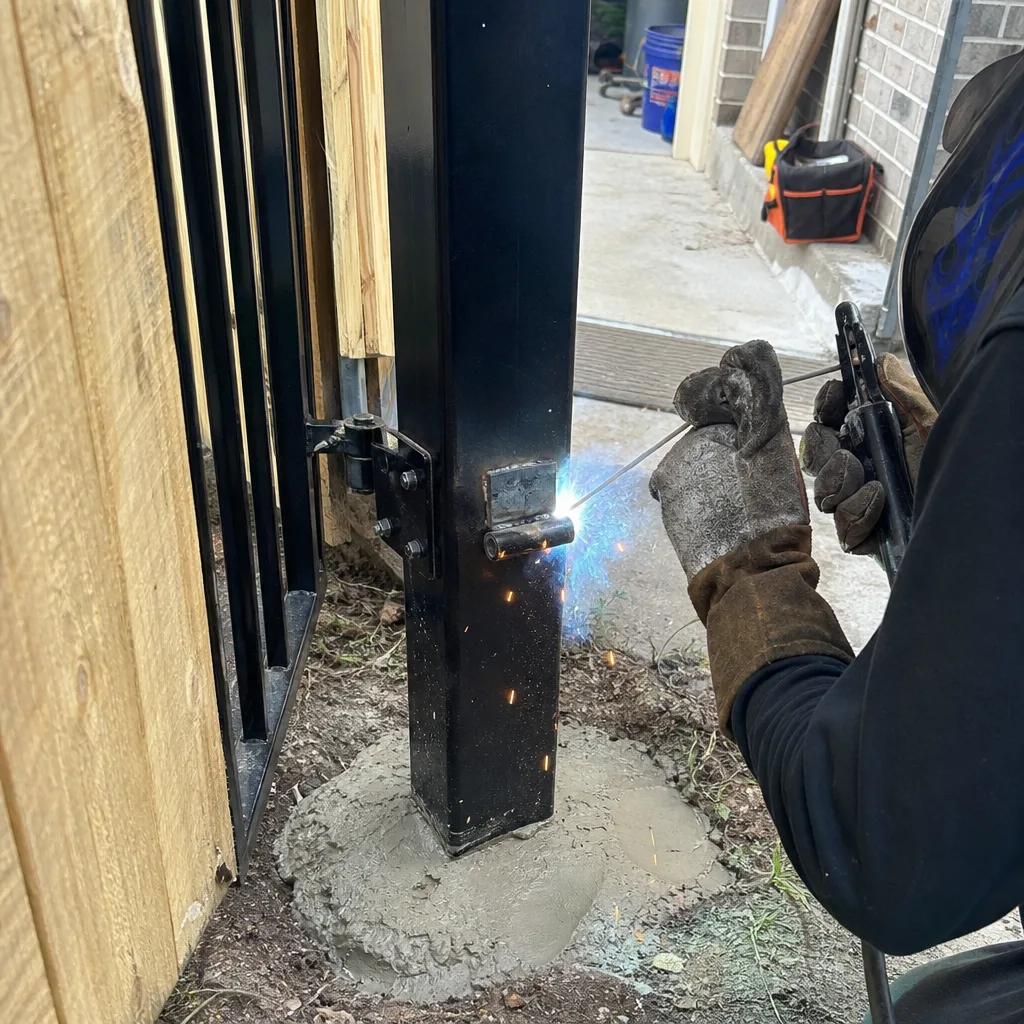
- Ordering a new operator when the post is visibly leaning. The operator is doing its job. The post is the problem. Replace the operator on a moving post and you’ll be replacing it again when the new one burns out against the same mechanical resistance.
- Ignoring a gate that drifts open after closing. A gate that closes and then eases back open two inches is not “almost working.” The limit switch or clutch is out of adjustment, and every cycle puts the motor under stall load. It’s a $150 fix that becomes a $900 motor replacement if you wait.
- Not capturing the cycle count when you first notice the problem. The cycle count is the best evidence of wear rate. If you don’t note it when the problem starts, you can’t demonstrate progression. Write the number down, photograph it, date it.
- Using the gate manually by disconnecting the operator without addressing the safety issue. A gate that reverses because of entrapment detection is a gate that needs adjustment. Disconnecting the operator and pushing the gate by hand doesn’t remove the risk of a child or pet being pinned by a gate that’s mechanically harder to move than it should be.
When to Call a Professional
Call a professional when the warning sign involves force, weight, or electricity. If the gate reverses without cause, if the post moves when you push on it, if the operator smells hot, makes a grinding noise, or trips a breaker, stop using the gate and get a diagnostic visit scheduled. The same goes for any issue involving the entrapment-detection system – bypassing or disabling a safety circuit is not a repair. If the gate is slow but still completes its cycle and holds position, you have time to schedule at standard rates. If you’re in The Woodlands, Vance Gate Repair offers free estimates and a written price delivered before any work begins. Explore more guides & resources on our blog. Call (346) 296-3138 – a live person answers, 24/7, no voicemail loop.
Frequently Asked Questions
Most gate repairs in The Woodlands run between $150 and $900, depending on what failed. A limit-switch adjustment or replacement is typically $80-220. Capacitor replacement runs $120-300. Roller and hinge replacement runs $150-400 per component. Operator replacement, when the motor truly has failed, runs $800-1,800 depending on brand and whether the arm brackets are intact. Post resetting runs $400-900. Every job gets a written price before work starts – you’ll know the number before anyone picks up a tool. Call (346) 296-3138 for an exact quote; estimates are free.
Yes. A gate that won’t close is a security issue, not just a convenience issue. We dispatch same-day for Tier 1 emergencies in The Woodlands, and a live person answers the phone 24/7 at (346) 296-3138. When you call, have the operator brand and model ready if you can find it – it tells us which parts to bring.
A reversing gate is triggering its entrapment-detection circuit, which means the motor is encountering more resistance than the programmed threshold. The cause could be a binding hinge, a failing capacitor, a misaligned operator, or a false reading from sun overload on the photo-eye. It’s worth a diagnostic visit to find out which one – and it’s not something to reset and ignore. The safety system is trying to tell you something.
That pattern points to photo-eye sun overload. In The Woodlands, southwest-facing driveways get direct afternoon sun at a shallow angle that overwhelms the infrared receiver, causing the gate to stop and reverse as if something were in the path. The fix is usually a sun shield or repositioning, not new sensors. Note the times of day and the weather conditions; that pattern is the diagnostic evidence.
We service nine major automation brands: LiftMaster, FAAC, BFT, Linear, Viking, Ghost Controls, DoorKing, Elite, and Mighty Mule. If your operator is one of these, we carry the common parts and know the diagnostic codes. We repair what’s already installed rather than pushing you toward a replacement. If a replacement is truly needed, the written price covers the full scope – operator, brackets, wiring, and setup – before any work starts. Call (346) 296-3138 to describe what you have; we’ll tell you what we can do over the phone.
Push on the post with body weight. If it moves at all, the post is the issue, not the operator. A visible gap under the gate that’s wider on one side, a gate that’s not level on the top rail, or a consistent scrape point in the same spot every cycle also points to a foundation or post problem. Catch it before the gate binds and you save the operator. Catch it after, and you’re replacing both.
The Bottom Line
Gate warning signs are only useful when they’re ranked by urgency. A gate that reverses without obstruction is a safety issue. A gate that grinds at the same point in its travel every cycle is a component wearing out on a schedule you can see. A gate that’s slow but silent and holds position is worth watching with documented evidence. In The Woodlands, with clay soil, humid summers, and long afternoon sun angles, the most common problems are photo-eye sun overload, post movement, and wear accelerated by moisture. Document what you see before you call: the brand and model, the cycle count, the sound’s location, and a photo of the failure point. When you do call, let Vance Gate Repair The Woodlands home be the first call you make. If you need a full gate installation in The Woodlands or gate motor and opener service in The Woodlands, the same written-price, documented-record standard applies. Call (346) 296-3138 for a free estimate – a live person answers, and you’ll get a written price before any work begins.
Written by Adrian Vance, Owner at Vance Gate Repair The Woodlands, serving The Woodlands since 2014.